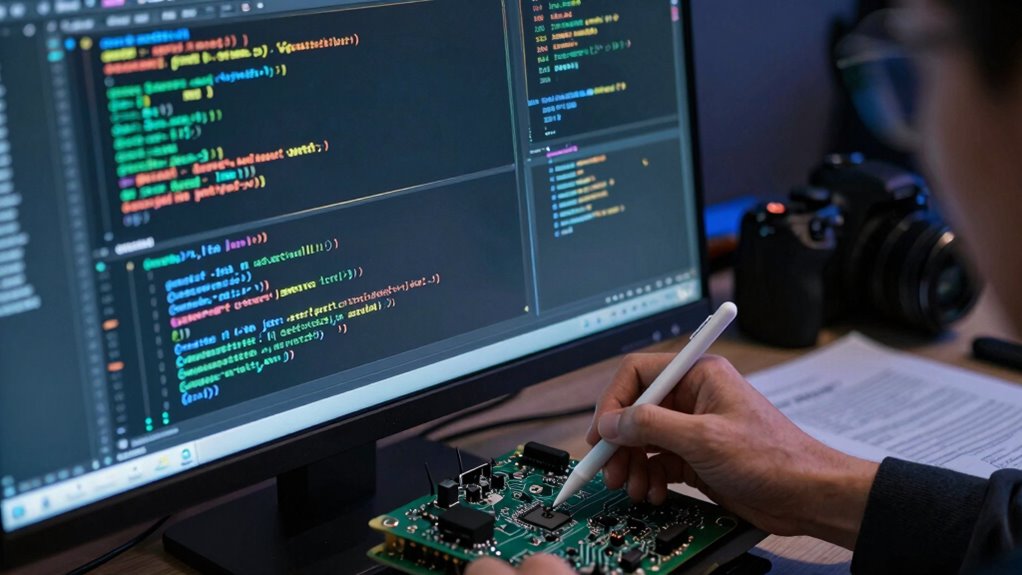

Reverse engineering remains essential in defensive security because it helps you analyze and understand malicious code and vulnerabilities beyond what automated tools can detect. It reveals hidden behaviors, communication methods, and obfuscation techniques used by attackers. This deep insight enables you to develop better detection strategies, patch weaknesses proactively, and stay ahead of evolving threats. Keep exploring, and you’ll find more ways it strengthens your security defenses and response capabilities.

Get privacy and security gear delivered free with Prime
- Fast, free delivery on millions of items
- Prime Video, Amazon Music and more included
- Member-only deals all year
Key Takeaways
- It uncovers hidden malicious behaviors and obfuscation techniques that automated tools may miss.
- Enables detailed vulnerability analysis to identify and patch security flaws proactively.
- Provides nuanced understanding essential for developing effective detection signatures.
- Helps respond rapidly to zero-day threats and evolving attack methods.
- Strengthens overall security posture by turning complex malware into actionable intelligence.
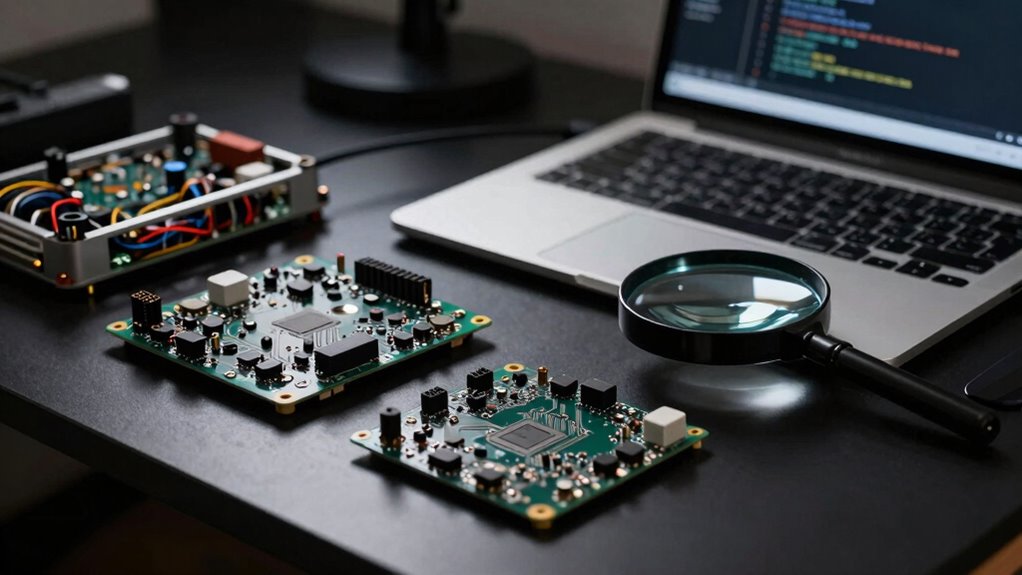
Reverse engineering is an essential skill in defensive security, allowing you to analyze and understand malicious code, vulnerabilities, and threat behaviors. As cyber threats evolve and become more sophisticated, simply relying on signature-based detection isn’t enough. You need to explore deeper into how malware operates and identify weaknesses before attackers can exploit them. This is where reverse engineering comes into play, giving you the ability to dissect malware to uncover its inner workings, detect hidden functionalities, and develop effective countermeasures. In malware analysis, your goal is to understand how the malicious code behaves, how it communicates with command-and-control servers, and what vulnerabilities it exploits within targeted systems. By reverse engineering malware, you gain insights that can help you improve your security posture and anticipate future attack vectors. Additionally, reverse engineering enhances your ability to develop detection techniques that can identify and mitigate threats more effectively.
Reverse engineering enables deep analysis of malware, revealing hidden functionalities and vulnerabilities to strengthen security defenses.
Vulnerability assessment benefits immensely from reverse engineering because it enables you to analyze software flaws at the code level. When you reverse engineer software, you examine binaries and source code to identify security weaknesses that could be exploited by attackers. This detailed approach helps you discover vulnerabilities that might not be apparent through automated scanning alone. As a result, you can patch these security gaps proactively, reducing the risk of breaches. In addition, reverse engineering allows you to verify whether existing security controls are effective against particular threats, ensuring your defenses are robust and reliable. It’s an indispensable part of a thorough vulnerability assessment strategy because it exposes the root causes of potential security failures. Incorporating manual analysis techniques can further enhance your understanding of complex threats and obfuscation methods. Recognizing the importance of thorough examination strengthens your ability to uncover hidden risks that automated tools may overlook. Moreover, engaging in hands-on analysis deepens your comprehension of attack techniques and malicious behaviors.
Despite advancements in automated tools and AI, reverse engineering remains essential because it provides context and nuanced understanding that automated methods often miss. Attackers continually refine their methods, embedding malicious code within legitimate-looking files or using obfuscation techniques to evade detection. By manually analyzing these threats through reverse engineering, you can uncover hidden malicious behaviors and develop signatures or detection rules that catch similar threats in the future. This hands-on approach also enhances your ability to respond quickly to zero-day vulnerabilities and new attack techniques, reducing the window of exposure.
In an environment where cyber threats are constantly changing, reverse engineering isn’t just a skill for malware analysts or security researchers; it’s a core defensive capability. It strengthens your malware analysis efforts, sharpens your vulnerability assessment, and ultimately makes your security defenses more resilient. By investing in these skills, you stay one step ahead of cybercriminals, turning complex malicious code into actionable intelligence that safeguards your digital assets.
Products Worth Considering

Sony WH-1000XM4C Wireless Noise-Cancelling Headphones, Black

Bose SoundLink Flex Bluetooth Speaker (2nd Gen), Portable Waterproof Speaker, Black

LG UltraGear 27-Inch QHD OLED Gaming Monitor, 240Hz, 0.03ms, G-SYNC Compatible, FreeSync Premium Pro, HDMI 2.1
As an affiliate, we earn on qualifying purchases.
Frequently Asked Questions
How Has Reverse Engineering Evolved Over the Past Decade?
Over the past decade, you’ve seen reverse engineering evolve from basic disassembly to sophisticated techniques like automated malware analysis. You now leverage advanced tools and machine learning to identify vulnerabilities faster, analyze complex malware, and improve security defenses. Reverse engineering has become more accessible, enabling you to dissect malicious code efficiently, stay ahead of evolving threats, and strengthen your organization’s security measures through proactive threat detection and response.
What Tools Are Most Effective for Reverse Engineering Malware?
Think of reverse engineering tools as your detective’s toolkit. Dynamic analysis tools like IDA Pro, Ghidra, and OllyDbg let you observe malware in action, revealing its secrets. Static techniques, such as strings analysis and disassemblers, help you dissect code without executing it. Together, these tools form a powerful duo, enabling you to unravel complex malware, understand its behavior, and strengthen your defenses effectively.
Can Reverse Engineering Help Prevent Zero-Day Exploits?
Yes, reverse engineering helps prevent zero-day exploits by enhancing threat detection and vulnerability analysis. When you analyze malicious code, you uncover hidden attack methods, which allows you to develop better defenses. This proactive approach helps identify vulnerabilities before attackers exploit them. By understanding the inner workings of new threats, you can strengthen your security measures, making it harder for zero-day exploits to succeed and improving your overall cybersecurity posture.
What Ethical Considerations Are Involved in Reverse Engineering?
Isn’t it tempting to see reverse engineering as a double-edged sword? You must navigate legal boundaries and ethical dilemmas carefully. While it helps uncover vulnerabilities, you risk infringing on intellectual property rights or exposing sensitive data. You need to balance your curiosity with responsibility, ensuring your actions contribute to security rather than harm. Respecting laws and ethical standards safeguards your reputation and advances the collective goal of safer technology.
How Does Reverse Engineering Complement Other Cybersecurity Strategies?
You use reverse engineering to enhance threat detection by uncovering vulnerabilities and malicious behaviors within software. It complements other cybersecurity strategies by enabling detailed software analysis, helping you understand how malware operates and identifying weaknesses before attackers exploit them. This proactive approach strengthens your defenses, supports incident response, and guarantees your security measures stay up-to-date with evolving threats, making your overall security posture more resilient.
Conclusion
Think of reverse engineering as your trusty lighthouse in a stormy sea of threats. Just as the lighthouse guides ships safely away from hidden rocks, your skills illuminate unseen vulnerabilities before attackers can exploit them. Without it, you’re steering blindly through treacherous waters. Embrace reverse engineering as your beacon — it keeps your defenses sharp and your digital harbor safe. In this ongoing battle, it’s your essential tool for staying one step ahead.