
Using home labs speeds up your cybersecurity learning because you get hands-on experience that theory alone can’t provide. You’ll practice real-world scenarios like network segmentation, malware analysis, and troubleshooting, which sharpens your skills fast. Labs also let you test vulnerabilities safely, experiment with defenses, and stay current with new threats. This active approach boosts problem-solving and critical thinking. Keep exploring, and you’ll discover how to build a resilient cybersecurity mindset step by step.

Get privacy and security gear delivered free with Prime
- Fast, free delivery on millions of items
- Prime Video, Amazon Music and more included
- Member-only deals all year
Key Takeaways
- Hands-on labs simulate real-world scenarios, enabling faster understanding of practical cybersecurity challenges.
- Direct interaction with tools accelerates skill development and reinforces theoretical concepts.
- Safe testing environments allow quick experimentation and learning from mistakes without real risks.
- Practical work fosters continuous learning, keeping skills up-to-date with evolving threats and techniques.
- Engaging in active troubleshooting and attack simulations builds instinct and resilience faster than passive study.
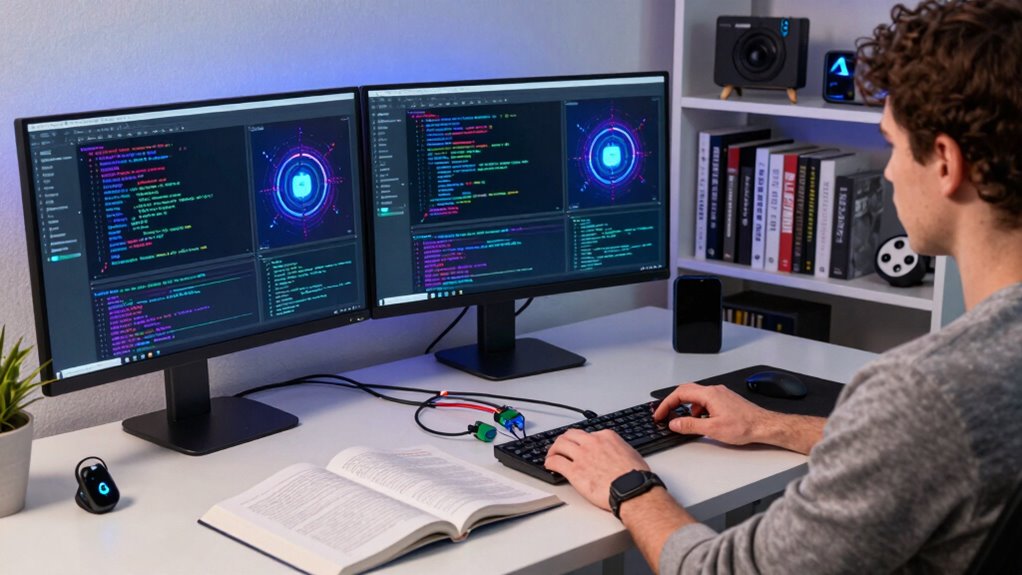
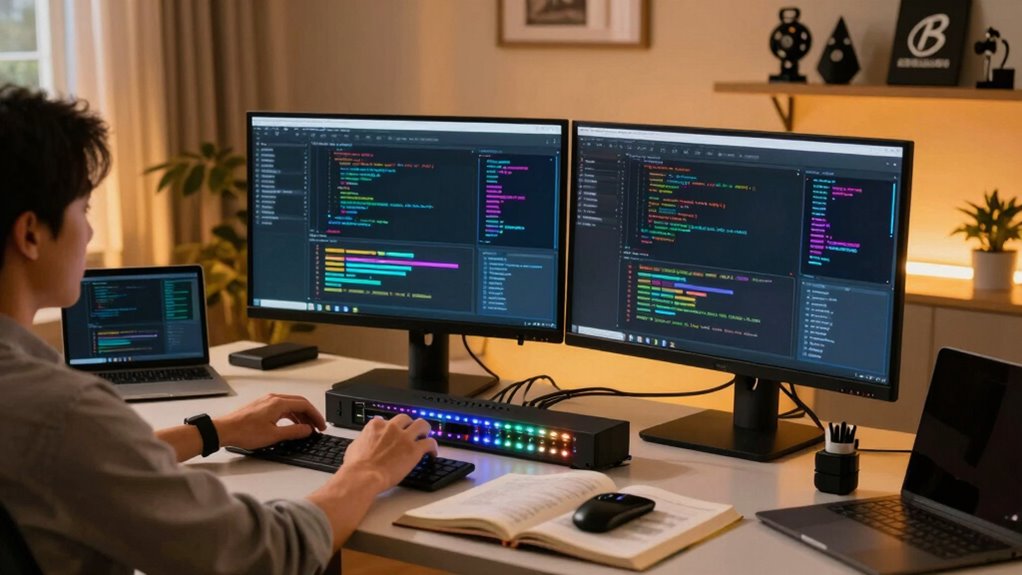
Setting up a home lab is one of the most effective ways to learn cybersecurity hands-on. Instead of just reading about concepts like network segmentation or malware analysis, you get to practice them in a controlled environment. This active approach helps you grasp complex topics faster and more thoroughly. When you create your own network, you can simulate real-world scenarios, experimenting with different configurations and defenses. For example, you might set up a network with segmented subnets to understand how network segmentation limits the spread of attacks and isolates sensitive data. This practical experience makes the theory stick, so you’re not just memorizing terms—you’re applying them.
Building a home lab allows hands-on practice, deepening understanding of cybersecurity concepts through real-world simulations.
Engaging directly with tools and techniques sharpens your problem-solving skills more efficiently than passive learning. When you analyze malware samples in your lab, you learn to identify malicious behaviors, reverse engineer code, and develop mitigation strategies firsthand. This hands-on malware analysis accelerates your understanding of attack vectors and how to counter them. As you troubleshoot issues, you develop instincts for spotting vulnerabilities and securing systems, which is tough to achieve through textbooks alone. Cultivating this kind of practical knowledge reinforces the importance of hands-on experience in mastering cybersecurity. Additionally, working on your own lab encourages the development of practical skills, which are essential for real-world cybersecurity roles.
Building a home lab also allows you to experiment without fear of consequences. You can intentionally introduce vulnerabilities or test different network segmentation strategies to see what works best. This trial-and-error process speeds up your learning curve because you’re actively discovering solutions rather than just reading about them. Plus, it’s easier to keep pace with current cybersecurity threats when you’re constantly tinkering and updating your lab environment. When you encounter a new malware strain or attack method, you can recreate the scenario in your setup, deepening your understanding. Additionally, practical experience helps solidify core concepts more effectively than passive study alone.
Furthermore, working on your own lab cultivates a mindset of continuous learning. You’re motivated to stay up-to-date with the latest tools and techniques because you see firsthand how they function. This real-world practice often surpasses theoretical study, which can sometimes feel abstract or disconnected from actual threats. As you develop skills like network segmentation, you learn to design resilient networks that can contain breaches, minimizing damage. When you analyze malware, you gain insights into attacker behaviors, which helps you anticipate future threats. Incorporating practical labs also enables you to explore cybersecurity tools, giving you a competitive edge in understanding their applications. This proactive engagement with emerging threats and tools is vital for maintaining effectiveness in the dynamic cybersecurity landscape.
Products Worth Considering

Sony WH-1000XM4C Wireless Noise-Cancelling Headphones, Black

Bose SoundLink Flex Bluetooth Speaker (2nd Gen), Portable Waterproof Speaker, Black

LG UltraGear 27-Inch QHD OLED Gaming Monitor, 240Hz, 0.03ms, G-SYNC Compatible, FreeSync Premium Pro, HDMI 2.1
As an affiliate, we earn on qualifying purchases.
Frequently Asked Questions
How Much Does Setting up a Home Cybersecurity Lab Cost Initially?
Setting up a home cybersecurity lab typically costs around $300 to $800 initially, depending on your equipment essentials and your goals. A cost analysis helps you determine whether to buy pre-assembled kits, second-hand gear, or build from scratch. Essential equipment includes a dedicated PC or virtual machines, routers, and switches. Investing in quality tools upfront guarantees a smoother learning experience and saves money in the long run.
What Are the Common Legal Considerations for Practicing Cybersecurity at Home?
Did you know nearly 60% of cybersecurity professionals emphasize legal boundaries as essential? When practicing cybersecurity at home, you must always follow legal boundaries and focus on ethical practices. Avoid testing on networks or devices without permission, as it can lead to serious legal issues. Stay within legal limits, use your own equipment, and prioritize ethical practices to guarantee your learning is safe, responsible, and compliant with laws.
How Do I Stay Updated With the Latest Cybersecurity Threats While Practicing?
To stay updated with the latest cybersecurity threats while practicing, you should regularly follow trusted sources like security blogs, forums, and threat detection reports. Engage in vulnerability analysis by participating in Capture The Flag (CTF) challenges and security webinars. Set up alerts for emerging threats and subscribe to updates from cybersecurity agencies. Continuous learning and active monitoring will keep your skills sharp and your home lab current with evolving threats.
Can Home Labs Prepare Me for Official Cybersecurity Certifications?
Think of home labs as your cybersecurity gym—perfect for practical experience and skill development. They prepare you well for official certifications by allowing you to practice real-world scenarios, troubleshoot, and refine techniques. With consistent hands-on practice, you’ll build confidence and competence, making certification exams less intimidating. Ultimately, your home lab becomes your training ground, transforming theory into tangible skills that align perfectly with the requirements of cybersecurity certifications.
What Are the Best Resources for Troubleshooting Home Lab Issues?
You should start with online forums like Reddit’s r/homelab or dedicated tech communities, where members share troubleshooting tips. Keep your network configuration clear and organized, as this often causes issues. Check hardware compatibility before making upgrades, ensuring all components work seamlessly together. Use diagnostic tools to identify problems quickly, and don’t hesitate to consult manufacturer documentation for specific hardware or network setup guidance.
Conclusion
Diving into a home lab is like planting your own cybersecurity garden—you get your hands dirty, learn from real-world mistakes, and watch your skills grow faster than from books alone. Theory sets the stage, but hands-on practice is the rocket fuel that propels you forward. If you want to become a cybersecurity pro, don’t just read about it—live it. Your home lab is the key to revealing your potential and turning knowledge into unstoppable skill.