Oversharing on Facebook can put you at serious risk of identity theft, cyberbullying, and scams. When you post personal details like your home address, routines, or family photos, you give hackers and cybercriminals valuable information to exploit. Public profiles make it easier for stalkers or bullies to target you. To protect yourself, it’s essential to think before sharing. If you want to understand how to stay safe, keep going to learn more.
Key Takeaways
- Sharing personal details publicly increases vulnerability to cybercriminals, identity theft, and scams.
- Oversharing location and routine updates can reveal when your home is unoccupied, risking burglary or kidnapping.
- Posting children’s information or photos can expose them to online predators and harassment.
- Public profiles and frequent sharing make it easier for stalkers and bullies to target you.
- Thinking before sharing helps protect your privacy, safety, and personal security online.
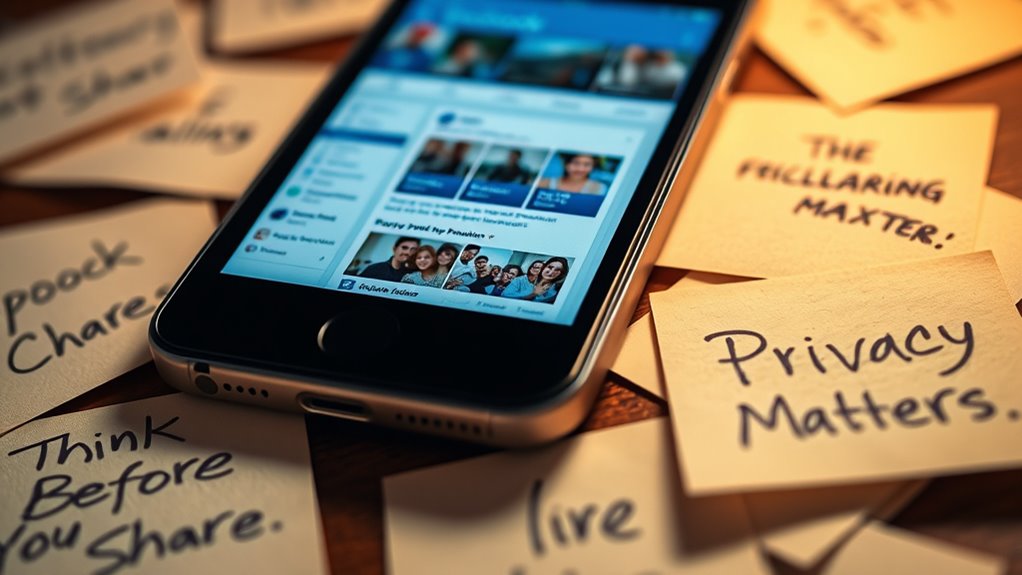
Have you ever stopped to contemplate just how much personal information you share on Facebook? Many people post weekly, with 84% sharing details about their lives. Some even post daily, revealing everything from their routines to personal opinions. It’s easy to forget that oversharing can expose you to serious risks, both online and offline. A significant number of users maintain public profiles—about 55% on Facebook—making their personal data accessible to anyone. Meanwhile, over 70% disclose sensitive information they might normally keep private, like home addresses, school details, or whether they’re living alone. Even seemingly harmless posts, such as birthday celebrations or family photos, can create vulnerabilities.
Many share daily on Facebook, risking privacy with personal details and public profiles.
Sharing pictures of children or mentioning their names is common; half of users do this regularly. While it may seem innocent, this information can be exploited by cybercriminals. Hackers use publicly available details to craft targeted social engineering attacks or impersonate trusted contacts. For example, detailed “Out of Office” messages or routine updates help cybercriminals identify targets and craft convincing phishing emails. In late 2020, social engineering attacks increased by 15%, with hackers leveraging personal data to scam victims or commit fraud. Such attacks can lead to financial loss, damage to credit scores, or identity theft. Public profiles also make it easier for stalkers or bullies to access sensitive data, putting your safety at risk.
Your posts can also reveal your location, routines, and habits—information that criminals can use for more sinister purposes. Posts about gym visits, school pickups, or holidays can signal when your home might be unoccupied. Location-enabled photos make impersonation easier, and in some regions, such as South Africa, kidnapping cases have risen, with online posts playing a role in planning or executing these crimes. Even car thefts are targeted through routine posts about vehicle models and whereabouts. Children’s names, ages, and locations shared in gaming chats or social media can expose them to harassment or exploitation. Research shows that 84% of people post personal info weekly on social media, increasing attack opportunities for hackers and cybercriminals. Recognizing the importance of personal data security can help you better protect yourself online.
Oversharing doesn’t just threaten your safety; it can also lead to identity theft. Criminals use personal details, like full names, birth dates, and addresses, to open loans or access bank accounts in your name. Many users have been locked out of their accounts after hackers impersonated them or used their profiles to contact friends. Platforms like Facebook and Instagram are prime targets, with over 70% of users experiencing breaches. The more you share, the easier it becomes for bad actors to misuse your information, putting your privacy, finances, and even your family’s safety at risk. Remember, thinking twice before posting can save you from avoidable dangers.

msi MPG 321URX QD-OLED, 32" 4K UHD Quantum Dot OLED Gaming Monitor, 3840 x 2160, 0.03ms, 240Hz, True Black HDR 400, 90W USB Type C, HDMI, DP Port
31.5" UHD (3840 x 2160) QD-OLED panel
As an affiliate, we earn on qualifying purchases.
Frequently Asked Questions
How Can I Limit the Amount of Personal Info I Share on Facebook?
To limit your personal info on Facebook, start by adjusting your privacy settings to restrict who can see your posts and profile details. Avoid sharing sensitive information like home addresses, phone numbers, or daily routines. Think before posting, and consider if the info could be used against you. Regularly review your posts and remove anything unnecessary. Use strong passwords, enable two-factor authentication, and be cautious about accepting friend requests from strangers.
What Are the Signs I’Ve Overshared on Social Media?
You’ve overshared on social media when you frequently post personal details like your home address, routines, or family photos. If your posts include sensitive info such as your workplace, children’s names, or travel plans, it’s a sign you’re sharing too much. Over time, if you notice strangers commenting on your personal life or receiving suspicious messages, it indicates you’ve shared more than you should and need to tighten your privacy settings.
How Do Privacy Settings Prevent Oversharing Risks?
Privacy presets protect personal particulars by preventing public posts from turning into potential pitfalls. You can control who sees your photos, posts, and personal info, limiting exposure to prying eyes. By adjusting privacy settings, you reduce risks like identity theft, stalking, and scams. Keep your private details protected, prevent predators from peeking, and promote peace of mind. Proper privacy precautions create a safe space, shielding you from social media’s sneaky, sinister risks.
Can Oversharing Impact My Job Security or Career?
Oversharing on social media can seriously impact your job security and career. When you share too much personal information, employers or colleagues might question your professionalism or trustworthiness. Potential employers could view oversharing as unprofessional, affecting hiring decisions. Additionally, hackers may use your personal details to impersonate you or access work accounts, risking your job. Stay cautious about what you post to protect your career reputation and opportunities.
What Steps Should I Take if My Info Is Hacked?
If your info gets hacked, act quickly by changing your passwords and enabling two-factor authentication. Report the breach to the platform and your employer if work info is involved. Scan your devices for malware, monitor your accounts for suspicious activity, and inform your contacts to watch out for scams. Consider freezing your credit and filing a police report if sensitive data, like financial info, was compromised.

LG 32GX850A-B 32" UltraGear 4K UHD (3840 x 2160) Glossy OLED Gaming Monitor, Dual-Mode 165Hz/330Hz, 0.03ms, G-SYNC, FreeSync Premium Pro, TrueBlack 400, HDMI, DP, Tilt/Height/Swivel/Pivot Stand, Black
32" 4K UHD Glossy OLED Display - Experience ultra-sharp visuals and lifelike color on a stunning 32-inch 4K...
As an affiliate, we earn on qualifying purchases.
Conclusion
Remember, sharing everything on Facebook can come back to haunt you. Oversharing might seem harmless, but it opens doors to risks you didn’t anticipate. Think twice before hitting “post”—it’s better to keep some things under wraps than to open Pandora’s box. Protect your privacy and reputation by being selective with what you share. After all, a little caution goes a long way; don’t let the wolf in sheep’s clothing catch you off guard.

AOOSTAR WTR MAX AMD R7 8845HS(up to 5.1 Ghs 6+5 Bays Desktop NAS(Barebone),2 * 10GB SFP+ LAN Ports,USB4&Oculink Port,Support ECC RAM, 2*DDR5 5600Mhz Slots,5* M.2 NVME Slots
All-in-One AI DIY NAS:Fueled by the AMD R7 PRO 8845HS processor (Zen 4 architecture), this NAS delivers exceptional...
As an affiliate, we earn on qualifying purchases.

msi MPG 341CQPX QD-OLED 34-inch Curved OLED Gaming Monitor, 3440 x 1440 (UWQHD), 0.03ms Response time, 240Hz, True Black HDR 400, HDMI, DP Port, USB Type C, Tilt, Height Adjustable
QD-OLED Display - MSI's renowned QD tech, combined with the latest OLED panel technology, these displays exhibit the...
As an affiliate, we earn on qualifying purchases.