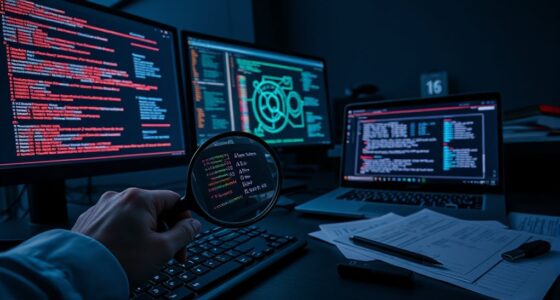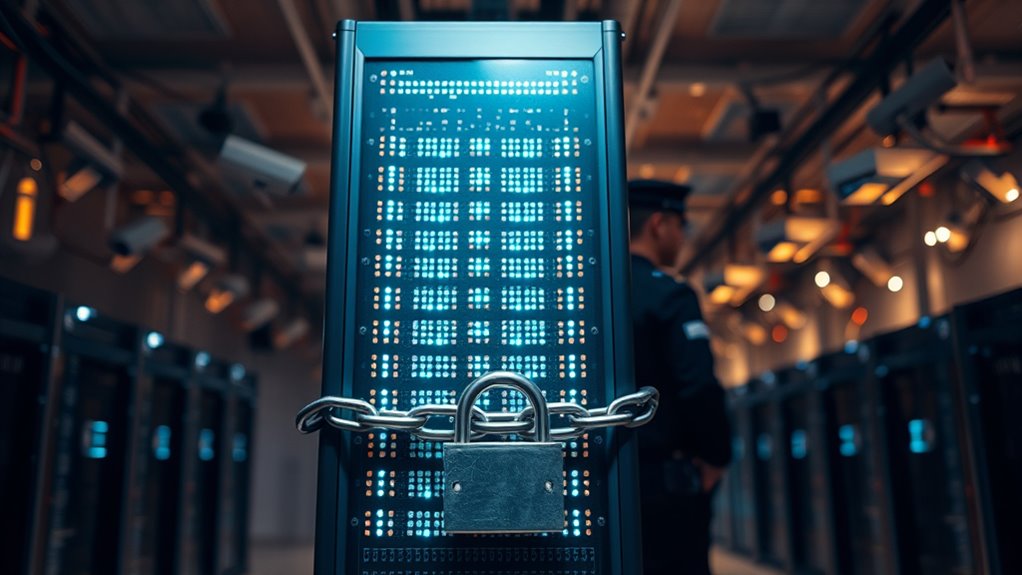

Physical security’s vital for protecting your hardware from unauthorized access and threats. It combines access control measures, like security badges and biometric scans, with environmental safeguards that monitor temperature and humidity. Surveillance systems enhance security by deterring malicious activity and providing essential incident analysis. Regular security audits help identify vulnerabilities and adapt your measures accordingly. Prioritizing physical security alongside cybersecurity guarantees thorough protection of your data. There’s more to explore about the evolving strategies in this domain.
Key Takeaways
- Physical security safeguards sensitive hardware from unauthorized access, complementing cybersecurity measures to protect organizational data assets.
- Access control measures, such as security badges and biometric scans, ensure only authorized personnel can access critical systems.
- Environmental safeguards, including climate control and fire suppression, protect hardware from damage caused by natural hazards.
- Surveillance systems, with strategically placed cameras, deter unauthorized activity and provide evidence for incident analysis.
- Regular security audits help identify vulnerabilities, ensuring that physical security measures adapt to evolving threats effectively.

As cyber threats grow more sophisticated, many people overlook the essential role of physical security in protecting sensitive information. While you might focus on software defenses, the reality is that all the firewalls and antivirus programs in the world won’t help if someone can walk right into your office and access your hardware. Physical security is just as vital, and it starts with robust access control measures. You need to guarantee that only authorized personnel can enter areas containing sensitive data, which often requires a multilayered approach. This can include security badges, biometric scans, or even key codes that limit entry to certain rooms or facilities.
As cyber threats evolve, prioritizing physical security is crucial for safeguarding sensitive information from unauthorized access.
Creating a secure environment goes beyond just restricting access. You should also consider environmental safeguards that protect your hardware from potential threats. Think about factors such as temperature, humidity, and even physical hazards like fire or flooding. If you’re not monitoring these conditions, you run the risk of damaging your equipment and the data stored on it. Investing in proper climate control systems and fire suppression equipment will ensure that your hardware remains safe from both natural and manmade disasters.
Don’t underestimate the importance of surveillance systems, either. High-quality cameras placed strategically throughout your facility can serve as both a deterrent and a means of accountability. If an incident occurs, having video footage can help you understand what happened and take appropriate action. But remember, even the best surveillance systems won’t be effective if your access control measures are weak. You need a well-rounded strategy that combines both physical security systems and digital defenses.
Regular audits of your physical security measures are also essential. They allow you to identify any vulnerabilities that may exist. Perhaps there’s a door that doesn’t lock properly, or maybe someone has been granted access they shouldn’t have. By regularly reviewing your security protocols, you can make necessary adjustments and keep your sensitive information safe. Additionally, incorporating seasonal recommendations for security measures can help adapt to evolving threats throughout the year.

Lenovo V-Series V15 Business Laptop, 15.6" FHD Display, AMD Ryzen 7 7730U, 40GB RAM, 1TB SSD, Numeric Keypad, HDMI, RJ45, Webcam, Wi-Fi, Windows 11 Pro, Black
[High Speed RAM And Enormous Space] 40GB high-bandwidth RAM to smoothly run multiple applications and browser tabs all...
As an affiliate, we earn on qualifying purchases.
Frequently Asked Questions
What Types of Physical Threats Should Businesses Be Aware Of?
You should be aware of several physical threats, including unauthorized access and environmental hazards. Without proper access control, anyone can easily enter your facilities, potentially leading to theft or data breaches. Environmental hazards like floods, fires, and extreme temperatures can damage your hardware and disrupt operations. By implementing strong access control measures and preparing for environmental risks, you can substantially enhance the physical security of your business and protect your valuable assets.
How Can Employees Contribute to Physical Security?
You can be a superhero for your workplace’s physical security! Start by adhering to access control measures, ensuring only authorized personnel enter sensitive areas. Participate in employee training sessions; they’re essential for recognizing potential threats and knowing the right actions to take. By reporting suspicious behavior and securing your workstation, you create a safer environment. Your proactive approach not only protects hardware but fosters a culture of vigilance among your colleagues.
What Are Common Physical Security Breaches?
Common physical security breaches include unauthorized access through weak access control measures, like easily guessed PINs or lost access cards. Environmental safeguards, such as inadequate surveillance or poor lighting, can also create vulnerabilities. You should always guarantee that access controls are robust and regularly updated. Additionally, maintaining environmental safeguards—like alarms and surveillance cameras—will help deter potential breaches and protect sensitive areas from unwanted intrusion, keeping your organization secure.
How Often Should Physical Security Audits Be Conducted?
You should conduct physical security audits at least annually, but quarterly is even better. Regular checks help guarantee access control systems and alarm systems are functioning properly. This frequency allows you to identify vulnerabilities and make necessary adjustments before issues arise. Keep in mind that changes in your environment or operations might require more frequent audits. Staying proactive safeguards your assets and keeps your security measures effective.
What Role Do Surveillance Cameras Play in Physical Security?
Surveillance cameras play a vital role in enhancing physical security. They deter potential intruders and provide evidence during incidents. You should focus on effective camera placement to cover vulnerable areas and blind spots. Using advanced surveillance technology can help you monitor activities in real-time, ensuring a swift response to threats. Regularly reviewing footage can also aid in identifying patterns and improving your overall security strategy, keeping your assets safe and secure.

Lenovo ThinkBook 15 Business Laptop (15.6" FHD Anti-Glare, 16GB RAM, 512GB SSD, AMD Ryzen 7 5825U (> Intel i7-1255U)) Fingerprint, 1080p Webcam, Military Grade, Ethernet, Wi-Fi, Win 11 Pro w/Copilot
INTRODUCING THE THINKBOOK 15 GEN 4 - the perfect commercial laptop that is both budget-friendly and MIL-SPEC tested...
As an affiliate, we earn on qualifying purchases.
Conclusion
Just like a knight guards a castle, ensuring its walls are sturdy and gates are locked, you must protect your hardware from physical threats. Without this vigilance, even the strongest digital defenses can crumble. By taking steps to secure your devices, you create a fortress that keeps intruders at bay, safeguarding your valuable data. Remember, a well-protected castle stands tall against any siege, and so can your cybersecurity strategy with the right physical security measures in place.

Lenovo ThinkBook 16 G7 Business Laptop, 16” FHD+, AMD Ryzen 7 7735HS, 32GB DDR5, 1TB NVMe, WiFi 6E + BT, Backlit KB, Fingerprint Reader, HD Webcam, Win 11 Pro
Lenovo ThinkBook 16 Gen 7 laptop powered by AMD Ryzen 7 7735HS processor (3.20 GHz up to 4.75...
As an affiliate, we earn on qualifying purchases.

Lenovo 16" FHD+ Business Laptop: High-Performance for Programming, Data Analysis & Video Editing, Intel Core i7-13700H, 64GB RAM, 2TB PCIe SSD, Windows 11 Pro, Fingerprint & Backlit Keyboard (Gray)
【Powerful 13th Gen Intel Core i7 Performance】Equipped with the 13th Generation Intel Core i7-13700H processor, featuring a hybrid...
As an affiliate, we earn on qualifying purchases.