
Using a VPN can boost your online privacy by encrypting your data and hiding your real IP address, making you safer from hackers, ISPs, and advertisers. However, it doesn’t guarantee full anonymity, as determined adversaries use techniques like traffic analysis and protocol fingerprinting to detect VPN use. While it’s a strong privacy tool, understanding its limits helps you stay more secure. Keep exploring to learn how you can further protect yourself online.
Key Takeaways
- VPNs mask your IP and encrypt traffic, increasing privacy but not guaranteeing complete anonymity.
- Advanced detection methods like traffic analysis and protocol fingerprinting can identify VPN use.
- VPN providers may log data or share it, potentially compromising your privacy.
- Encryption alone doesn’t prevent sophisticated tracking or traffic analysis by adversaries.
- For true anonymity, combine VPNs with additional privacy tools like Tor and good security practices.
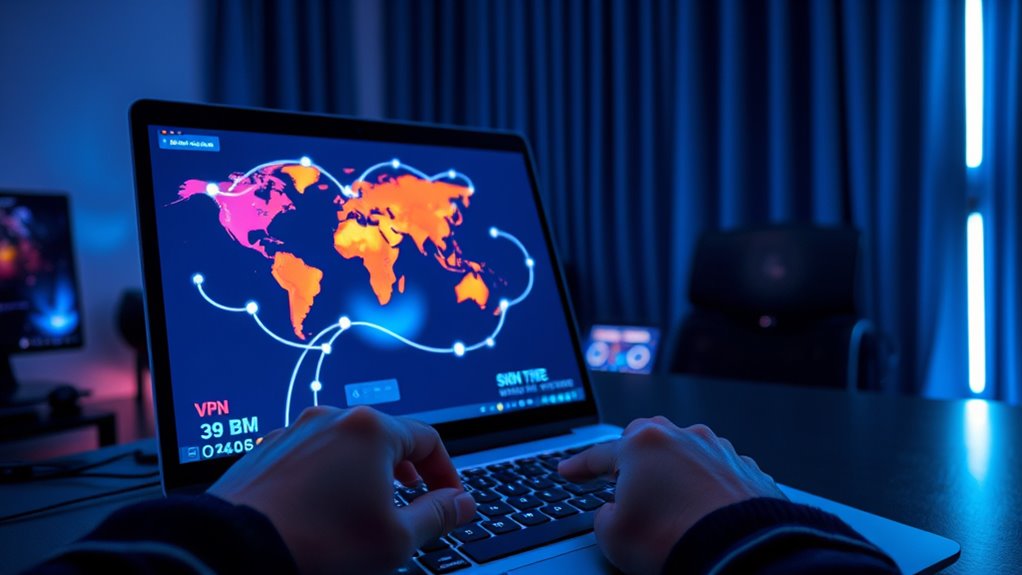
A VPN, or Virtual Private Network, is a tool that encrypts your internet traffic and routes it through a remote server, masking your original IP address and creating a secure connection. This way, your browsing activity appears to originate from the VPN server’s location, helping you stay private and avoid local network monitoring. When you connect to a VPN, your data is encrypted using protocols like OpenVPN, making it difficult for hackers, ISPs, or anyone else to intercept or read your online activity. It also hides your IP address, preventing websites and advertisers from tracking your real location or building detailed profiles based on your browsing habits. Approximately 1.5 billion global VPN users in 2023, representing 31% of all internet users, highlight the widespread reliance on these tools. However, while VPNs offer notable privacy benefits, they’re not foolproof. Recent research shows that novel techniques can unmask 40-45% of VPN users through methods like Canarytoken honeypots, which act like digital traps to detect VPN activity. Traffic analysis, a process where patterns of data flow are examined, can detect about 42% of VPN and Tor connections, revealing user behaviors even when encryption is active. Protocol fingerprinting, which identifies specific VPN protocols, can succeed with over 85% accuracy, especially with popular options like OpenVPN, exposing users who rely on these methods. This means that even with a VPN active, determined adversaries can sometimes identify and track your activity. Understanding VPN protocols can help you choose more secure options and reduce your risk of detection.
Furthermore, many VPN providers log user activity or share data with third parties, risking exposure if their systems are breached. For example, a major breach in May 2023 exposed 360 million records, including IP addresses, logs, and visited sites. Despite the encryption, VPN users often remain vulnerable to sophisticated traffic analysis and protocol fingerprinting. This is why the belief that VPNs guarantee complete anonymity is misleading. About 16% of users doubt their anonymity, even though 84% feel confident, illustrating a disconnect between perception and reality.
Frequently Asked Questions
Can VPNS Prevent All Forms of Online Tracking?
VPNs can’t prevent all forms of online tracking. While they hide your IP address and encrypt your traffic, sophisticated techniques like traffic analysis and protocol fingerprinting can still identify some VPN users. Plus, many VPN providers log data or have security breaches. So, even with a VPN, you might still be tracked through browser fingerprinting, cookies, or other methods. Stay aware of these limitations to better protect your privacy online.
Do VPN Providers Log User Activity Despite Claims of No-Logs?
You might be stunned to learn that some VPN providers actually log your activity despite claims of no-logs policies. While many advertise total privacy, sneaky practices like data retention or sharing with third parties still happen behind the scenes. Always scrutinize their policies, as even a tiny logging detail can compromise your anonymity. Don’t blindly trust promises—research and choose providers with verified no-log commitments to truly protect your online activity.
How Effective Are VPNS Against Government Surveillance?
VPNs can offer some protection against government surveillance, but they’re not foolproof. They encrypt your traffic and hide your IP, making it harder for governments to track you. However, sophisticated analysis like traffic fingerprinting and protocol detection can still reveal your activity, especially if your VPN keeps logs or has weaknesses. Use a reputable provider with strict no-log policies and strong encryption to maximize your privacy, but stay aware of potential limits.
What Are the Risks of Using Free VPN Services?
Using free VPN services poses significant risks. You might unknowingly expose your personal data since many free VPNs log or sell user information, risking privacy breaches. They often have weaker encryption, making you vulnerable to hacking or surveillance. Free VPNs may also have slower speeds, limited server options, and unreliable connections. Additionally, some may contain malware or be used for malicious activities, compromising your security rather than protecting it.
Can VPNS Protect Me From Malware and Cyberattacks?
Think a VPN can shield you from malware and cyberattacks? Not exactly. VPNs mainly encrypt your traffic and hide your IP, making it harder for hackers to target you directly. But they don’t scan for malware or block phishing sites. To stay safe, combine a VPN with strong antivirus software, update your systems regularly, and be cautious about suspicious links. Relying solely on a VPN leaves gaps in your protection.
Conclusion
While using a VPN can boost your online safety, remember that it doesn’t make you completely anonymous. Surprisingly, a recent survey found that over 70% of VPN users still experience some level of data tracking. So, enjoy the added protection but stay cautious—combine your VPN with other good habits like strong passwords and regular updates. Staying informed is your best defense in the digital world.