
While progress has been made, many vulnerabilities remain in the power grid’s defenses against cyberattacks. With advanced threats like malware, ransomware, and false data attacks, it’s clear that current measures are not foolproof. Utility companies are adopting layered strategies, standards, and emerging technologies to improve security, but the evolving nature of threats keeps us on edge. To understand how prepared we really are—and what’s being done to stay ahead—keep exploring the details.
Key Takeaways
- Many utilities follow cybersecurity standards like NIST and NERC CIP, improving grid resilience.
- Advanced detection tools and AI help identify threats in real-time, reducing response times.
- Past incidents, such as Ukraine’s 2016 attack, highlight ongoing vulnerabilities in critical infrastructure.
- Layered defenses, including network segmentation and physical security, are crucial for preventing widespread damage.
- Despite progress, evolving threats require continuous updates and innovations to ensure preparedness.
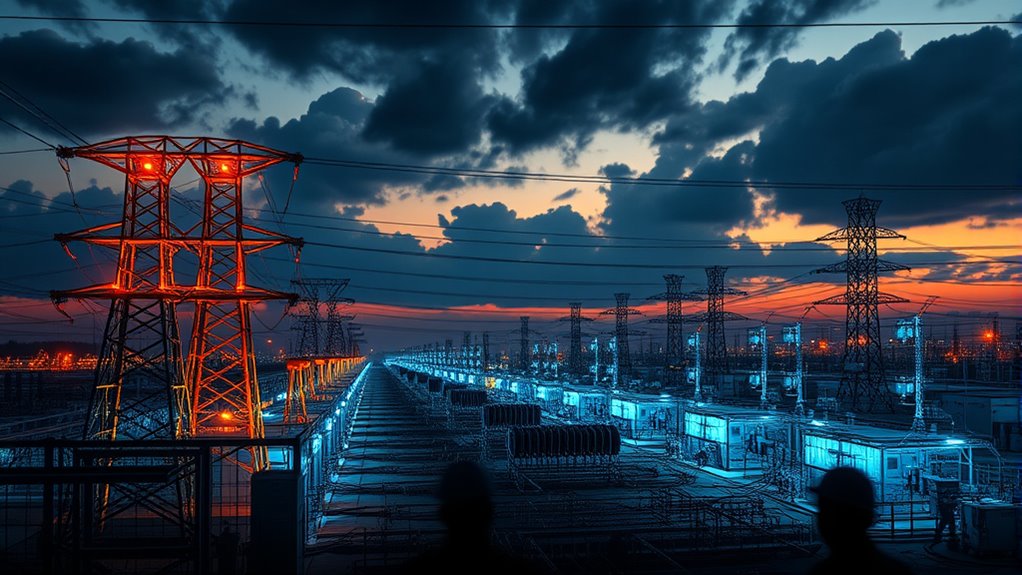
Cyberattacks on the power grid pose a significant threat to national security and public safety, as malicious actors target critical infrastructure to disrupt electricity supply. Past incidents, like the 2016 Ukraine power grid attack, demonstrate how malware such as CRASHOVERRIDE can disable Siemens SIPROTEC devices by manipulating firmware in serial-to-Ethernet components. This disruption affects essential functions like protection and automation during outages. In the U.S., ICS-CERT responded to over 100 cyber incidents in the first half of FY2015, with the energy sector leading all others, highlighting its vulnerability. The National Security Agency has also reported intrusions into industrial control systems controlling U.S. power grids, some of which succeeded in rendering devices non-functional via denial-of-service attacks, even without full network access. Cyberattack techniques continue to evolve, increasing the complexity and difficulty of defending these critical systems. You should be aware that the key threats involve denial-of-service attacks that manipulate devices to make parts of the grid non-operational. Ransomware, distributed denial-of-service (DDoS), phishing, and insider threats target industrial control system (ICS) and SCADA networks, which control grid functions. The interconnected nature of smart grids, while increasing efficiency, also introduces vulnerabilities that malicious actors exploit to inject malware or spread false information, even with limited access. Intrusions into control systems can be carried out by sophisticated adversaries capable of taking down grid controls, making malware injections and false data attacks a persistent concern. Enhancing the cybersecurity of these systems remains critical to prevent catastrophic failures.
Cyberattacks threaten power grid security, with malware and denial-of-service attacks disrupting critical infrastructure and essential services.
Despite these risks, the energy sector has made significant progress in preparedness. About 65% of utilities follow the NIST Cybersecurity Framework, and 78% use AI and machine learning for real-time threat detection, accelerating response times. The implementation of standards such as NERC CIP and the EU NIS Directive has reduced severe breaches by roughly 30% over the past two years. Advanced monitoring tools, like intrusion detection and prevention systems, have cut successful breaches by more than half, helping utilities to identify vulnerabilities early and respond swiftly.
You can bolster your defense with layered security measures. Intrusion detection systems monitor network traffic for suspicious activity, while intrusion prevention systems block attacks before they cause damage. Segmentation, firewalls, and software-defined networking limit malware spread and detect unauthorized traffic in real time. Physical protections, like fences, cameras, and access controls, add another layer of security, especially at substations and critical infrastructure. Regular asset discovery, role-based access controls, and continuous configuration monitoring help maintain a resilient system.
In terms of compliance, standards like NERC CIP and the NIST Cybersecurity Framework set voluntary and mandatory guidelines to manage risks. These include physical security, cyber hygiene, and risk assessments, which are vital for minimizing vulnerabilities. Future improvements, such as AI-based anomaly detection and hardware attestation, promise to further reduce cyber-induced outages. Ultimately, your ability to integrate these layered, evolving defenses determines whether the power grid can withstand sophisticated threats or if we’re still vulnerable to the worst-case scenario.
Frequently Asked Questions
How Likely Is a Major Power Grid Cyberattack in the Near Future?
A major power grid cyberattack is increasingly likely, given recent threats and vulnerabilities. Cybercriminals and nation-states target ICS and SCADA systems using malware, DDoS, and insider threats. While many utilities adopt advanced defenses like AI detection and network segmentation, the interconnected nature of smart grids and evolving tactics mean we can’t fully eliminate risks. Staying vigilant, updating security measures, and adhering to standards are vital to reduce the threat.
What Are the Earliest Signs of a Cyber Intrusion in the Grid?
You’ll notice unusual activity in your monitoring systems, like unexpected traffic spikes or unauthorized access attempts. You might see anomalies in device behavior, such as protection systems activating unexpectedly or firmware changes. Alerts from intrusion detection or prevention systems indicate suspicious patterns. Keep an eye on real-time data analysis tools, which can spot deviations early. Quick response to these signs helps prevent potential damage and keeps the grid secure.
How Do International Policies Influence National Grid Cybersecurity?
International policies shape your national grid cybersecurity by setting standards and encouraging cooperation. While these regulations push you to adopt best practices, they can also create gaps if not uniformly enforced. You benefit from frameworks like NIST and NERC, which improve defenses, but challenges remain in global coordination. Ultimately, these policies influence your approach, balancing security enhancements with the complexity of cross-border collaboration and evolving threats.
Can Existing Defenses Fully Prevent Sophisticated Malware Attacks?
Existing defenses substantially reduce the risk of sophisticated malware attacks, but they can’t fully prevent them. You need layered security measures like intrusion detection, network segmentation, and AI-driven anomaly detection. Staying updated on emerging threats and continuously improving your cybersecurity protocols is vital. Remember, cybercriminals constantly evolve their tactics, so your defenses must adapt too. Vigilance, rapid response, and proactive security practices are essential to mitigate advanced malware threats effectively.
What Is the Role of Public Awareness in Grid Cybersecurity Resilience?
Public awareness plays a crucial role in grid cybersecurity resilience by empowering you to recognize phishing scams, report suspicious activity, and follow best practices. When you stay informed about cyber threats, you help create a culture of vigilance that supports stronger defenses. Your proactive steps, like updating passwords and avoiding risky links, reduce vulnerabilities and contribute to a more resilient power grid for everyone.
Conclusion
You should know that a recent report found that 70% of power grid cyberattacks go undetected for days, leaving critical infrastructure vulnerable. This highlights how unprepared we might be for a major attack. While technology evolves, so do hackers’ tactics, making it essential for you to stay informed and support stronger safeguards. Preparing now can prevent catastrophic outages and protect millions. Don’t wait—your awareness could make all the difference in defending our power supply.