Biometric technology uses advanced algorithms and sensors to recognize your unique traits, like fingerprints and facial features. When you first set it up, your device captures and securely stores these patterns. Fingerprint scanners detect ridges and valleys, while Face ID analyzes facial measurements. This process happens quickly to grant you instant access, making security seamless. Curious about how these methods are evolving or their implications for privacy? There’s more to explore on this fascinating topic.
Key Takeaways
- Fingerprint scanners use capacitive sensors to detect unique ridge and valley patterns for authentication.
- Facial recognition technology analyzes distinct facial features, such as eye distance and jawline shape, using machine learning.
- Biometric data is converted into secure digital representations during setup and stored on devices for quick access.
- Real-time analysis compares live data with stored biometric information to enable rapid device unlocking.
- The integration of biometric technology enhances security and streamlines processes in various sectors, including hospitality.
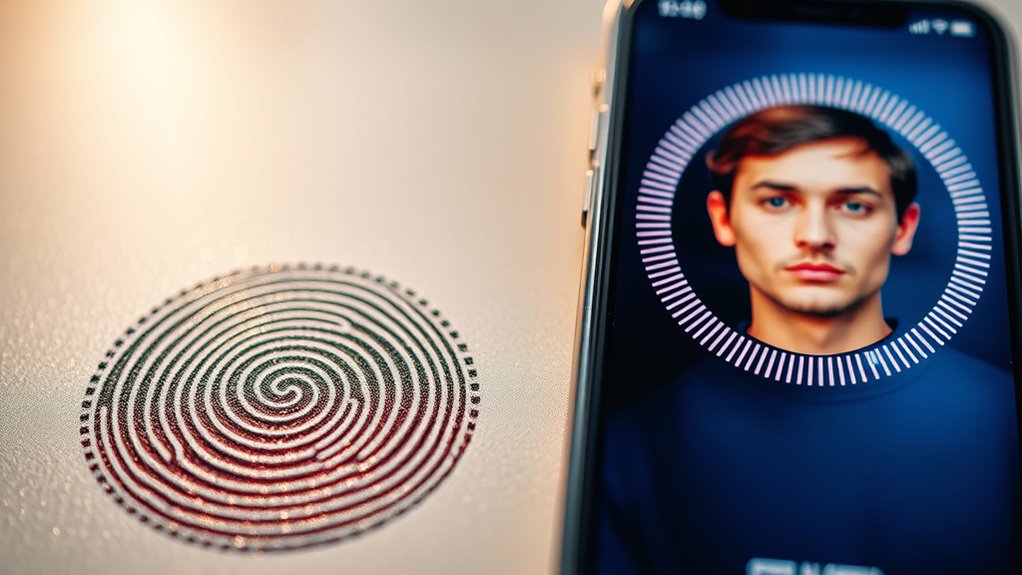
Have you ever wondered how your smartphone recognizes your face or fingerprints? It all boils down to a fascinating blend of biometric technology and sophisticated algorithms that work seamlessly together. When you set up your device, it captures unique features of your face or the intricate patterns of your fingerprints. This data is then converted into a digital representation, which is stored securely on your device. Every time you access your phone, the system performs a quick analysis, comparing what it sees with the stored data to grant or deny access.
As technological advancements continue to evolve, so do the methods employed to enhance security through biometric systems. For instance, facial recognition technology uses machine learning to analyze various data points, such as the distance between your eyes or the shape of your jawline. Similarly, fingerprint scanners utilize capacitive sensors that detect the unique ridges and valleys of your fingerprint. These processes happen in seconds, allowing you to access your device quickly and effortlessly. Additionally, many hotels, such as those in Orlando, have started using biometric technology to enhance guest security and streamline check-in processes.
However, with these advancements come privacy concerns that can’t be overlooked. As we increasingly rely on biometric data for security, questions arise about how this sensitive information is stored and used. Unlike passwords, which can be changed, your biometric data is permanent. If hackers gain access to this information, they could compromise your security in ways that are tough to rectify. This leads to a pressing need for robust security measures to protect your biometric information and guarantee it isn’t misused.
Moreover, as more companies integrate biometrics into their products, the conversation about privacy intensifies. Are we sacrificing our personal privacy for the sake of convenience? While biometric technology offers a streamlined user experience, it’s essential to remain vigilant about where and how your data is being used. You should always look for devices that prioritize security, employing encryption and other protective measures to keep your biometric data safe.

Lenovo V-Series V15 Business Laptop, 15.6" FHD Display, AMD Ryzen 7 7730U, 40GB RAM, 1TB SSD, Numeric Keypad, HDMI, RJ45, Webcam, Wi-Fi, Windows 11 Pro, Black
[High Speed RAM And Enormous Space] 40GB high-bandwidth RAM to smoothly run multiple applications and browser tabs all...
As an affiliate, we earn on qualifying purchases.
Frequently Asked Questions
Are Biometric Systems Secure Against Hacking and Spoofing?
Biometric systems can be secure against hacking and spoofing, but it’s not guaranteed. They often use liveness detection to ensure the user is present, which helps prevent spoofing attempts. However, hackers continually develop techniques to bypass these systems. Encryption methods protect the stored biometric data, adding an extra layer of security. To enhance safety, always choose systems with robust liveness detection and strong encryption to mitigate risks effectively.
How Do Biometric Systems Compare in Accuracy?
Biometric systems vary in accuracy, with facial recognition generally offering a broader range of identification, but it’s influenced by lighting and angles. Fingerprint sensors, on the other hand, provide a high level of precision since they rely on unique patterns. While both methods have their strengths, fingerprint sensors tend to have lower false rejection rates. Ultimately, your choice might depend on the specific application and environment you’re working in.
What Happens if My Biometric Data Is Compromised?
If your biometric data gets compromised, it’s a serious issue. You’re at risk of biometric theft, where hackers could misuse your fingerprints or face data. Unlike passwords, you can’t change your biometrics, making recovery difficult. That’s why data encryption is essential; it helps protect your information from unauthorized access. You should monitor accounts closely and consider additional security measures to safeguard your identity and personal data moving forward.
Can Biometric Technology Be Used for Identity Verification Remotely?
Yes, biometric technology can be used for identity verification remotely. Imagine opening your phone with a fingerprint while sipping coffee at a café; it’s that seamless. With remote enrollment, you can register your biometrics anywhere, and cross device verification guarantees you’re recognized across multiple platforms. This makes transactions and logins quicker and more secure, letting you focus on what matters while keeping your identity safe. It’s a modern solution for today’s digital world.
Are There Privacy Concerns With Biometric Data Storage?
Yes, there are privacy concerns with biometric data storage. When you store biometrics, you expose yourself to potential privacy risks, like data breaches or unauthorized access. If someone gains access to your fingerprint or facial recognition data, they could impersonate you. It’s essential to prioritize data protection measures, ensuring that any biometric data you share is encrypted and securely stored. Always be aware of how your information is handled to safeguard your privacy.

Amazon eero Pro 7 tri-band mesh Wi-Fi 7 router (newest model) - Supports internet plans up to 5 Gbps, Coverage up to 6,000 sq. ft., 3-pack
WIFI AT THE SPEED OF LIFE - eero Pro 7 brings next-generation speed and reliability to home and...
As an affiliate, we earn on qualifying purchases.
Conclusion
In a world where you thought passwords were secure, biometric technology swoops in to save the day. Ironically, you’re now trusting your face and fingerprints—two things that can’t be changed—more than a simple combination of letters and numbers. As you access your devices with just a glance or a touch, it’s both liberating and a bit unnerving to realize you’ve traded one form of vulnerability for another. Who knew security could feel so personal?

Lenovo ThinkBook 15 Business Laptop (15.6" FHD Anti-Glare, 16GB RAM, 512GB SSD, AMD Ryzen 7 5825U (> Intel i7-1255U)) Fingerprint, 1080p Webcam, Military Grade, Ethernet, Wi-Fi, Win 11 Pro w/Copilot
INTRODUCING THE THINKBOOK 15 GEN 4 - the perfect commercial laptop that is both budget-friendly and MIL-SPEC tested...
As an affiliate, we earn on qualifying purchases.

Lenovo ThinkBook 16 G7 Business Laptop, 16” FHD+, AMD Ryzen 7 7735HS, 32GB DDR5, 1TB NVMe, WiFi 6E + BT, Backlit KB, Fingerprint Reader, HD Webcam, Win 11 Pro
Lenovo ThinkBook 16 Gen 7 laptop powered by AMD Ryzen 7 7735HS processor (3.20 GHz up to 4.75...
As an affiliate, we earn on qualifying purchases.