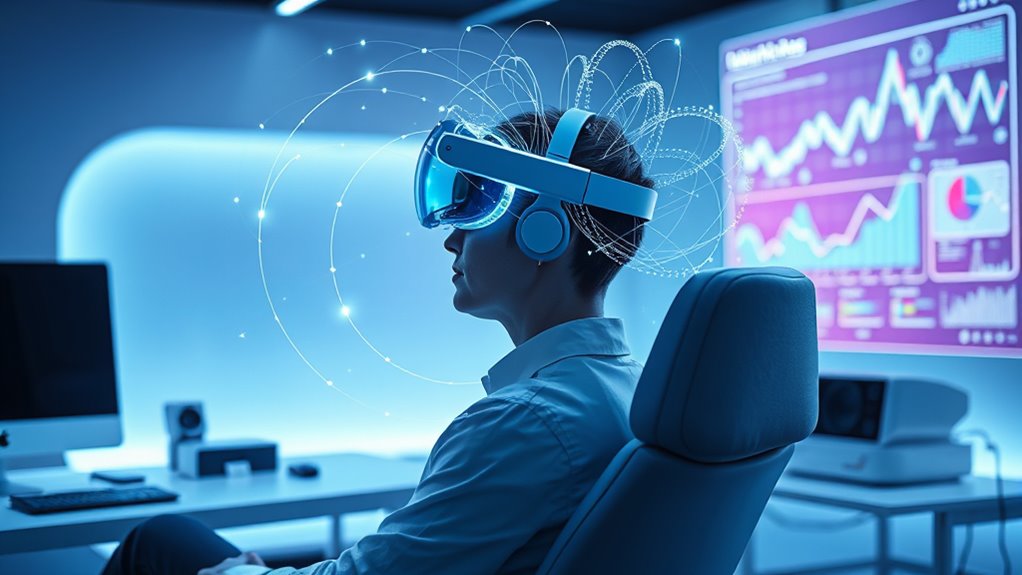

Brain-Computer Interfaces (BCIs) are changing how you connect with technology. You can control computers and smartphones using just your thoughts, making life easier, especially for those with mobility challenges. BCIs enhance gaming experiences and may allow for direct thought-to-device communication. However, there are important ethical, privacy, and accessibility concerns to weigh. Understand the implications and possibilities of BCIs and how they shape your interaction with technology as you explore further.
Key Takeaways
- BCIs enable direct control of computers and devices through neural commands, transforming user interaction with technology.
- They enhance mobility for individuals with impairments, offering greater independence and improved quality of life.
- Ethical considerations include protecting neural data from unauthorized access and ensuring user consent for data use.
- BCIs may create societal divides, necessitating equitable access to prevent privilege gaps in technology use.
- Psychological impacts of BCIs require careful consideration to maintain authentic human experiences and interactions.
As technology evolves, brain-computer interfaces (BCIs) are transforming how you interact with the digital world. Imagine controlling a computer or smartphone just by thinking about it. BCIs work by interpreting your brain’s neural signals and translating them into commands for devices. This neural signal processing opens up a domain of possibilities, from helping individuals with mobility impairments to enhancing gaming experiences. It’s a fascinating leap into a future where your thoughts can directly influence the digital universe.
However, as you explore this revolutionary technology, it’s essential to address the ethical implications surrounding BCIs. You might wonder who gets access to these advancements and how they affect privacy and security. For instance, if a device can read your thoughts, what safeguards are in place to prevent misuse? The potential for abuse is a serious concern, whether it involves unauthorized access to your thoughts or the manipulation of memories.
Furthermore, think about the implications of neural signal processing concerning data ownership. If a company develops a BCI that can extract and analyze your neural data, do you really own your thoughts? This question of ownership and consent is crucial as you navigate this new landscape. It’s important to guarantee that individuals have control over their neural data, preventing exploitation or commercialization without their explicit permission.
Additionally, consider the impact of BCIs on social dynamics. Will those who have access to advanced BCIs become privileged, creating a divide between them and others? As you ponder this, remember that equitable access to technology is key to fostering an inclusive society. You wouldn’t want a future where only a select few can enhance their cognitive abilities or communicate effortlessly through thought alone.
Lastly, it’s important to think about the emotional and psychological implications of BCIs. Relying heavily on technology to communicate or interact with the world could lead to disconnection from genuine human experiences. Balancing the benefits of BCIs with the need for authentic human interaction is something we all need to reflect on. Additionally, as advancements in BCIs continue, we must also consider the role of AI’s role in cybersecurity to ensure these technologies are developed with robust safety measures in place.
Frequently Asked Questions
How Do Brain-Computer Interfaces Affect Mental Health?
Brain-computer interfaces can positively affect your mental health by promoting neuroplasticity improvement, which helps your brain adapt and heal. However, they also come with mental health risks, such as dependency on technology and potential anxiety from over-reliance. it is crucial to balance their use while being aware of these risks. By understanding both the benefits and drawbacks, you can make informed choices about integrating this technology into your mental health journey.
Are There Any Ethical Concerns With Brain-Computer Interfaces?
Yes, there are significant ethical concerns with brain-computer interfaces. You’ve got to contemplate privacy concerns; these technologies might collect sensitive data about your thoughts and feelings. Informed consent is also vital—can you fully understand what you’re agreeing to when it comes to such advanced tech? As you explore these interfaces, keep these issues in mind to guarantee your rights and autonomy are respected. It’s fundamental to navigate this landscape thoughtfully.
What Industries Will Benefit Most From Brain-Computer Interfaces?
You’ll see the healthcare and entertainment industries benefit most from brain-computer interfaces. In healthcare, neural enhancement can revolutionize treatment for neurological disorders, improving patients’ quality of life. Meanwhile, consumer applications in gaming and virtual reality will create immersive experiences that engage users like never before. As these technologies advance, expect to witness substantial growth and innovation in how you interact with both medical solutions and entertainment platforms.
Can Brain-Computer Interfaces Enhance Physical Abilities?
Yes, brain-computer interfaces can enhance your physical abilities by improving muscle activation and motor control. These technologies can help you translate thoughts into actions, enabling precise movements. For instance, if you’re recovering from an injury, BCIs can assist in regaining strength and coordination by stimulating the right muscles. With ongoing advancements, you could experience heightened dexterity and responsiveness, making everyday tasks easier and more efficient. Your potential to enhance physical abilities is truly exciting!
What Is the Cost of Developing Brain-Computer Interface Technology?
Developing brain-computer interface technology can cost upwards of $1 million for initial research and prototypes. You’ll face significant funding challenges, as many projects struggle to secure investment despite their potential. Cost estimation varies widely, depending on complexity and intended use. As you dive deeper into this field, keep in mind that while the financial barriers are high, the rewards could revolutionize how we interact with technology and enhance human capabilities.
Conclusion
As we stand on the brink of a new era in human-technology interaction, brain-computer interfaces promise to revolutionize the way we connect with machines. Imagine effortlessly controlling devices with just your thoughts—how transformative would that be for everyday life? The possibilities are endless, from enhancing communication for those with disabilities to opening new domains of creativity. Embracing this technology could redefine our relationship with the digital world, making it more intuitive and accessible than ever before.