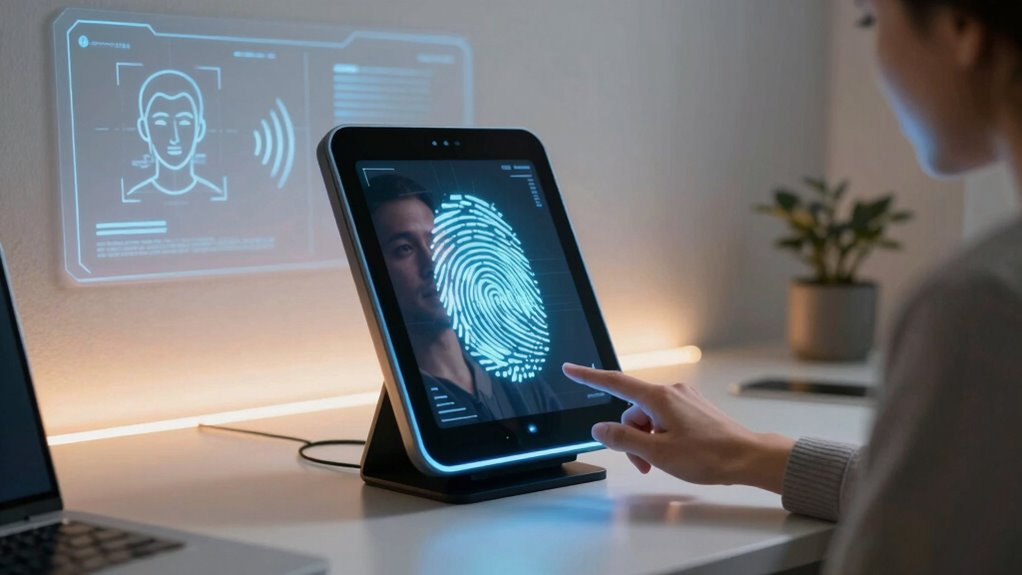

The future of passwordless login is happening faster than you think, thanks to advancements in biometric authentication and decentralized identity technologies. You’ll soon verify your identity using fingerprints, facial recognition, or iris scans, making access faster and more secure. These methods eliminate the vulnerabilities of traditional passwords and give you more control over your data. To discover how these innovations will change your online security, keep exploring what’s coming next.

Get privacy and security gear delivered free with Prime
- Fast, free delivery on millions of items
- Prime Video, Amazon Music and more included
- Member-only deals all year
Key Takeaways
- Biometric authentication offers fast, accurate, and more secure login methods, reducing reliance on traditional passwords.
- Decentralized identity solutions empower users to control their digital credentials securely without centralized servers.
- Advances in biometric tech make spoofing difficult, enhancing overall security for online and physical access.
- Transitioning to passwordless systems improves user convenience and significantly lowers risks of credential theft.
- Widespread adoption of these technologies will transform digital identity management, making passwordless login the new standard.
As technology evolves, traditional password-based login methods are becoming increasingly outdated and vulnerable to security breaches. You’re likely familiar with the frustrations and risks of managing multiple passwords—remembering complex combinations, resetting forgotten codes, and worrying about hackers stealing your information. That’s why the shift toward passwordless authentication is gaining momentum. Instead of relying on a single, often weak, password, you’ll soon be able to verify your identity through more secure and streamlined methods like biometric authentication. This technology uses unique biological identifiers—your fingerprint, facial features, or even iris patterns—to confirm who you are quickly and accurately. It’s fast, convenient, and significantly harder for cybercriminals to spoof or duplicate, making your online security much stronger.
Beyond biometric authentication, a key component driving the future of passwordless login is decentralized identity. Unlike traditional systems that store your data on centralized servers vulnerable to breaches, decentralized identity puts control directly into your hands. Using blockchain or other distributed ledger technologies, your digital identity becomes a portable, tamper-proof asset that you manage securely. This means you’re not at the mercy of a single company’s data security practices; instead, you hold the keys to your information. When you want to access an online service, you can authenticate yourself through cryptographic proofs stored locally or on a secure device, rather than submitting a password that can be intercepted or stolen. decentralized identity enhances user privacy and security by giving individuals more control over their personal data. Additionally, these systems often incorporate secure storage methods that further protect user credentials from unauthorized access.
The combination of biometric authentication and decentralized identity paves the way for a future where logging in is seamless, private, and more secure than ever. Imagine walking into a building, and your face is recognized by a camera, granting you access without ever needing a key or a password. Or, when you log into your bank account from your smartphone, your fingerprint confirms your identity instantly, without the hassle of remembering or typing a password. This level of convenience doesn’t compromise security; instead, it enhances it by eliminating the weak links that passwords often create. Plus, with decentralized identity, you retain full control over your credentials, reducing the risk of identity theft or data breaches.
In essence, the future of passwordless login isn’t just about replacing passwords—it’s about transforming how you authenticate and manage your digital identity altogether. With advancements in biometric authentication and decentralized identity, your online interactions will become faster, safer, and more private. As these technologies mature and become more widespread, you’ll find that logging in will be less of a chore and more of a seamless part of your digital life.
As an affiliate, we earn on qualifying purchases.
Frequently Asked Questions
How Secure Are Passwordless Login Methods Compared to Traditional Passwords?
Passwordless login methods are generally more secure than traditional passwords because they rely on stronger user verification, like biometrics or hardware tokens, rather than easily compromised passwords. They enhance password strength by eliminating weak or reused passwords, reducing the risk of breaches. With multi-factor authentication, passwordless options provide an added layer of security, making unauthorized access much harder compared to traditional methods.
What Devices Are Compatible With Upcoming Passwordless Authentication Technologies?
You’ll find that most modern smartphones, tablets, and laptops are compatible with upcoming passwordless authentication technologies. Device compatibility is improving rapidly, with biometric standards like fingerprint scanners and facial recognition becoming widespread. This means you won’t need to worry about switching devices or losing access. As standards evolve, even wearables and IoT devices will support seamless, secure biometric authentication, making your digital life more convenient and protected.
Can Passwordless Login Be Integrated With Existing Security Systems?
Yes, you can integrate passwordless login with existing security systems. It enhances multi-factor security by combining biometrics or device-based authentication with your current password management tools. This integration strengthens your defenses, making unauthorized access harder. You simply need to guarantee compatibility between the new passwordless methods and your existing security infrastructure, which many providers now support, creating a seamless, more secure user experience.
What Are the Potential Privacy Concerns With Biometric Authentication?
Imagine your fingerprints or retina scans becoming open books for hackers—biometric data is incredibly personal. You might worry about this sensitive info being stolen or misused. To protect yourself, data encryption is essential, scrambling your biometric info, and user consent must be clear, ensuring you’re in control of how your data’s shared. Without these safeguards, privacy concerns could turn your biometric details into vulnerabilities instead of protections.
How Will Passwordless Login Impact User Convenience and Accessibility?
Passwordless login considerably boosts your user experience by making access faster and simpler. With biometric or device-based authentication, you won’t need to remember complex passwords, reducing frustration. It also improves accessibility, allowing users with disabilities or difficulties in typing to effortlessly log in. Overall, this shift makes digital interactions more inclusive and convenient, ensuring everyone can access services smoothly without compromising security or usability.
facial recognition security device
As an affiliate, we earn on qualifying purchases.
As an affiliate, we earn on qualifying purchases.
Conclusion
Soon, the door to your digital world will swing open with the ease of a gentle breeze, no keys or passwords needed. As technology advances, passwordless login becomes the shining star guiding us through a safer, simpler future. Imagine a world where your identity flows effortlessly, like a river carving its path. Embrace this new horizon, where security and convenience dance together, and step confidently into a future where passwords are just a distant memory.
iris scan biometric authentication
As an affiliate, we earn on qualifying purchases.
As an affiliate, we earn on qualifying purchases.
As an affiliate, we earn on qualifying purchases.
Halloween Picks
halloween
As an affiliate, we earn on qualifying purchases.