TL;DR

Get privacy and security gear delivered free with Prime
- Fast, free delivery on millions of items
- Prime Video, Amazon Music and more included
- Member-only deals all year
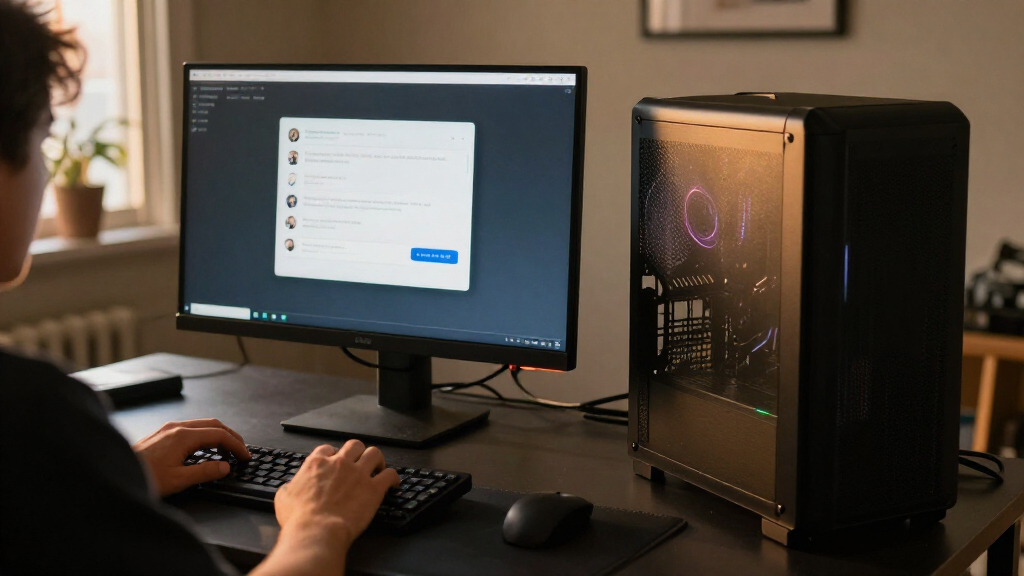
AtomicChat has published an edited, compressed build of DeepSeek-V4.1-Flash-1017 and says it can run on a PC with a 12GB GPU, provided the system has substantial RAM and storage. Its reported drop in JailbreakBench refusals has not been independently replicated, and the edit removes refusals across topics rather than distinguishing harmful requests from political ones.
AtomicChat has published a refusal-edited version of DeepSeek-V4.1-Flash-1017, saying the compressed model can run locally on a PC with a single 12GB graphics card. The publisher also reports that the build’s refusal rate on a safety test fell from 85.2% to 0.0%, but those results have not been independently replicated, and the hardware claim comes with substantial memory and storage requirements.
The repository, listed on Hugging Face as DeepSeek-V4.1-Flash-1017-Uncensored-GSQ-RCO-GGUF, combines DeepSeek’s open model with compression work from ISTA-DASLab at the Institute of Science and Technology Austria, then applies AtomicChat’s refusal-removal edit. The compression methods are Gumbel-Softmax Quantization and a per-tensor bit budget. The lab’s work makes the large model files more manageable; it does not itself remove safety refusals.
AtomicChat says the model needs 46 to 64GB of system RAM and about 250GB of downloads, and runs at roughly 5 to 10 tokens per second in the developers’ tests. Those figures are publisher-reported, not independent performance measurements. AtomicChat also reports a change from 85.2% to 0.0% refusals on JailbreakBench while reasoning scores held. Its card acknowledges that the refusal classifier checks the start of an answer, so a refusal later in the response can be counted as an answer.
The build’s own description says the edit removes refusals across topics rather than preserving some categories and removing others. AtomicChat says large expert blocks remain as supplied by ISTA-DASLab and that only a few shared model parts were changed; outside verification of those details is not reported. The repository is available without access gating and is MIT-licensed, according to the page. As of November 3, it showed 30,284 downloads in the past month and 221 likes.
Local Access Shifts Safety Responsibilities
A model that can run offline on a desktop offers users more control over where prompts and outputs are processed. That can matter for privacy, and it may reduce reliance on a hosted service’s filters. But local operation also means an organization’s usual gateway, logging and policy controls may not see requests made through a separately installed model. For businesses, that creates a potential shadow AI problem: use outside approved systems can be hard to monitor.
Removing refusal behavior also changes the model’s safeguards, not just its availability. The publisher says refusals across topics are removed together, so the build does not draw a line between harmful requests and political or other sensitive topics. The source says some earlier DeepSeek versions were found by U.S. government evaluators to carry Chinese Communist Party censorship. Whether this edit changes political bias or the factual reliability of answers has not been measured in the material provided. An absence of refusals is not evidence of neutrality or accuracy.
The source also notes that obligations under the EU AI Act depend on how a system is used, not simply on who modified its refusal behavior. Users and organizations therefore cannot assume that a downloaded model’s open license settles questions about lawful use, risk controls or accountability.
Products Worth Considering

Samsung 27-Inch Odyssey OLED G5 QHD Gaming Monitor

Samsung Odyssey G4 25-inch FHD Gaming Monitor

LG UltraGear 34GX90SA-W 34-inch WQHD Curved OLED Gaming Monitor
As an affiliate, we earn on qualifying purchases.
Three Projects Behind the Build
DeepSeek released V4.1-Flash on September 10, 2026, followed by V4.1-Flash-1017 on October 17, according to the source. DeepSeek described the update as “a Pareto improvement in performance and cost.” Its model card lists an MIT license and, according to the source, does not include a safety section or acceptable-use policy. The model’s weights and subsequent versions have been made available through model repositories.
The compressed files rely on work by ISTA-DASLab, whose methods reduce the storage and memory burden. A free hobby engine called Strata is used to run the compressed model with a 12GB GPU, while much of the model is held in system memory. AtomicChat then applies the refusal-removal edit. This is distinct from the compression work: one makes the model easier to run on limited hardware, while the other changes how it responds to requests.
Refusal-removal techniques are not new. The source cites research published in 2024 that described refusal behavior as associated with a single direction in a model, and says similar “abliterated” models have since become common. Hugging Face’s tag filter listed 12,613 models with that tag on November 3, 2026, according to the source. The reported development is the combination of that kind of edit with a model of this size and a route to running it on consumer-class graphics hardware.
““The edit removes refusals across topics; it does not keep a narrower set of them.””
— AtomicChat’s model card
Performance and Bias Still Unverified
The main performance and safety figures remain self-reported by the publishers. The supplied material does not describe independent replication of the 85.2% to 0.0% JailbreakBench result, retained reasoning scores, hardware performance, or the claim that model components were preserved byte for byte. The stated test method also has a limitation identified by AtomicChat: a refusal later in an answer may not be detected.
It is not clear whether removing refusal behavior changes the model’s political framing, its accuracy, or its tendency to produce other unsafe outputs. The source says those effects have not been measured. Nor does the available information establish how the model performs across different PCs, what level of setup expertise is needed, or whether the reported speed is typical outside the developers’ tests.
Independent Tests Are the Next Check
The immediate next step for readers is independent evaluation of the repository’s claims: safety tests using a clearly described method, checks of the model files and edits, and performance measurements on varied systems. Until those results are available, the refusal figures and hardware performance should be treated as developer-reported claims, not established benchmarks.
Organizations considering local use will also need to decide whether installations fall within their approved AI controls, how they will track use, and what restrictions apply to staff. The source provides no announced independent audit, product release milestone or scheduled follow-up. Further testing or updates to the repository may clarify those points, but their timing is not stated.
Key Questions
What has AtomicChat published?
It published a compressed, refusal-edited version of DeepSeek-V4.1-Flash-1017 on Hugging Face. The build combines DeepSeek’s model, compression methods from ISTA-DASLab and AtomicChat’s edit.
Can it really run with a 12GB graphics card?
AtomicChat and the compression project say it can run with a single 12GB GPU, using 46 to 64GB of system RAM and about 250GB of downloads. The reported speed is 5 to 10 tokens per second in the developers’ tests; independent testing is not cited.
Has the zero-refusal result been verified independently?
No independent replication is described in the source. The change from 85.2% to 0.0% on JailbreakBench is AtomicChat’s reported result, and the publisher notes that its classifier can miss refusals that appear later in an answer.
Does “uncensored” mean the model is politically neutral?
No. The edit is described as removing refusals across topics, but the effect on political framing and bias has not been measured. Removing a refusal does not establish that an answer is neutral or accurate.
What should organizations watch for?
A locally run model may operate outside an organization’s usual AI gateway, logging and policy controls. Businesses should assess how any use is monitored and governed; the source notes that regulatory responsibilities depend on how a model is used.
Source: Thorsten Meyer AI