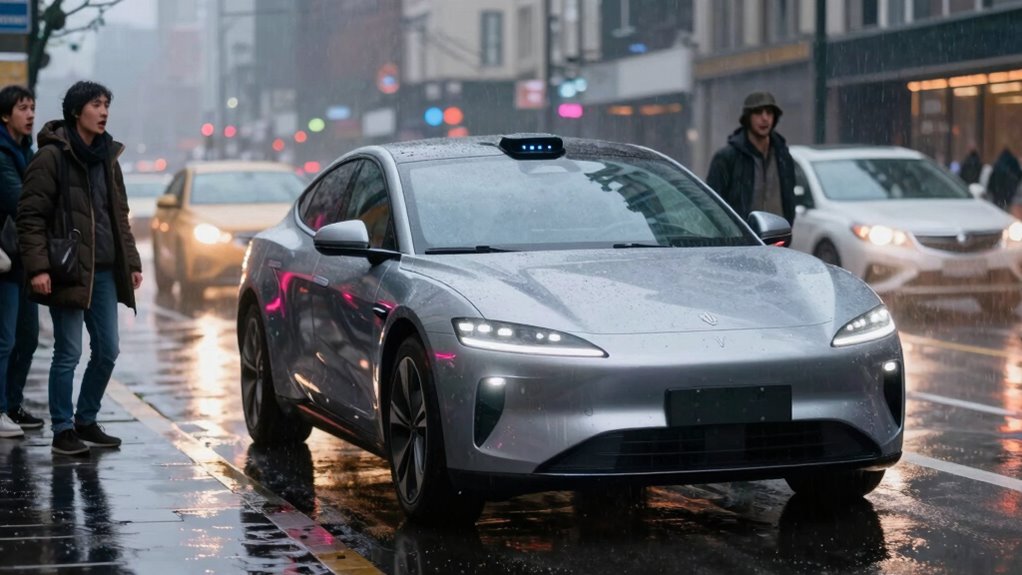

Self-driving cars are improving safety, but they still have significant challenges. Despite a 79.75% reduction in injury crashes by Waymo and many low-speed impacts, autonomous systems experience more crashes per mile than human drivers. Incidents can range from minor bumps to serious injuries, highlighting risks still present. Trust depends on understanding these risks and ongoing developments. If you want to explore how close AI is to reliable safety, there’s more to uncover below.
Key Takeaways
- Self-driving cars have significantly reduced crash injuries but still experience higher crash rates than human drivers.
- Many incidents involve low-speed impacts, but some have caused moderate or serious injuries, highlighting safety risks.
- Complex urban environments pose challenges for autonomous systems, leading to unpredictable and potentially dangerous scenarios.
- Data inconsistencies and reporting biases make it difficult to accurately assess the true safety and reliability of self-driving vehicles.
- Ongoing improvements show promise, but current limitations mean we should remain cautious about fully trusting AI-driven cars with our lives.

Have you ever wondered how safe self-driving cars really are? The truth is, the data paints a complex picture. On one hand, autonomous vehicles like Waymo have driven millions of miles, logging impressive safety improvements over traditional cars. For example, Waymo reports a 79.75% reduction in crash rates involving injuries compared to their earlier data. They’ve driven over 96 million rider-only miles through June 2025, with zero serious injury crashes reported in cities like Phoenix and Los Angeles. In San Francisco, their serious crash rate per million miles is considerably lower than benchmarks, suggesting that their systems are becoming safer over time. Additionally, airbag deployment incidents have decreased by over 89%, indicating fewer scenarios where the vehicle’s safety features are activated. The data from various sources also shows a downward trend in certain safety incidents, supporting the notion that autonomous systems are improving. However, the numbers also reveal troubling issues. Across all self-driving systems, crash rates are often higher than those of human drivers. For instance, some datasets show autonomous vehicles experiencing around 9.1 crashes per million miles, more than double the 4.1 crashes per million miles typical for human-driven cars. In California alone, self-driving vehicles logged 26.3 crashes per million miles in 2022, compared to only 0.7 for human drivers. The number of incidents involving Waymo vehicles has grown, with over 464 incidents reported as of August 2025, including a fatality. The majority of crashes, about 352, happen in low-speed zones of 25 mph or less, which suggests that even slow impacts can pose risks. Furthermore, some reports highlight that the complexity of urban environments can challenge autonomous systems, leading to unpredictable scenarios. Injury data adds another layer of concern. While most Waymo collisions result in no injuries or minor ones, there have been a few serious injuries and even fatalities. From 2021 to 2025, Waymo recorded 28 minor injuries, two moderate, and one serious injury, with only one fatality. Yet, the presence of these serious outcomes shows that accidents involving autonomous vehicles are not risk-free. Industry summaries often note that many crashes involve low-speed impacts, but even these can cause moderate injuries depending on the circumstances. The variation in injury severity and definitions across sources makes it difficult to draw definitive conclusions about safety. Furthermore, reporting biases and differing standards complicate the picture. Internal telemetry reports often use varying definitions—for example, Tesla counts incidents when their FSD system was active within five seconds of a crash—potentially inflating or underestimating risks. National data from agencies like NHTSA are incomplete, sometimes conflating Level-2 driver-assist features with full autonomy. These inconsistencies make it hard to compare safety across different systems or to fully understand the real risks involved. While autonomous vehicles show promise, the data suggests that trusting them with our lives requires careful consideration of their current limitations and ongoing development.
Frequently Asked Questions
How Do Self-Driving Cars Handle Unexpected Road Conditions?
Self-driving cars handle unexpected road conditions by relying on advanced sensors, cameras, and AI algorithms that detect and interpret changes in the environment. You’ll find they adapt in real-time, adjusting speed, braking, or steering to navigate obstacles or unusual weather. While they’re designed to respond swiftly, they still face challenges with unpredictable situations, and safety improvements continue as developers refine their ability to manage these surprises effectively.
What Are the Legal Liabilities for AV Accidents?
You’re likely wondering who’s responsible if an AV crashes. In most cases, liability falls on manufacturers or developers, especially if a defect or system failure caused the accident. However, if you’re in control or negligent, you might share the blame. Laws are evolving, but ultimately, companies are held accountable for their technology’s safety. Trust hinges on clear regulations ensuring they’re responsible for damages caused by their autonomous systems.
How Do Manufacturers Improve AV Safety After Crashes?
Manufacturers improve AV safety after crashes by thoroughly investigating incidents, analyzing data, and updating algorithms to prevent recurrence. They implement software patches, enhance sensors, and refine decision-making processes based on crash insights. Regular testing, real-world data collection, and collaboration with regulatory bodies help identify vulnerabilities. You should see ongoing safety improvements as companies learn from incidents, aiming to make autonomous vehicles safer and more reliable with each update.
Are There Long-Term Health Effects From AV Collision Exposure?
Long-term health effects from AV collision exposure are like shadows that linger quietly, often unnoticed. You might not feel immediate harm, but repeated minor impacts or stress from crashes could lead to chronic issues like anxiety, musculoskeletal pain, or PTSD over time. While research is still developing, it’s wise to monitor your health, seek medical advice if needed, and advocate for improved safety measures to minimize long-term risks.
How Transparent Are Companies About AV Safety Performance?
Companies are becoming more transparent about AV safety performance, but transparency varies. You’ll find detailed crash statistics, injury reports, and safety metrics published publicly, especially from companies like Waymo and Tesla. However, some details may be limited or delayed, making it hard for you to fully assess risks. It is crucial to stay informed by reviewing official reports, safety disclosures, and independent analyses to understand how well these companies are sharing their safety performance.
Conclusion
As you consider the risks and benefits of self-driving cars, remember that trusting AI is like walking a tightrope—balancing innovation with safety. While these vehicles can revolutionize transportation, they’re still prone to errors, just like any other technology. It’s up to us to stay vigilant and demand better safeguards. Only then can we confidently embrace this new era, knowing that, like a skilled pilot, AI can guide us safely if properly managed.