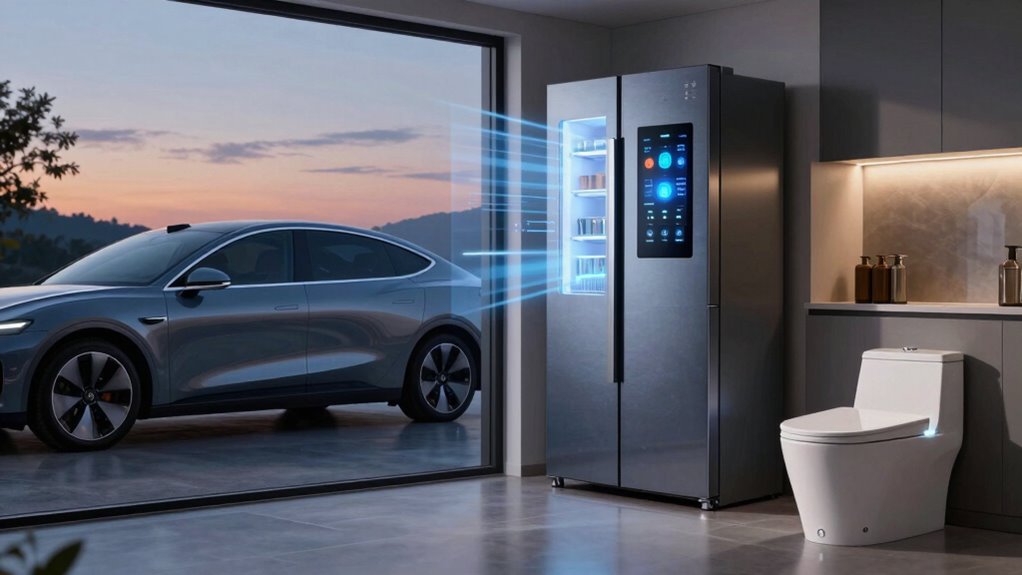

Imagine your smart fridge communicating with your car to remind you about groceries or schedule appointments, while your toilet detects health issues and shares data with your doctor. Thanks to industry standards like Matter, these devices from different brands can work together effortlessly. AI and automation make your home more responsive, personalized, and safer. Want to discover how this interconnected future can enhance your daily life? Keep exploring to learn more.
Key Takeaways
- Industry standards like Matter enable seamless communication among smart devices from different brands.
- Devices can coordinate actions, such as a smart fridge alerting a smart oven to preheat.
- Interoperability fosters complex automation, like car alerts triggering home security responses.
- AI and machine learning personalize device interactions, making interconnected devices more responsive.
- Security and privacy measures protect data as more devices communicate and share information.

Imagine a world where your fridge suggests recipes, your car adjusts to your driving habits, and your toilet monitors your health—welcome to the era of smart devices. This interconnected environment isn’t just a distant dream; it’s rapidly becoming a reality. The global smart home market is projected to reach over $1.4 trillion by 2034, with the U.S. contributing a significant share. As more households adopt these devices, you’ll find your home increasingly integrated, intuitive, and responsive. Today, about 45% of U.S. internet households own at least one smart device, and that number is climbing as adoption becomes mainstream. You might now own an average of six devices, from thermostats to smart cameras, enabling seamless control and automation. The market is expanding swiftly, with smart device spending rising and new innovations making setups easier and more compatible.
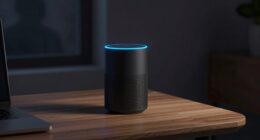
What’s driving this growth? Interoperability plays a crucial role. Industry standards like Matter are creating a unified language that allows devices from different brands to communicate effortlessly. This means your smart fridge can tell your smart oven to preheat when you’re nearby, or your car can alert your home’s security system if it detects unusual activity. AI and machine learning are further personalizing your experience. Your devices learn your routines, adjusting temperatures, lighting, or security settings to match your habits. Samsung’s AI integration across all product lines exemplifies this trend, making your smart home smarter every day. Voice assistants like Alexa or Google Assistant bring everything together, enabling you to control your environment with simple commands. Additionally, interoperability standards are enhancing device compatibility, reducing setup friction and expanding the ecosystem of compatible products.
Security remains a concern, but advancements are addressing vulnerabilities. While 62% of users worry about device security, manufacturers are investing in encrypted connections and remote access protections. Industry collaborations are making devices more secure, especially as the number of connected devices per household grows. You’ll likely see your smart home not just as a convenience but as a platform for health and safety. Sensors monitor essential signs, alerting you or your healthcare provider if something’s amiss. Your toilet might analyze your health data, providing early warnings for potential issues. The integration of health monitoring devices is expanding, especially with aging-in-place solutions. Furthermore, the ongoing development of security protocols and encryption methods continues to strengthen user trust and protect personal data in these interconnected environments.
Top picks for "smart everyth fridge"
Open Amazon search results for this keyword.
As an affiliate, we earn on qualifying purchases.
Frequently Asked Questions
How Secure Are Interconnected Smart Devices From Cyber Threats?
Interconnected smart devices face significant cyber threats, but their security varies. You should know that many devices, like smart speakers and cameras, are vulnerable to hacking, especially if not updated regularly. While manufacturers improve security, vulnerabilities still exist, and data breaches happen. To protect yourself, keep devices updated, use strong, unique passwords, and enable security features. Staying vigilant helps reduce risks and keeps your smart home safer from cyber attacks.
What Are the Privacy Implications of Connected Smart Appliances?
You should be aware that 11% of households with 1-15 devices experienced data breaches, highlighting privacy risks. Connected smart appliances collect personal data, like your habits and routines, which can be exploited if not properly secured. This raises concerns about unauthorized access and misuse. You need to contemplate privacy settings carefully, stay updated on security measures, and limit data sharing to protect your personal information from potential breaches.
How Much Does Integrating Multiple Smart Devices Typically Cost?
Integrating multiple smart devices usually costs between $205 and $1,659, depending on the complexity of your system and devices. You’ll need to factor in the price of individual devices, smart hubs, and installation fees. Keep in mind, spending more can improve automation and security, which might boost your home’s value. Budget accordingly, and consider future expansion to avoid costly upgrades later.
Are Smart Devices Compatible Across Different Brands and Ecosystems?
Think of smart devices as a lively orchestra—some play in harmony, others miss a beat. Compatibility varies; many brands now embrace standards like Zigbee, Z-Wave, and Wi-Fi, making integration smoother. Yet, some gadgets still speak different languages, requiring bridges or hubs. To keep your smart home singing in tune, check each device’s ecosystem and look for compatibility labels before buying. This way, you create a seamless symphony in your connected space.
How Does Smart Device Data Impact Home Resale Value?
You can boost your home’s resale value by adding smart devices, as they appeal to modern buyers seeking convenience and energy efficiency. When you install smart thermostats, security cameras, or lighting, you demonstrate a tech-savvy, efficient home. These upgrades can make your property stand out, especially since integrating smart technology can increase home value by around 5%. Keep your devices updated and secure to maximize their positive impact on resale.
Conclusion
Imagine a world where your fridge gently alerts you when the milk’s about to spoil, your car chats with your home to prepare your morning coffee, and your toilet knows when to clean itself without a prompt. It’s a seamless dance of convenience, turning everyday routines into effortless moments. As these devices talk to each other, your life becomes smoother and more connected—like a symphony of smart technology working behind the scenes, making every day feel a little easier.