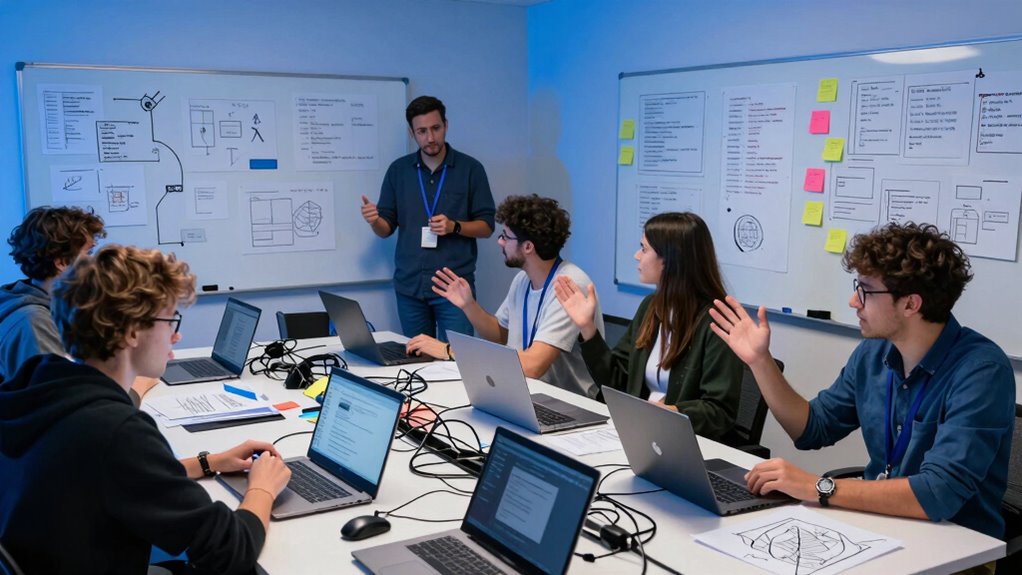

You might build too much too early in a hackathon because you jump into complex features without clearly defining the core problem or setting realistic goals. enthusiasm to impress and showcase skills can push you to overextend, leading to scope creep. Poor communication and unclear roles can cause team members to work on overlapping tasks or superficial features. If you want to better manage your project scope and focus, there’s more to discover below.

Get privacy and security gear delivered free with Prime
- Fast, free delivery on millions of items
- Prime Video, Amazon Music and more included
- Member-only deals all year
Key Takeaways
- Teams often jump into complex features without clearly defining the core problem.
- Overconfidence and eagerness lead to attempting too many features early.
- Lack of structured planning causes scope creep and premature development.
- Divergent ideas and poor communication increase the tendency to overbuild.
- Focusing on impressing judges rather than validating core ideas results in unnecessary features.

At hackathons, teams often plunge into building complex features right from the start, even when they haven’t fully defined their core problem or validated their ideas. This tendency stems from a mix of excitement, ambition, and sometimes a lack of clear direction. When you jump straight into development, your team dynamics play a significant role in how quickly you move and what you choose to prioritize. If your team is composed of highly skilled developers eager to showcase their talents, it’s tempting to start working on advanced features immediately. However, this rush often leads to a misaligned project scope, where everyone works on different assumptions rather than a shared understanding of what really matters.
One of the main reasons teams build too much too early is because they don’t spend enough time clarifying their core problem. Instead of focusing on the problem statement or the end-user needs, there’s a tendency to jump into solutions. When your team skips this essential step, it’s easy to overestimate what can be achieved within the tight timeframe. You might think that building a prototype of every feature is the way to impress judges or demonstrate effort, but this approach can backfire. The project scope becomes unwieldy, and instead of creating a polished, functional product, you end up with a jumble of unfinished features that lack coherence.
Skipping core problem clarity leads to scope creep, unfinished features, and a lack of coherence in your project.
Your team dynamics also influence how quickly you fall into the trap of building too much early on. If your team members are eager to contribute and have different ideas about what the final product should be, you might find yourselves rushing to implement a broad range of features just to satisfy everyone. Without proper coordination and communication, this can lead to scope creep—where the scope expands beyond what’s feasible within the limited time. When the scope gets too broad, your team risks spreading yourselves too thin, resulting in superficial work on many features rather than deep, meaningful progress on a few. Recognizing team cohesion as an essential factor can help prevent this common mistake. Additionally, understanding project scope and its impact can help teams stay focused on achievable goals and avoid unnecessary detours. Moreover, emphasizing the importance of clear planning early on can significantly improve your chances of success. Developing effective collaborative strategies can also foster better decision-making and keep the team aligned throughout the project. Being aware of team roles and assigning responsibilities accordingly can further streamline the process and reduce the temptation to overbuild.
As an affiliate, we earn on qualifying purchases.
Frequently Asked Questions
How Do Teams Decide What Features to Prioritize Early On?
You decide what features to prioritize early on by focusing on user experience and technical feasibility. Start by identifying features that deliver the most value to users and are achievable within your time constraints. Communicate with your team to assess technical complexity and avoid overcommitting. This approach helps you build a functional prototype efficiently, ensuring your team stays focused and delivers a compelling, user-centered product without unnecessary scope creep.
What Are Common Signs of Overbuilding in Hackathons?
You recognize overbuilding when your team spends excessive time on features, ignoring design trade-offs and user feedback. Signs include a cluttered interface, complex code for simple tasks, and ignoring user needs in favor of adding more features. You might also notice delays in progress or difficulty in maintaining the project. These signs indicate you’re prioritizing quantity over quality, risking burnout and missing the core problem you aimed to solve.
How Can Teams Effectively Manage Scope Creep During Development?
You might think you can handle every feature, but managing scope creep is essential. Focus on resource allocation by prioritizing core features first, then tackle extras if time allows. Practice risk management by setting clear boundaries and regularly reviewing progress. Ironically, the best way to avoid overbuilding is to resist the urge to do everything at once; instead, stay disciplined, communicate openly, and adjust your scope as your project evolves.
Are There Best Practices for Balancing Speed and Quality?
To balance speed and quality, focus on delivering a solid user experience without accumulating technical debt. Prioritize features that matter most, and avoid overbuilding early on. Use rapid prototyping to test ideas quickly, then refine based on user feedback. Keep communication clear within your team, and set short-term goals to prevent rushing. This approach helps you stay efficient while maintaining quality and user satisfaction.
What Role Does Team Size Play in Early Overbuilding?
Team size markedly impacts early overbuilding because larger teams often face complex team dynamics, leading to fragmented efforts and redundant work. With more members, resource allocation can become inefficient, encouraging teams to build more than necessary early on to showcase progress. To avoid this, you should streamline your team, clarify roles, and focus on core features, ensuring efficient resource use and preventing unnecessary overbuilding during the initial stages.
As an affiliate, we earn on qualifying purchases.
Conclusion
If you plunge in too quickly, you might end up building a sprawling, tangled mess of features that swamp your project like an unstoppable flood. Instead of creating a sleek, focused solution, you’ll drown in a sea of unnecessary complexity. Remember, slow and steady wins the race—don’t let your ambition turn into a mountain of unfinished code. Keep it simple, stay sharp, and build only what truly matters, or risk sinking in your own overambition.
As an affiliate, we earn on qualifying purchases.
As an affiliate, we earn on qualifying purchases.
Evergreen bestsellers Picks
bestsellers
As an affiliate, we earn on qualifying purchases.