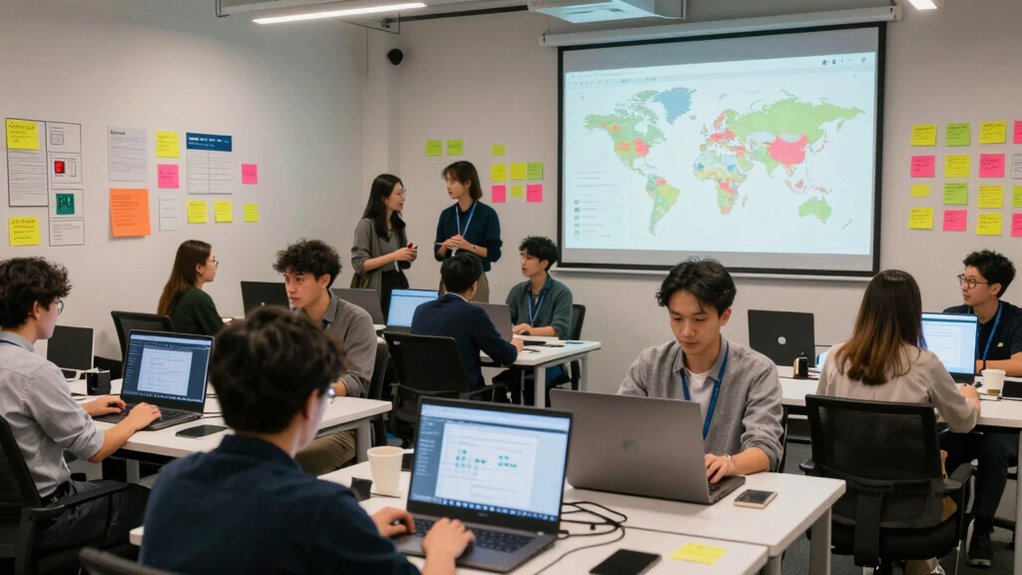
Hackathons for Good are fast-paced coding competitions where you can team up with others to develop innovative solutions for societal challenges like health, climate, and civic issues. These events often last from 24 to 72 hours and focus on creating impactful prototypes that can be developed further. By participating, you help drive social change, collaborate with diverse talents, and explore opportunities to turn ideas into real-world projects. Keep going to discover how these events make a difference.
Key Takeaways
- Hackathons for Good foster rapid innovation to develop impactful solutions addressing societal challenges like health, climate, and governance.
- They promote community involvement, ethical AI use, inclusive design, and co-creation with beneficiaries for sustainable impact.
- Participants collaborate in short-term events, leveraging open data, civic APIs, and resources to prototype real-world solutions quickly.
- Successful projects often transition into startups, pilot programs, or are adopted by NGOs, supported by sponsors and post-event mentorship.
- These competitions build talent pipelines, strengthen social infrastructure, and drive tangible social and environmental benefits worldwide.
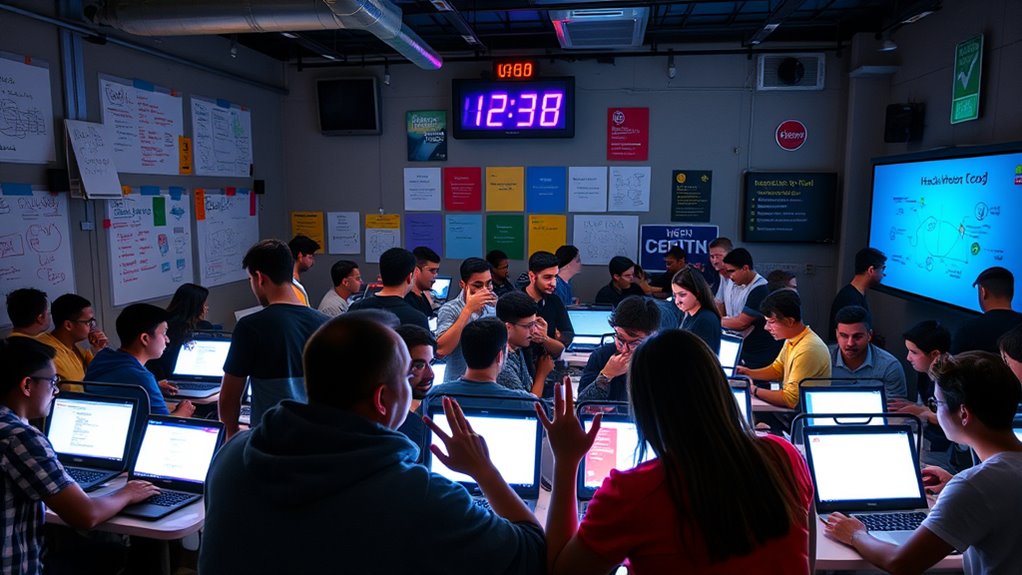
Hackathons for good harness the power of rapid innovation to address some of society’s most pressing challenges. As a participant, you’ll find yourself working alongside diverse teams—developers, data scientists, designers, and domain experts—all united by a common goal: creating impactful solutions within a short timeframe. These events typically last between 24 and 72 hours, either onsite or virtually, pushing you to prototype ideas quickly and efficiently. Whether the focus is civic tech, health, climate, or education, the core aim remains the same: develop feasible, testable prototypes that can be shifted into real-world applications. Hackathons are recognized as effective platforms for fostering social innovation and community engagement. During these hackathons, you often work with open data, civic APIs, satellite imagery, or health records—resources that help inform your solutions. For instance, you might build a damage-detection model from satellite imagery for disaster response or develop a low-bandwidth educational app for underserved students. The challenge themes are varied but always centered on creating social impact—reducing emissions, improving access to healthcare, or enhancing transparency in governance. These competitions foster a collaborative environment where community involvement and ethical considerations are central. You’re encouraged to co-create with target beneficiaries, ensuring your solutions are relevant and usable.
Sponsors, often corporations or government agencies, provide cloud credits, APIs, mentorship, and prizes, supporting your efforts and making deployment feasible. Many hackathons include post-event pathways, like project grants or accelerators, to help turn prototypes into sustainable solutions. The best projects might receive ongoing mentorship, funding, or even incubation within startup accelerators. Successful solutions from these events have been adopted by NGOs and public institutions, demonstrating tangible social change. They’ve improved public data transparency, enhanced disaster response coordination, or provided affordable health diagnostics. Impact measurement is a key aspect, and successful hackathons often track outcomes such as the number of prototypes turned into pilots or startups, the diversity of participants, and the social or environmental benefits achieved. Many events also serve as talent pipelines, connecting skilled developers with organizations seeking innovative solutions. These competitions emphasize responsible AI use, data privacy, and community-centered design—ensuring that solutions are ethical, inclusive, and sustainable. They also promote capacity building, helping participants sharpen technical skills while strengthening nonprofit infrastructure.
In essence, hackathons for good transform rapid prototyping into real-world impact, forging innovative pathways for societal betterment. They are a fertile ground for creative problem solving, fostering collaboration across sectors, and turning ideas into action. By participating, you become part of a global movement that leverages technology to address some of the world’s most urgent issues, making a difference that extends far beyond the event itself.
Frequently Asked Questions
How Do Hackathons Ensure Data Privacy and Ethical Use?
You guarantee data privacy and ethical use by strictly handling personal and health data, using anonymized or public datasets, and following partner data-governance policies. You work closely with community members and NGOs to design solutions that respect their needs and rights. Additionally, you test for bias, be transparent about AI limitations, and incorporate responsible practices like consent, accessibility, and sustainability to protect users and build trust.
What Are the Typical Funding Sources for These Hackathons?
You’ll find that most hackathons for good rely heavily on sponsorships, with many offering cash prizes and project grants. For example, some events have awarded over $300,000 in total funding. Additionally, sponsors provide in-kind support like cloud credits, software licenses, and mentorship, which considerably boost the impact and sustainability of projects. These diverse funding sources help guarantee the hackathons can focus on meaningful social change initiatives.
How Can NGOS Participate in or Benefit From Hackathons?
You can participate in hackathons by sharing real-world problems, providing domain expertise, and offering relevant data. NGOs benefit through access to innovative solutions, skill-building opportunities for staff, and potential project continuation grants. Engaging in hackathons helps you connect with developers and sponsors, improve organizational infrastructure, and raise awareness for your causes. Plus, you can implement prototypes directly into your operations or pilot new tools created during these collaborative events.
What Measures Are Taken to Sustain Projects After the Event?
You can guarantee project sustainability by securing project grants and ongoing sponsorships, which provide funding for continued development. Many hackathons involve partner organizations that offer mentorship and technical support after the event, helping you refine and deploy solutions. Including clear documentation, maintenance plans, and community engagement strategies also helps sustain momentum. Additionally, leveraging accelerator programs or incubation pathways can turn prototype projects into lasting, impactful solutions for your community or organization.
How Do Hackathons Address Inclusivity and Accessibility Concerns?
You guarantee hackathons address inclusivity and accessibility by designing low-bandwidth, multilingual, and assistive-technology–friendly interfaces, making solutions usable for diverse users. You involve community members and beneficiaries in co-creation to meet their needs better. Additionally, you promote awareness of bias and responsible AI use, providing resources and mentorship to support participants from underrepresented backgrounds. This approach helps create equitable solutions that serve a broad range of users effectively.
Conclusion
Participating in hackathons for good proves you can make a real difference. Did you know that over 60% of projects from these events lead to ongoing social impact initiatives? Your skills can tackle pressing issues like climate change or healthcare. By joining these competitions, you’re not just coding—you’re creating solutions that change lives. So, why not get involved? Your ideas and talents could be the next big step toward a better world.