Encrypted backup drives help protect files if a drive is lost, stolen, or accessed without permission, but this lineup varies widely in capacity and encryption features. My best overall pick is the Apricorn Aegis Padlock Fortress 1TB, which puts hardware encryption and a keypad in a portable hard drive. For large desktop backups, the Aegis Padlock DT 4TB FIPS offers more storage and a certification-focused option, while the Aegis Secure Key 3 NXC suits people who need compact encrypted file transport. The main tradeoff is between dedicated hardware protection and more everyday storage capacity: the WD drives offer ample space but do not list hardware encryption in their product names. Read on for the full breakdown, buying guidance, and recommendations by use case.

Get privacy and security gear delivered free with Prime
- Fast, free delivery on millions of items
- Prime Video, Amazon Music and more included
- Member-only deals all year
Key Takeaways
- Dedicated encryption separates the Apricorn and IronKey options from the WD drives: most Apricorn models name hardware encryption, and the IronKey models are explicitly positioned as encrypted USB drives; the WD My Book and My Passport listings do not specify encryption.
- The Aegis Padlock Fortress 1TB is the balanced portable hard-drive pick: it pairs a keypad-based design with more backup capacity than the USB flash drives, while avoiding the bulk of desktop models.
- Capacity changes the role of each product: 32GB and 64GB IronKey drives and the 128GB Secure Key 3 NXC are for selected files, not full-computer backups; desktop models reach 18TB.
- FIPS-labeled models serve a more specialized buyer: the Aegis Padlock DT FIPS 4TB and Aegis Fortress L3 4TB make more sense when certification is part of a work requirement than for routine household backups.
- A high-capacity drive is not automatically an encrypted backup drive: the WD My Book 18TB and My Passport 5TB offer storage capacity, but buyers seeking encryption should verify protection details rather than assume them.
| Apricorn Aegis Padlock DT 2TB Encrypted USB 3.0 Desktop Hard Drive |  | Best for Secure Desktop Backups | Storage capacity: 2 TB | Interface: USB 3.0 | Encryption: 256-bit AES XTS hardware encryption | VIEW LATEST PRICE | See Our Full Breakdown |
| Apricorn Aegis Padlock Fortress 1TB Encrypted USB 3.0 Hard Drive |  | Best for Certified, Cross-Platform Security | Storage capacity: 1 TB | Encryption: 256-bit AES-XTS hardware encryption | Security validation: FIPS 140-2 Level 2 | VIEW LATEST PRICE | See Our Full Breakdown |
| Apricorn Aegis Secure Key 3 NXC 128GB Encrypted USB-C Flash Drive |  | Best for Encrypted USB-C Portability | Storage capacity: 128 GB | Encryption: 256-bit AES-XTS hardware encryption | Security validation: FIPS 140-2 Level 3 | VIEW LATEST PRICE | See Our Full Breakdown |
| Kingston IronKey Locker+ 50 G2 64GB Encrypted USB Drive |  | Best for Simple Password-Based File Protection | Storage capacity: 64 GB | Encryption: 256-bit XTS-AES hardware encryption | Certification: FIPS 197 | VIEW LATEST PRICE | See Our Full Breakdown |
| Apricorn Aegis Padlock 1TB USB 3.0 Hardware-Encrypted External Hard Drive |  | Best Value Portable Hard Drive Pick | Storage capacity: 1 TB (1024 GB) | Interface: USB 3.0; backward compatible with USB 2.0 and 1.1 | Encryption: AES-XTS 256-bit hardware encryption | VIEW LATEST PRICE | See Our Full Breakdown |
| Kingston IronKey Locker+ 50 G2 32GB Encrypted USB Drive | 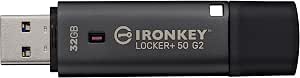 | Best for Secure, Small Transfers | Storage capacity: 32GB | Encryption: 256-bit XTS-AES hardware encryption | Certification: FIPS 197 | VIEW LATEST PRICE | See Our Full Breakdown |
| Apricorn Aegis Padlock DT FIPS 4TB Encrypted Desktop Hard Drive |  | Best for Cross-Platform Secure Desktop Storage | Storage capacity: 4TB | Encryption: 256-bit AES XTS hardware encryption | Security validation: FIPS 140-2 Level 2 | VIEW LATEST PRICE | See Our Full Breakdown |
| WD My Book 18TB Desktop External Hard Drive |  | Best for High-Capacity Encrypted Backups | Storage capacity: 18TB | Encryption: 256-bit AES hardware encryption with password protection | Interface: USB 3.0; compatible with USB 2.0 | VIEW LATEST PRICE | See Our Full Breakdown |
| Apricorn Aegis Padlock 2TB USB 3.0 Hardware-Encrypted Portable Hard Drive | | Best for Portable, Software-Free Backups | Storage capacity: 2TB | Encryption: 256-bit AES XTS hardware encryption | Authentication: Integrated keypad; up to five user PINs and one administrator PIN | VIEW LATEST PRICE | See Our Full Breakdown |
| Apricorn Aegis Fortress L3 4TB FIPS 140-2 Level 3 Encrypted Portable Drive |  | Best for High-Assurance Portable Security | Capacity: 4TB | Encryption: 256-bit AES-XTS hardware encryption | Security validation: FIPS 140-2 Level 3 | VIEW LATEST PRICE | See Our Full Breakdown |
| WD My Passport 5TB Portable External Hard Drive, Black |  | Best for High-Capacity Everyday Backups | Storage capacity: 5 TB | Form factor: 2.5-inch | Dimensions: 4.22 x 2.95 x 0.75 inches | VIEW LATEST PRICE | See Our Full Breakdown |
| encrypted backup drife | Storage capacity | Encryption | Interface | Compatibility |
|---|---|---|---|---|
| Apricorn Aegis Padlock DT 2TB | 2 TB | 256-bit AES XTS hardware encryption | USB 3.0 | Mac, PC |
| Apricorn Aegis Padlock Fortres | 1 TB | 256-bit AES-XTS hardware encryption | USB 3.0 | Windows, Mac, and Linux |
| Apricorn Aegis Secure Key 3 NX | 128 GB | 256-bit AES-XTS hardware encryption | USB 3.2 Type-C | — |
| Kingston IronKey Locker+ 50 G2 | 64 GB | 256-bit XTS-AES hardware encryption | USB 3.2 Gen 1 | — |
| Apricorn Aegis Padlock 1TB USB | 1 TB (1024 GB) | AES-XTS 256-bit hardware encryption | USB 3.0; backward compatible with USB 2.0 and 1.1 | Windows, Mac, Linux |
| Kingston IronKey Locker+ 50 G2 | 32GB | 256-bit XTS-AES hardware encryption | — | — |
| Apricorn Aegis Padlock DT FIPS | 4TB | 256-bit AES XTS hardware encryption | USB 3.0 / USB 3.1 | Windows, Linux, Mac, Android, Chrome, and other USB storage systems |
| WD My Book 18TB Desktop Extern | 18TB | 256-bit AES hardware encryption with password protection | USB 3.0; compatible with USB 2.0 | Desktop PC and Mac |
| Apricorn Aegis Padlock 2TB USB | 2TB | 256-bit AES XTS hardware encryption | USB 3.0 | PC and Mac |
| Apricorn Aegis Fortress L3 4TB | — | 256-bit AES-XTS hardware encryption | USB 3.0 | PC, Mac, Linux, and mass-storage-compliant systems |
| WD My Passport 5TB Portable Ex | 5 TB | — | — | Desktop, laptop, tablet, PC, Linux, Mac with reformatting, and Microsoft Xbox One |
More Details on Our Top Picks
Apricorn Aegis Padlock DT 2TB Encrypted USB 3.0 Desktop Hard Drive
I’d choose the Aegis Padlock DT when a backup drive can stay at a desk and capacity matters more than portability. Its 256-bit AES XTS hardware encryption and built-in keypad keep PIN entry off the connected computer, while separate Admin, User, and Recovery PINs allow more flexible access than the single-user approach of many portable drives. Read-only modes and auto-lock add useful controls for shared or unattended workspaces. Compared with the Aegis Padlock Fortress 1TB, this model offers twice the storage and a faster-spinning 7200 rpm drive, but it needs an AC adapter and is less convenient to carry. The software-free setup is helpful on locked-down computers; the tradeoff is its NTFS format, which may need changing for some workflows.
Pros:- 256-bit AES XTS hardware encryption with keypad PIN authentication
- Admin, User, and Recovery PIN options support managed access
- Auto-lock, read-only modes, and brute-force defense add access controls
- Software-free setup works without administrator rights
Cons:- AC adapter and desktop form factor limit portability
- NTFS formatting may require reformatting for some devices or workflows
Best for: Home offices and small teams that want a higher-capacity encrypted backup drive kept near a desktop computer.
Not ideal for: Travelers or users who need a bus-powered drive, since this desktop model requires an AC adapter.
- Storage capacity:2 TB
- Interface:USB 3.0
- Encryption:256-bit AES XTS hardware encryption
- Form factor:3.5 inches
- Rotational speed:7200 rpm
- Authentication:Integrated keypad with Admin, User, and Recovery PINs
- Compatibility:Mac, PC
- File system:NTFS
Our verdict“Choose this for a secure, desk-based backup with more capacity than the portable Aegis Padlock Fortress 1TB.”
Apricorn Aegis Padlock Fortress 1TB Encrypted USB 3.0 Hard Drive
The Aegis Padlock Fortress is a strong fit when a portable backup needs both hardware encryption and a stated security validation. Its FIPS 140-2 Level 2 validation and AES-XTS encryption suit organizations with formal security requirements, while keypad access avoids typing a password into a potentially untrusted computer. It works with Windows, Mac, and Linux without installing software, and its integrated cable reduces what I’d need to pack. Compared with the Aegis Padlock 1TB, the Fortress adds FIPS validation and water- and dust-resistant protection, making it the more security-focused travel pick. The 1TB capacity and 5400 rpm drive are less compelling for large or frequent backups, though, and repeated incorrect PIN attempts can trigger key destruction and make data inaccessible.
Pros:- 256-bit AES-XTS hardware encryption with FIPS 140-2 Level 2 validation
- Keypad PIN entry keeps credentials off the host computer
- Works with Windows, Mac, and Linux without software installation
- Integrated cable and water- and dust-resistant construction support travel
Cons:- 1TB capacity may be limiting for large backup sets
- Repeated failed PIN attempts can make stored data inaccessible
Best for: IT staff and professionals who need a portable encrypted backup compatible with Windows, Mac, and Linux, plus FIPS 140-2 Level 2 validation.
Not ideal for: Users backing up large media libraries or anyone uncomfortable with a failed-PIN policy that can destroy the encryption key.
- Storage capacity:1 TB
- Encryption:256-bit AES-XTS hardware encryption
- Security validation:FIPS 140-2 Level 2
- Interface:USB 3.0
- Access:Keypad PIN; 1 administrator and 4 user PINs
- Compatibility:Windows, Mac, and Linux
- Protection:Water and dust resistant
- Form factor:2.5-inch
Our verdict“Pick the Fortress when validated security and cross-platform portability matter more than capacity or forgiving PIN recovery.”
Apricorn Aegis Secure Key 3 NXC 128GB Encrypted USB-C Flash Drive
For small, frequently carried backup sets, the Aegis Secure Key 3 NXC is the most compact choice here: it is a 128GB flash drive rather than a hard drive with moving parts. Its USB-C connection can work with compatible computers, tablets, and smartphones, and software-free authentication avoids dependence on an installed app. FIPS 140-2 Level 3 validation gives it a higher stated validation level than the Aegis Padlock Fortress 1TB, but that comparison comes with a major capacity difference: the Fortress holds eight times as much data. The Secure Key makes more sense for selected documents or a compact working backup than for a full computer archive. Buyers should also check device support in advance, since USB-C alone does not guarantee compatibility with every phone or tablet.
Pros:- 256-bit AES-XTS hardware encryption with FIPS 140-2 Level 3 validation
- Compact flash-drive format is easier to carry than the Aegis Padlock hard drives
- Software-free authentication includes administrator and user modes
- USB-C support can extend access to compatible mobile devices
Cons:- 128GB capacity is small beside the 1TB Aegis Padlock Fortress
- Device support depends on compatible USB-C or USB OTG functionality
- Listed read and write speeds differ considerably
Best for: Mobile professionals who need a small, encrypted set of work files that can be used with compatible USB-C computers, tablets, or phones.
Not ideal for: People seeking a full-system or large media backup, or anyone whose devices lack compatible USB-C or USB OTG support.
- Storage capacity:128 GB
- Encryption:256-bit AES-XTS hardware encryption
- Security validation:FIPS 140-2 Level 3
- Interface:USB 3.2 Type-C
- Read speed:171 MB/s
- Write speed:625 MB/s
- Authentication:Software-free; separate administrator and user modes
- Dimensions:3.25 × 0.75 × 0.25 in
Our verdict“Choose this for a pocketable, validated encrypted file store, not as a replacement for a high-capacity backup drive.”
Kingston IronKey Locker+ 50 G2 64GB Encrypted USB Drive
The Kingston IronKey Locker+ 50 G2 suits buyers who want a straightforward encrypted USB drive with distinct administrator and user passwords. Its 256-bit XTS-AES hardware encryption and FIPS 197 certification provide a clear security foundation, while complex-password and passphrase modes let users choose between stricter credentials and something easier to remember. Compared with the Aegis Secure Key 3 NXC, Kingston uses USB Type-A rather than USB-C, so it fits many older computers but may need an adapter for newer devices. Its 64GB capacity is half the NXC’s, making this a better fit for a modest set of documents than a broad backup. Read and write speeds are specified, though the maximum write rate is lower than the read rate.
Pros:- 256-bit XTS-AES hardware encryption with FIPS 197 certification
- Separate administrator and user password options
- Complex-password and passphrase modes offer different credential styles
- Specified read and write speeds provide a clear performance reference
Cons:- 64GB capacity is limited for extensive backup collections
- USB Type-A connector may require an adapter for newer devices
- Maximum write speed is lower than the stated maximum read speed
Best for: People who want a small encrypted document drive for USB-A computers and prefer password options over a high-capacity hard drive.
Not ideal for: USB-C-only device owners or buyers who need enough space for large photo, video, or system backups.
- Storage capacity:64 GB
- Encryption:256-bit XTS-AES hardware encryption
- Certification:FIPS 197
- Interface:USB 3.2 Gen 1
- Connector:USB Type-A
- Password options:Administrator and user passwords; complex or passphrase modes
- Read speed:Up to 145 MB/s
- Write speed:Up to 115 MB/s
Our verdict“Choose the IronKey for password-managed protection of a modest file set on USB-A devices, rather than for broad backups.”
Apricorn Aegis Padlock 1TB USB 3.0 Hardware-Encrypted External Hard Drive
The Aegis Padlock 1TB is the straightforward choice for buyers who want portable hard-drive capacity with keypad-based encryption and no software setup. It encrypts data in real time with 256-bit AES-XTS hardware encryption, while the wear-resistant keypad and brute-force self-destruct feature add protection beyond a standard external drive. USB 3.0 also works with USB 2.0 and 1.1, which helps when the drive must connect to older computers. Compared with the Aegis Padlock Fortress 1TB, this model offers a similar capacity and keypad approach but does not list FIPS validation or water- and dust resistance. Its 5400 rpm mechanical drive is less suited to rough travel or rapid repeated backups than a flash drive, and its portable form does not make it as physically resilient as solid-state storage.
Pros:- 256-bit AES-XTS hardware encryption operates in real time
- Keypad access requires no software installation or administrator rights
- USB 3.0 is backward compatible with USB 2.0 and 1.1
- Epoxy-sealed enclosure and brute-force self-destruct feature add protection
Cons:- 5400 rpm mechanical drive is less suitable for demanding transfer workloads
- Portable hard-drive construction is less resilient than solid-state storage
- Does not list the FIPS validation and water- and dust-resistant features of the Aegis Padlock Fortress
Best for: Budget-conscious home and field users who need a portable 1TB encrypted backup and software-free keypad access.
Not ideal for: Organizations requiring stated FIPS validation, or frequent travelers who need stronger physical protection than a portable mechanical drive offers.
- Storage capacity:1 TB (1024 GB)
- Interface:USB 3.0; backward compatible with USB 2.0 and 1.1
- Encryption:AES-XTS 256-bit hardware encryption
- Form factor:2.5-inch
- Rotational speed:5400 rpm
- Data transfer rate:120 MB/s
- Compatibility:Windows, Mac, Linux
- Additional protection:Epoxy-sealed enclosure, wear-resistant keypad, brute-force self-destruct feature
Our verdict“Choose this for portable 1TB encrypted backups with simple keypad access, but pick the Fortress if validation and environmental protection take priority.”
Kingston IronKey Locker+ 50 G2 32GB Encrypted USB Drive
I’d choose the IronKey Locker+ 50 G2 for carrying a modest set of sensitive files, not for backing up a full computer. Its 256-bit XTS-AES hardware encryption and FIPS 197 certification provide a stronger security focus than a standard flash drive, while separate administrator and user passwords can help when access needs to be managed by more than one person. Read speeds up to 145 MB/s make routine transfers practical, and its compact USB Type-A design plugs directly into many computers.
The tradeoff is 32GB of capacity: it fills quickly beside the 2TB Apricorn Aegis Padlock portable drive or the 4TB Fortress L3. I’d skip it for recurring system backups or large media libraries. It’s a focused choice for securely moving a small, defined set of files.
Pros:- 256-bit XTS-AES hardware encryption with FIPS 197 certification
- Separate administrator and user password options
- Passphrase mode offers an alternative to complex passwords
- Read speeds up to 145 MB/s support practical file transfers
Cons:- 32GB capacity is restrictive for ongoing backups
- USB Type-A connector may need an adapter for USB-C-only devices
Best for: People who need a compact, encrypted USB drive for sensitive documents and small file transfers between USB Type-A computers.
Not ideal for: Anyone backing up a laptop, photo library, or other large collection; 32GB is far less capacity than the lineup’s portable hard drives.
- Storage capacity:32GB
- Encryption:256-bit XTS-AES hardware encryption
- Certification:FIPS 197
- Password options:Administrator and user passwords; complex or passphrase modes
- Interface and connector:USB 3.2 Gen 1; USB Type-A
- Read speed:Up to 145 MB/s
- Write speed:Up to 115 MB/s
- Warranty:5 years
Our verdict“Choose this Kingston for encrypted, pocket-size transfers of a limited file set, not as your primary backup drive.”
Apricorn Aegis Padlock DT FIPS 4TB Encrypted Desktop Hard Drive
For a fixed backup station shared across different systems, I’d put the Aegis Padlock DT FIPS ahead of the small Kingston IronKey Locker+ 50 G2. It offers 4TB of storage, keypad PIN access, and separate administrator and user modes, so authentication happens on the drive rather than through host software. Its FIPS 140-2 Level 2 validation, tamper-resistant epoxy protection, and aluminum enclosure make security a more central part of its design than on the capacity-focused WD My Book 18TB.
The compromise is its desktop-only setup: the 3.5-inch drive needs a powered USB port and is not the pick for travel. Its listed 500 MB/s read speed and 160 MB/s transfer rate also make the published speed figures less straightforward than a single comparable measure. I’d choose it when cross-platform access and keypad security matter more than maximum capacity.
Pros:- 256-bit AES XTS hardware encryption with FIPS 140-2 Level 2 validation
- Keypad PIN access with separate administrator and user modes
- Tamper-resistant epoxy protection and aluminum enclosure
- Compatibility spans Windows, Linux, Mac, Android, and other USB storage systems
Cons:- Desktop-sized 3.5-inch form factor is awkward to carry
- Requires a powered USB connection
- 4TB is much less capacity than the WD My Book 18TB
Best for: Small offices or households that need a PIN-protected backup drive shared among Windows, Mac, Linux, and other compatible USB systems.
Not ideal for: Travelers and buyers who want a simple, bus-powered portable drive; this 3.5-inch desktop model requires external power.
- Storage capacity:4TB
- Encryption:256-bit AES XTS hardware encryption
- Security validation:FIPS 140-2 Level 2
- Authentication:Keypad PIN access; separate administrator and user modes
- Interface:USB 3.0 / USB 3.1
- Form factor and speed:3.5 inches; 7200 rpm
- Enclosure:Aluminum
- Compatibility:Windows, Linux, Mac, Android, Chrome, and other USB storage systems
Our verdict“Pick the Aegis Padlock DT FIPS for a stationary, PIN-secured backup shared across operating systems, not for high-capacity storage or travel.”
WD My Book 18TB Desktop External Hard Drive
When backup volume matters more than portability, the WD My Book 18TB gives me the largest listed capacity in this group. Its 256-bit AES hardware encryption and password protection add a security layer, while included WD Discovery software supports backup and device management. Compared with the 4TB Apricorn Aegis Padlock DT FIPS, the My Book holds substantially more data, making it a better fit for large archives and repeated computer backups.
That capacity comes with a different security and setup balance: the product data lists password protection and encryption, but not the keypad authentication or FIPS validation found on the Apricorn. It is also a 3.5-inch desktop drive that needs an AC adapter, and the backup software requires download and installation. I’d choose it for a stationary, high-volume backup library rather than sensitive data that calls for validated, keypad-based controls.
Pros:- 18TB capacity accommodates large archives and recurring backups
- 256-bit AES hardware encryption with password protection
- Backup and device management software is included
- Works with Mac and PC and supports USB 2.0 compatibility
Cons:- Requires an AC adapter for desktop operation
- Backup software must be downloaded and installed
- No keypad PIN access or FIPS validation is listed, unlike the Apricorn Aegis Padlock DT FIPS
Best for: Home or small-office users archiving large computer backups and media libraries on a stationary drive, with Mac or PC compatibility.
Not ideal for: Travelers or security-focused buyers who require keypad authentication and stated FIPS validation; it is desktop-sized and lacks those listed Apricorn security features.
- Storage capacity:18TB
- Encryption:256-bit AES hardware encryption with password protection
- Interface:USB 3.0; compatible with USB 2.0
- Form factor:3.5 inches
- Compatibility:Desktop PC and Mac
- Listed read speed:600 MB/s
- Dimensions and weight:9 × 8 × 3.5 inches; 2.8 lbs
- Included items:AC adapter, USB cable, quick start guide, WD Discovery software
Our verdict“Choose the WD My Book when you need the lineup’s highest capacity for stationary encrypted backups and can accept software setup and external power.”
Apricorn Aegis Padlock 2TB USB 3.0 Hardware-Encrypted Portable Hard Drive
I’d choose the Aegis Padlock 2TB when I need more backup room than a flash drive offers but still want a portable, keypad-secured device. Its 256-bit AES XTS hardware encryption and integrated PIN keypad work without installing software or requiring administrator rights, which is useful on managed computers. Compared with the desktop Aegis Padlock DT FIPS, this 2.5-inch model is easier to carry and does not need the same desktop setup; it also provides more space than the 32GB Kingston IronKey Locker+.
The tradeoffs are a mechanical 5400 rpm drive and NTFS preformatting. Mac users may need to address the file-system format for their intended workflow, while buyers seeking a more advanced validation level should compare it with the FIPS-rated Fortress L3. This is a practical portable backup option, but not the fastest or most capacity-rich drive here.
Pros:- 256-bit AES XTS hardware encryption with integrated PIN keypad
- Software-free operation does not require administrator rights
- Portable 2.5-inch form factor with rugged epoxy-protected design
- Supports up to five user PINs and one administrator PIN
Cons:- 5400 rpm mechanical drive is less suited to speed-focused transfers
- Preformatted in NTFS, which may require a format change for some Mac workflows
- 2TB capacity is below the 4TB Apricorn Fortress L3
Best for: People who carry multi-file backups between PC and Mac systems and need keypad access without installing software or obtaining administrator rights.
Not ideal for: Users who need high transfer performance, more than 2TB, or a drive ready for Mac workflows without addressing its NTFS formatting.
- Storage capacity:2TB
- Encryption:256-bit AES XTS hardware encryption
- Authentication:Integrated keypad; up to five user PINs and one administrator PIN
- Interface:USB 3.0
- Form factor and speed:2.5 inches; 5400 rpm
- File system:NTFS
- Compatibility:PC and Mac
- Included accessory:USB 3.0 Y-extension cable
Our verdict“Pick this Apricorn for portable, keypad-protected backups on managed computers, provided its mechanical drive and NTFS format fit your workflow.”
Apricorn Aegis Fortress L3 4TB FIPS 140-2 Level 3 Encrypted Portable Drive
The Aegis Fortress L3 is my security-first portable pick: it combines FIPS 140-2 Level 3 validation with keypad PIN entry, separate Admin and User modes, and two read-only modes. Those read-only settings can help protect stored files from unwanted changes during access, while brute-force defense crypto-erases the encryption key after repeated incorrect PIN entries. Compared with the 2TB Aegis Padlock, it doubles capacity and adds the listed Level 3 validation; unlike the 4TB desktop Padlock DT FIPS, it uses a 2.5-inch portable form factor.
Its main tradeoff is the security response itself: too many incorrect PIN attempts can make the data unusable. The listed 5400 rpm rotational speed also signals a mechanical drive, despite the provided 600 MB/s speed figures. I’d choose it for sensitive portable backups where controls matter more than easy recovery from forgotten or mistyped credentials.
Pros:- 256-bit AES-XTS hardware encryption with FIPS 140-2 Level 3 validation
- Keypad PIN enrollment keeps credentials off the host computer
- Two read-only modes help limit changes to stored data
- Aircraft-grade aluminum enclosure and security fasteners
Cons:- Repeated incorrect PIN entries trigger crypto-erase and can make data unusable
- Mass configuration requires the separately sold Aegis Configurator
- 5400 rpm mechanical drive is less suited to buyers prioritizing fast storage
Best for: Organizations or individuals carrying sensitive 4TB backups who need portable hardware encryption, keypad controls, and FIPS 140-2 Level 3 validation.
Not ideal for: Users who need a forgiving login process, fast recovery from forgotten PINs, or mass configuration without buying Apricorn’s separate Aegis Configurator.
- Capacity:4TB
- Encryption:256-bit AES-XTS hardware encryption
- Security validation:FIPS 140-2 Level 3
- Authentication and modes:Keypad PIN enrollment; Admin and User modes; two read-only modes
- Interface:USB 3.0
- Form factor and rotational speed:2.5 inches; 5400 rpm
- Enclosure:Aircraft-grade 6061 aluminum alloy
- Compatibility:PC, Mac, Linux, and mass-storage-compliant systems
Our verdict“Choose the Fortress L3 for portable backups where validated security controls outweigh the risk of strict PIN lockout and the need for separate fleet-configuration hardware.”
WD My Passport 5TB Portable External Hard Drive, Black
The WD My Passport 5TB pairs substantial portable storage with password protection and hardware encryption, making it a practical fit for carrying a large personal backup rather than just a handful of sensitive files. Its included backup software adds ransomware protection, a useful extra for people who want help managing routine backups. Compared with the Apricorn Aegis Padlock 2TB, this drive offers more listed capacity and software support, while the Apricorn is more explicitly positioned around hardware-encrypted storage.
The tradeoff is that WD’s product information lists several USB versions inconsistently, so buyers should check connector and transfer expectations before purchase. Mac users also need to reformat the drive, which adds setup work. Choose it for capacity and familiar portable storage; skip it if you want a drive built around a dedicated keypad or a more specialized security-first design.
Pros:- 5TB capacity in a slim, 7.4-ounce portable drive
- Password protection and hardware encryption add protection for stored files
- Included backup and device-management software includes ransomware protection
- Listed compatibility covers desktop, laptop, tablet, and Xbox One use
Cons:- Mac use requires reformatting
- Product information lists USB 2.0, USB 3.0, and USB 3.2 Gen 2, leaving connectivity details unclear
- Its general-purpose design lacks the dedicated keypad found on some Apricorn encrypted drives
Best for: Laptop users who need several terabytes for portable backups and want password protection, hardware encryption, and included backup software.
Not ideal for: Mac users who want plug-and-play setup, or security-focused buyers who prefer a dedicated keypad-based drive such as an Apricorn Aegis Padlock.
- Storage capacity:5 TB
- Form factor:2.5-inch
- Dimensions:4.22 x 2.95 x 0.75 inches
- Weight:7.4 ounces
- Connectivity listed:USB 2.0, USB 3.0, USB 3.2 Gen 2
- Security:Password protection and hardware encryption
- Included software:Device management and backup software with ransomware protection
- Compatibility:Desktop, laptop, tablet, PC, Linux, Mac with reformatting, and Microsoft Xbox One
- Warranty:3-year limited warranty
Our verdict“Choose the My Passport if you want high-capacity portable backups with hardware encryption and software support, but pick a keypad-based drive if security controls are your priority.”

How We Picked
I ranked these drives by how directly their listed features address secure backup: stated hardware encryption, keypad or access-control design, and whether the capacity suits a real backup role. I also weighed form factor and likely usability, separating pocketable flash drives from portable hard drives and desktop units. The ranking favors products whose listings make encryption a clear part of the device rather than products that primarily offer storage capacity.
That approach puts the Aegis Padlock Fortress 1TB first as a practical balance of portability, hard-drive capacity, and named hardware encryption. Models with FIPS labeling rank well for buyers with formal security requirements, but their specialization is less useful to everyone. The Kingston IronKey and Apricorn flash drive options fit small file sets; the WD drives rank lower for this specific roundup because their product names do not state hardware encryption, even though their capacities suit general backups. Capacity alone does not outrank the category’s central need: encryption.
| encrypted backup drife | Interface |
|---|---|
| Apricorn Aegis Padlock DT 2TB | USB 3.0 |
| Apricorn Aegis Padlock Fortres | USB 3.0 |
| Apricorn Aegis Secure Key 3 NX | USB 3.2 Type-C |
| Kingston IronKey Locker+ 50 G2 | USB 3.2 Gen 1 |
| Apricorn Aegis Padlock 1TB USB | USB 3.0; backward compatible with USB 2.0 and 1.1 |
| Kingston IronKey Locker+ 50 G2 | — |
| Apricorn Aegis Padlock DT FIPS | USB 3.0 / USB 3.1 |
| WD My Book 18TB Desktop Extern | USB 3.0; compatible with USB 2.0 |
| Apricorn Aegis Padlock 2TB USB | USB 3.0 |
| Apricorn Aegis Fortress L3 4TB | USB 3.0 |
| WD My Passport 5TB Portable Ex | — |
Factors to Consider When Choosing Encrypted Backup Drives
Before choosing a drive, match the protection method to what you are backing up and how you will access it. A drive that is excellent for carrying a small set of documents may be a poor fit for a whole-computer archive. I would also distinguish a product described as encrypted from one whose listing leaves encryption unclear, and check that its access method works with your devices and backup routine.
Choose protection that is clearly specified
Do not treat the words “backup drive” and “encrypted drive” as interchangeable. Look for a product listing that explicitly describes encryption and, when relevant to your work, identifies a certification or security standard. A large drive with no stated encryption may still serve as a storage target, but it should not be assumed to protect data if it is lost. Also check how access is controlled: a keypad, password workflow, or compatible management software can affect daily use. If the drive will hold sensitive work files, confirm the exact model’s documentation rather than relying on a family name or a seller’s broad description.
Size capacity for the backup job, not the headline number
Flash drives in this lineup range from 32GB to 128GB, making them better suited to selected documents or file handoffs than full-system backups. Portable and desktop hard drives provide more room for repeated backups, but the right capacity depends on current data size and how much history you want to retain. A common mistake is buying just enough space for today’s files, leaving no room for future growth or multiple backup versions. Compare the drive’s usable capacity with the size of your existing archive and the schedule you plan to follow. If you need to preserve older versions, reserve space for those copies rather than counting only the latest files.
Decide whether portability is worth the capacity tradeoff
A flash drive is easy to carry but holds far less than a desktop backup drive, while a portable hard drive balances mobility with more storage. Desktop units make sense when the drive will stay in one location and support a larger archive; they are less convenient for regular travel. Buyers sometimes choose a portable model for a desk-based backup without considering whether its smaller capacity will become limiting. Think about where the drive will live, how often it will be moved, and whether it must connect to more than one computer. Separate a travel copy from a primary home backup if one device cannot serve both roles well.
Check the access routine before committing
Hardware protection is only useful if you can reliably unlock the drive when you need your files. Review how the model handles authentication, whether its keypad or connector suits your setup, and what happens if you forget the credential. A device intended for frequent use should fit the owner’s routine; a complicated access process can lead to skipped backups. For shared or workplace use, decide who manages access and how recovery procedures will be handled. Confirm compatibility with the computers and ports you plan to use, especially for a USB-C flash drive or an older USB-connected hard drive.
Treat certification as a requirement, not a bonus
FIPS labeling can matter when an organization requires a particular certified device, but it does not automatically make a model the right choice for every household. Check the exact certification level and model documentation against the policy you must meet; similar product names can refer to different configurations. Certification-focused drives may add complexity or cost without helping a buyer whose needs are ordinary personal backups. Conversely, a non-certified option may not satisfy a workplace rule even if it offers hardware encryption. Decide whether certification is a written requirement before paying attention to it as a differentiator.
Plan for a backup copy beyond one drive
Encryption protects access to data on a drive, but it does not protect that data from drive failure, accidental deletion, or damage to the only copy. Avoid making one encrypted drive the sole home for important files. A second copy stored separately can reduce the risk that one incident takes out both the computer and its backup. Consider how often you will update each copy and how you will verify that files can be restored. For sensitive data, protect every copy with an appropriate security approach rather than assuming one encrypted device covers the whole backup plan.
Frequently Asked Questions
Can I use a WD My Book or My Passport as an encrypted backup drive?
The listed WD My Book 18TB and My Passport 5TB product names do not specify hardware encryption, so I would not choose either on the assumption that it provides encrypted storage. They may still work as high-capacity backup drives, but buyers should check the exact model documentation for encryption and access controls. If protection against access after loss is a firm requirement, favor a model whose listing and manufacturer documentation clearly state how encryption works. Do not rely on a separate computer password to protect files once a drive is disconnected.
Is a 32GB or 64GB encrypted USB drive enough for a backup?
It can be enough for a focused set of documents, small work files, or a limited transfer, but it is unlikely to hold a full computer backup for many users. The 32GB and 64GB IronKey options in this lineup are better viewed as compact secure storage than as replacements for a larger hard drive. Check the size of the files you need to preserve and leave room for updates or older versions. If your goal is a broad archive, a higher-capacity portable or desktop drive is a more practical starting point.
Should I choose a FIPS-labeled drive for personal backups?
Choose a FIPS-labeled model when a workplace policy, contract, or other defined requirement calls for it. For personal backups without such a requirement, a clearly specified hardware-encrypted drive may better match the need without adding a certification-focused feature you will not use. Verify the exact model and certification details against the rule that applies to your data. A FIPS label does not replace good backup habits, secure credential handling, or a second copy of important files.
Is a keypad-encrypted hard drive better than an encrypted flash drive?
Neither form is universally better: the choice depends on how much data you need and how you will carry it. The keypad-equipped Apricorn hard drives offer substantially more capacity than the 32GB, 64GB, and 128GB flash options in this lineup, making them more suitable for larger archives. Flash drives are smaller and easier to carry, but their capacity makes them better for selected files than whole-device backups. Check the access workflow and connector compatibility for the exact model before deciding.
Can one encrypted drive be my only backup?
I would not rely on one drive as the only copy of important data. Encryption limits access if the device is lost, but it does not prevent mechanical failure, accidental deletion, or damage to that drive. Keep another copy on a separate device or in another suitable location, and update it on a schedule you can maintain. Periodically check that the backup can be opened and restored, since an unreadable archive is not a useful safety copy.
Conclusion
For most buyers who want a clearly encrypted portable hard drive, I would start with the Apricorn Aegis Padlock Fortress 1TB as the best overall balance in this lineup. The best value by role is the Kingston IronKey Locker+ 50 G2 32GB for someone who only needs a small, encrypted file carrier—not a full backup drive. For a best premium, high-capacity choice, consider the Apricorn Aegis Padlock DT FIPS 4TB if its certification-focused design matches your requirements; the Aegis Fortress L3 4TB suits buyers seeking a portable FIPS-labeled option. The best choice for beginners is the straightforward capacity-first route: pick a drive that clearly states its encryption, fits your backup size, and has an access method you can use consistently; do not assume the WD models provide encryption without checking. For compact file transport, choose the Apricorn Aegis Secure Key 3 NXC 128GB or a Kingston IronKey; for a large desktop archive where encryption is not the deciding requirement, the WD My Book 18TB offers the most listed capacity. Match the drive to the data and keep a second backup copy.