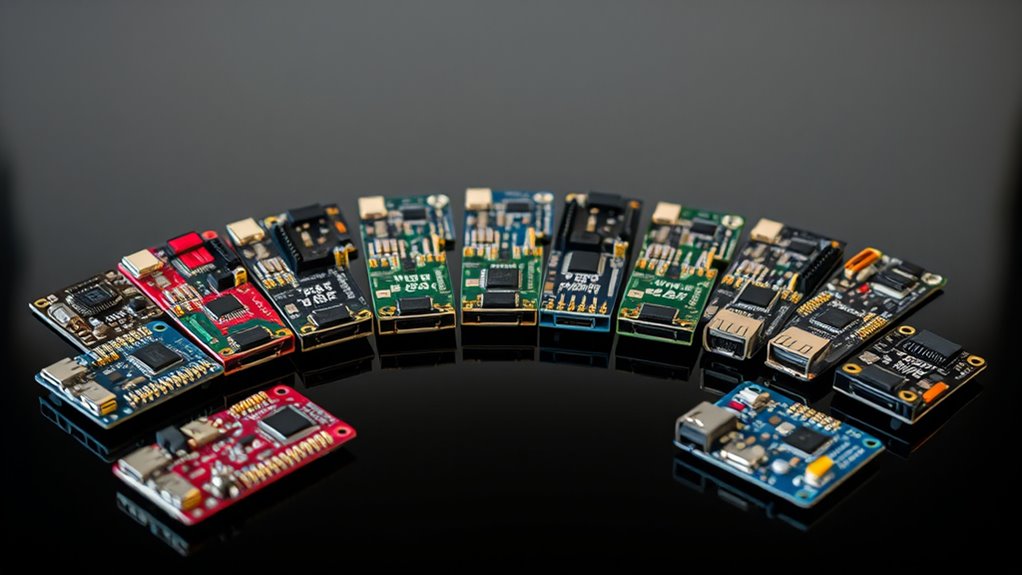

When selecting a microcontroller board, the key consideration is balancing performance, ease of use, and project requirements. The Arduino Uno REV3 stands out as the best overall choice for its reliability and broad community support, while the ESP32 WROOM-32 offers superior WiFi and Bluetooth capabilities for more advanced IoT projects. However, tradeoffs exist: more powerful boards tend to be more complex and pricier, whereas simpler options may lack connectivity features. Continue reading to see a detailed comparison of 15 top microcontroller boards, helping you find the best fit for your project goals.

Get privacy and security gear delivered free with Prime
- Fast, free delivery on millions of items
- Prime Video, Amazon Music and more included
- Member-only deals all year
Key Takeaways
- The top-rated boards balance connectivity features with ease of programming, making them suitable for both beginners and experienced developers.
- Many boards share similar microcontrollers (like the ATmega328P and ESP32), but differences in peripherals and form factors influence their ideal use cases.
- Boards with USB-C ports are becoming standard, offering faster and more reliable connections, especially for ongoing development.
- Starter kits with tutorials add value for beginners, but advanced users may prefer standalone boards for custom setups.
- Price varies widely; the most expensive boards often provide better performance and features, but budget options remain highly capable for simple projects.
| Hosyond 3-Pack ESP32 ESP-32S Development Board with USB-C WiFi Bluetooth Dual Core Microcontroller for Arduino IDE |  | Best Overall for Versatile IoT Development | Processor: Dual-core 32-bit CPU up to 240MHz | Connectivity: Wi-Fi 2.4GHz, Bluetooth | Interfaces: GPIO, UART, SPI, I2C | VIEW ON AMAZON | See Our Full Breakdown |
| LAFVIN Basic Starter Kit for ESP32 ESP-32S WiFi IoT Development Board with Tutorial |  | Best for Beginners Learning Electronics and IoT | Model: ESP32 ESP-32S | Included Components: LED, DHT11, OLED module, tutorial | Compatibility: Arduino IDE | VIEW ON AMAZON | See Our Full Breakdown |
| 3PCS Nano V3.0 Board with Cable, ATmega328P, CH340G Chip, 5V 16M, Microcontroller Compatible with Arduino (USB C Port) |  | Best for Cost-Effective Arduino Projects | Chip: ATmega328P, CH340G | Voltage: 5V | Clock Speed: 16MHz | VIEW ON AMAZON | See Our Full Breakdown |
| ELEGOO Presoldered Nano Board USB-C with Cable (3 Pack) Compatible with Arduino |  | Best for Ready-to-Use Basic Arduino Microcontrollers | Microcontroller: ATMEGA328P | Processor Speed: 16 MHz | Flash Memory: 32 KB | VIEW ON AMAZON | See Our Full Breakdown |
| ELEGOO ESP-32 Super Starter Kit with Tutorial Compatible with Arduino IDE |  | Best for All-in-One IoT Learning and Prototyping | Microcontroller: ESP-32 | Connectivity: Wi-Fi, Bluetooth 4.2 | Modules Included: Sensors, displays, motors, keypad, more | VIEW ON AMAZON | See Our Full Breakdown |
| Arduino Uno REV3 – ATmega328P Microcontroller, 16MHz, 14 Digital I/O Pins, 6 Analog Inputs, 32KB Flash, USB Connectivity, Compatible with Arduino IDE |  | Best Overall Microcontroller for Beginners and Education | Microcontroller: ATmega328P | Clock Speed: 16 MHz | Digital I/O Pins: 14 | VIEW ON AMAZON | See Our Full Breakdown |
| ESP32 WROOM-32 Development Board with USB-C, WiFi & Bluetooth | 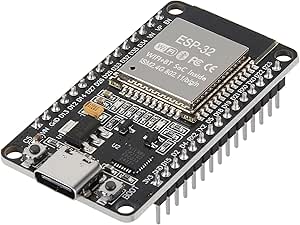 | Best for IoT Projects Requiring Wireless Connectivity and Dual-Core Performance | Memory Storage Capacity: 4 MB | Processor Speed: 240 MHz | Connectivity Technology: Wi-Fi, Bluetooth | VIEW ON AMAZON | See Our Full Breakdown |
| Seeed Studio XIAO ESP32C3 – Tiny MCU Board with Wi-Fi and BLE for IoT |  | Best for Ultra-Compact IoT Edge Devices with Low Power Consumption | Chip: ESP32-C3 32-bit RISC-V | Frequency: 160 MHz | Connectivity: Wi-Fi, BLE 5.0 | VIEW ON AMAZON | See Our Full Breakdown |
| ELEGOO 3PCS ESP-32 Dev Boards, ESP-WROOM-32, USB-C, WiFi Bluetooth 4.2 |  | Best for Multi-Device IoT Projects Requiring Wireless Connectivity and Over-the-Air Updates | Processor: Dual-core ESP32, up to 240 MHz | Connectivity: Wi-Fi 4.2, Bluetooth 4.2 | Interface: USB-C, GPIO, UART, SPI, I2C | VIEW ON AMAZON | See Our Full Breakdown |
| ESP-WROOM-32 ESP32 ESP-32S Development Board (3 Pack) |  | Best for IoT Projects Requiring Dual Connectivity | Wireless Frequency: 2.4GHz | Connectivity: WiFi + Bluetooth | Supported Protocols: LWIP, FreeRTOS | VIEW ON AMAZON | See Our Full Breakdown |
| 2Pcs Raspberry Pi Pico Development Board with RP2040 Dual-core ARM Cortex M0+ Processor |  | Best for Beginners and Versatile Embedded Projects | Processor: Dual-core ARM Cortex M0+ | Processor Speed: 133 MHz | RAM: 264 KB | VIEW ON AMAZON | See Our Full Breakdown |
| 6-Pack RP2040-Zero Board, Dual-Core Cortex M0+ Microcontroller |  | Best for Bulk Projects and Soldering Enthusiasts | Processor: RP2040 dual-core ARM Cortex M0+ | Clock Speed: up to 133 MHz | SRAM: 264 KB | VIEW ON AMAZON | See Our Full Breakdown |
| Nano V3.0 ATmega328P Micro-Controller Board for Arduino IDE (3-Pack with USB Cables) |  | Best for Arduino Enthusiasts and Simple Projects | Microcontroller: ATmega328P | Voltage: 5V | Clock Speed: 16MHz | VIEW ON AMAZON | See Our Full Breakdown |
| XIAO ESP32C3 3-Pack – RISC-V Tiny MCU Board with Wi-Fi and Bluetooth 5.0 |  | Best for Space-Constrained IoT Projects | Processor: ESP32-C3 32-bit RISC-V | Processor Speed: 160 MHz | RAM Memory: 0.4 MB | VIEW ON AMAZON | See Our Full Breakdown |
| microcontroller board | Connectivity |
|---|---|
| Hosyond 3-Pack ESP32 ESP-32S D | Wi-Fi 2.4GHz, Bluetooth |
| LAFVIN Basic Starter Kit for E | — |
| 3PCS Nano V3.0 Board with Cabl | — |
| ELEGOO Presoldered Nano Board | USB-C, GPIO, I2C |
| ELEGOO ESP-32 Super Starter Ki | Wi-Fi, Bluetooth 4.2 |
| Arduino Uno REV3 | — |
| ESP32 WROOM-32 Development Boa | — |
| Seeed Studio XIAO ESP32C3 | Wi-Fi, BLE 5.0 |
| ELEGOO 3PCS ESP-32 Dev Boards | Wi-Fi 4.2, Bluetooth 4.2 |
| ESP-WROOM-32 ESP32 ESP-32S Dev | WiFi + Bluetooth |
| 2Pcs Raspberry Pi Pico Develop | None onboard |
| 6-Pack RP2040-Zero Board | USB 1.1 |
| Nano V3.0 ATmega328P Micro-Con | — |
| XIAO ESP32C3 3-Pack | Wi-Fi, Bluetooth 5.0 |
More Details on Our Top Picks
Hosyond 3-Pack ESP32 ESP-32S Development Board with USB-C WiFi Bluetooth Dual Core Microcontroller for Arduino IDE
This set of three ESP32 boards stands out for their dual-core processors and extensive wireless capabilities, making them a flexible choice for both hobbyists and professionals. Compared with the ELEGOO ESP-32 Super Starter Kit, these boards focus purely on core development features without the additional modules, providing a cleaner platform for custom projects. The dual-core CPU up to 240MHz offers efficient multitasking, but setting up Wi-Fi and Bluetooth can be complex for newcomers. The compatibility with multiple development environments like Arduino IDE and MicroPython broadens their appeal. However, the lack of detailed accessory information and the need for some technical knowledge to configure wireless features are notable drawbacks.
Pros:- Powerful dual-core processor for multitasking and efficiency
- Rich interfaces including GPIO, UART, SPI, I2C for diverse projects
- Supports multiple development environments like Arduino IDE and MicroPython
Cons:- Requires technical knowledge for wireless setup and configuration
- Limited details on included accessories, which may affect initial setup
Best for: Intermediate to advanced developers needing powerful, flexible IoT microcontrollers
Not ideal for: Complete beginners who want a simple, plug-and-play experience without deep technical setup
- Processor:Dual-core 32-bit CPU up to 240MHz
- Connectivity:Wi-Fi 2.4GHz, Bluetooth
- Interfaces:GPIO, UART, SPI, I2C
- Power:Supports deep sleep and ultra-low power modes
- Compatibility:Arduino IDE, ESP-IDF, MicroPython, PlatformIO
Our verdict“This pick is best suited for users comfortable with technical configuration seeking a high-performance IoT microcontroller.”
LAFVIN Basic Starter Kit for ESP32 ESP-32S WiFi IoT Development Board with Tutorial
This starter kit is designed to introduce newcomers to electronics and programming with the ESP32 module. Unlike the Hosyond ESP32 boards, which focus on core development, this kit emphasizes learning through hands-on assembly with included components like LEDs, DHT11 sensors, and OLED displays. The comprehensive tutorials and code examples make it accessible for beginners, but it lacks advanced features for experienced users. The Arduino IDE compatibility simplifies programming, yet the kit’s focus on basic modules means it’s not ideal for complex projects that require specialized hardware. It’s a solid starting point for those new to IoT who want guided learning.
Pros:- Excellent for beginners learning electronics and programming
- Includes detailed tutorials and code examples
- Compatible with Arduino IDE for straightforward coding
Cons:- Limited to basic modules and features, not suitable for complex projects
- No onboard Wi-Fi or Bluetooth modules, only the ESP32 chip
Best for: Beginners seeking structured tutorials and simple IoT projects
Not ideal for: Advanced developers who need high-performance microcontrollers or extensive hardware support
- Model:ESP32 ESP-32S
- Included Components:LED, DHT11, OLED module, tutorial
- Compatibility:Arduino IDE
Our verdict“Perfect for newcomers who want a guided, beginner-friendly introduction to IoT development.”
3PCS Nano V3.0 Board with Cable, ATmega328P, CH340G Chip, 5V 16M, Microcontroller Compatible with Arduino (USB C Port)
These Nano V3.0 boards excel as affordable, versatile microcontrollers for straightforward Arduino projects, especially when multiple boards are needed. Compared to the ELEGOO presoldered Nano Board, these boards offer similar core features but rely on the CH340G chip, which may require driver installation for some operating systems. Their support for USB-C simplifies power and programming, making them more user-friendly than older models with mini USB ports. The 16MHz clock speed and limited onboard features mean they’re best suited for basic control tasks rather than intensive computing. Still, their low cost and compatibility across platforms make them a popular choice for DIYers.
Pros:- Affordable and supports multiple units for multi-project setups
- USB-C port simplifies power and programming
- Compatible with Arduino IDE across various OS platforms
Cons:- Uses CH340G chip, which may need driver setup
- Limited to 16MHz, unsuitable for high-speed applications
Best for: Hobbyists and students needing multiple microcontrollers for simple projects
Not ideal for: Advanced users requiring higher clock speeds, onboard Wi-Fi, or complex peripherals
- Chip:ATmega328P, CH340G
- Voltage:5V
- Clock Speed:16MHz
- USB Port:USB-C
- Digital I/O Pins:14 (6 PWM)
- Compatibility:Arduino Nano, Windows, Mac, Linux
Our verdict“Ideal for budget-conscious DIYers working on basic Arduino projects with multiple boards.”
ELEGOO Presoldered Nano Board USB-C with Cable (3 Pack) Compatible with Arduino
This trio of presoldered Nano boards offers a quick-start solution for Arduino projects, saving time on assembly. Compared to the CH340G-based Nano V3.0, these boards feature the same ATMEGA328P microcontroller but come preconfigured with headers, making them immediately usable on breadboards. The USB-C interface simplifies connection, and their compact size is ideal for space-constrained projects. However, the absence of onboard Wi-Fi or Bluetooth limits their application to control and measurement tasks. They’re a reliable, no-fuss choice for basic automation, but lack the advanced connectivity options found in ESP32-based boards. Driver installation remains necessary for some operating systems, which could pose initial setup hurdles.
Pros:- Presoldered headers save time and effort
- USB-C port simplifies connection and power supply
- Compact and ready-to-use on breadboards
Cons:- No onboard Wi-Fi or Bluetooth features
- Limited to basic microcontroller functions without advanced peripherals
Best for: Beginners and educators needing quick, reliable Arduino microcontrollers
Not ideal for: Projects requiring wireless communication or high processing power
- Microcontroller:ATMEGA328P
- Processor Speed:16 MHz
- Flash Memory:32 KB
- SRAM:2 KB
- EEPROM:1 KB
- Connectivity:USB-C, GPIO, I2C
Our verdict“Best for straightforward Arduino projects where ease of use and quick deployment matter most.”
ELEGOO ESP-32 Super Starter Kit with Tutorial Compatible with Arduino IDE
This comprehensive kit leverages the power of the ESP-32 microcontroller, offering Wi-Fi and Bluetooth connectivity along with a wide array of modules, sensors, and displays. Compared to the LAFVIN ESP32 starter kit, this package includes more components, making it ideal for learners wanting to explore multiple facets of electronics and IoT. The detailed tutorials and step-by-step instructions support beginners, yet the sheer volume of components may overwhelm those new to electronics. The ESP-32’s dual-core processor and extensive I/O make it suitable for complex projects, but the extensive setup and learning curve can be daunting for absolute beginners. Nonetheless, it provides a holistic environment for both education and advanced prototyping.
Pros:- Includes over 35 modules for diverse project possibilities
- Detailed tutorials make it accessible for beginners
- Supports Arduino IDE for easy programming
Cons:- Can be overwhelming due to the number of components
- Requires some electronics knowledge to maximize use
Best for: Beginners and learners interested in comprehensive IoT projects and prototyping
Not ideal for: Users seeking only a simple microcontroller without extensive peripherals or who prefer minimal setups
- Microcontroller:ESP-32
- Connectivity:Wi-Fi, Bluetooth 4.2
- Modules Included:Sensors, displays, motors, keypad, more
- Compatibility:Arduino IDE
- Number of Components:Over 35
Our verdict“Ideal for learners who want a complete IoT development environment with guided assistance.”
Arduino Uno REV3 – ATmega328P Microcontroller, 16MHz, 14 Digital I/O Pins, 6 Analog Inputs, 32KB Flash, USB Connectivity, Compatible with Arduino IDE
The Arduino Uno REV3 stands out for its simplicity and widespread use, making it an excellent choice for newcomers and educational settings. Compared to the ESP32 boards, it offers a more straightforward programming experience via the Arduino IDE, but its limited SRAM and EEPROM can restrict more complex projects. Its extensive community support and compatibility with various shields make it ideal for prototyping. However, it doesn’t support WiFi or Bluetooth out of the box, which limits IoT applications. This board is best suited for those starting with microcontrollers or developing basic automation projects. The limited memory and need for additional components for more advanced setups are tradeoffs to consider.Pros:- Easy to program with the Arduino IDE, ideal for beginners
- Multiple digital and analog I/O pins for versatile projects
- Widely supported with extensive tutorials and community resources
Cons:- Limited SRAM (2 KB) and EEPROM (1 KB), restricting complex applications
- Requires additional components for complete systems like sensors or shields
Best for: Beginners, students, and hobbyists interested in learning basic microcontroller programming and prototyping.
Not ideal for: Advanced IoT developers or anyone needing built-in wireless connectivity and higher memory capacity.
- Microcontroller:ATmega328P
- Clock Speed:16 MHz
- Digital I/O Pins:14
- Analog Inputs:6
- Flash Memory:32 KB
- Dimensions:3.15″L x 2.17″W x 0.98″H
Our verdict“This board makes the most sense for newcomers and educators focusing on fundamental microcontroller concepts.”
ESP32 WROOM-32 Development Board with USB-C, WiFi & Bluetooth
The ESP32 WROOM-32 offers impressive processing power with its dual-core 240 MHz CPU and integrated WiFi and Bluetooth, making it a top choice for connected IoT applications. Unlike the Arduino Uno, it supports multiple protocols and has ample processing capacity, but it requires a higher level of technical skill to set up and program. Its compact size and built-in connectivity make it ideal for developing smart devices or sensor networks. Still, the limited onboard storage (4MB) and lack of a display mean you’ll need to add external components for more complex interfaces. This board is perfect for experienced hobbyists and developers targeting IoT projects with wireless needs, but it’s less suited for those new to microcontrollers.Pros:- Supports multiple wireless protocols including WiFi and Bluetooth
- Powerful dual-core processor suitable for complex tasks
- Compact design with integrated antennas and reset/program buttons
Cons:- Requires technical expertise for setup and coding
- Limited onboard storage (4MB) may restrict large applications
- No onboard display or extensive I/O ports for direct user interaction
Best for: Intermediate to advanced developers building connected IoT devices with WiFi and Bluetooth requirements.
Not ideal for: Beginners or those needing a plug-and-play setup with extensive onboard features.
- Memory Storage Capacity:4 MB
- Processor Speed:240 MHz
- Connectivity Technology:Wi-Fi, Bluetooth
- Operating System:None (bare-metal)
- Processor Count:2
- Dimensions:Not specified (compact form factor)
Our verdict“Ideal for developers who need robust wireless connectivity and processing power for IoT applications.”
Seeed Studio XIAO ESP32C3 – Tiny MCU Board with Wi-Fi and BLE for IoT
The Seeed Studio XIAO ESP32C3 excels in size and low power use, making it an excellent choice for wearables or edge AI projects. Its tiny footprint (21×17.5mm) is a key advantage over larger boards like the ESP32 WROOM-32, especially when space is limited. Its RISC-V architecture and multiple I/O options support diverse IoT functions, but it offers less processing power and fewer onboard features than larger boards. The low power sleep modes extend battery life, yet the compact design means fewer pins and no onboard display. This makes it perfect for lightweight, battery-operated IoT devices but less ideal for projects requiring extensive I/O or complex processing.Pros:- Ultra-compact and lightweight, suitable for small devices
- Low power consumption with deep sleep modes
- Rich I/O options supporting various protocols
Cons:- Limited processing capability for intensive tasks
- Requires external components for complete IoT systems
- No onboard display or large memory capacity
Best for: Wearables, compact IoT sensors, and projects where space and power efficiency are priorities.
Not ideal for: Applications demanding high processing power, large memory, or extensive I/O ports.
- Chip:ESP32-C3 32-bit RISC-V
- Frequency:160 MHz
- Connectivity:Wi-Fi, BLE 5.0
- Power Modes:Deep sleep at 44μA
- Dimensions:21×17.5mm
- I/O:11 digital (PWM), 4 analog (ADC), UART, I2C, SPI
Our verdict“Best suited for lightweight, battery-powered IoT devices where size and power efficiency outweigh raw processing power.”
ELEGOO 3PCS ESP-32 Dev Boards, ESP-WROOM-32, USB-C, WiFi Bluetooth 4.2
Best for Multi-Device IoT Projects Requiring Wireless Connectivity and Over-the-Air Updates
View on AmazonThe ELEGOO ESP-32 boards deliver solid dual-core processing up to 240 MHz combined with integrated WiFi and Bluetooth 4.2, making them versatile for various IoT applications. They are comparable to the ESP32 WROOM-32 in features but come as a pack, offering cost-effective options for multi-device projects. The inclusion of USB-C simplifies programming, and OTA support facilitates firmware updates without physical access. However, setup and programming may challenge beginners, and the absence of onboard sensors or displays limits immediate interaction. These boards are best for developers managing multiple IoT nodes or sensors, yet less ideal for straightforward projects or beginners without prior experience.Pros:- High-performance dual-core processor suitable for complex IoT tasks
- Supports WiFi 4.2 and Bluetooth 4.2 for versatile connectivity
- Over-the-air firmware update support for easy maintenance
Cons:- Requires some technical knowledge for initial setup
- USB-C cable not included, which could be inconvenient
- Limited onboard features; external peripherals needed for full functionality
Best for: Developers deploying multi-node IoT networks with wireless communication and OTA update needs.
Not ideal for: Complete beginners or projects requiring extensive onboard I/O or display elements.
- Processor:Dual-core ESP32, up to 240 MHz
- Connectivity:Wi-Fi 4.2, Bluetooth 4.2
- Interface:USB-C, GPIO, UART, SPI, I2C
- Power Modes:Dynamic clock scaling, low-power modes
- Size:Not specified (compact form factor)
- OTA Support:Yes
Our verdict“A strong choice for IoT developers needing multiple wireless-enabled nodes with easy firmware management.”
ESP-WROOM-32 ESP32 ESP-32S Development Board (3 Pack)
This set of three ESP-WROOM-32 boards stands out for integrating both WiFi and Bluetooth, making it ideal for IoT applications that demand versatile wireless communication. Compared with the XIAO ESP32C3, which supports Bluetooth 5.0 but has less RAM, the ESP-WROOM-32 offers more extensive connectivity options at the cost of slightly increased complexity in setup. Its compatibility with Arduino IDE simplifies development for those familiar with Arduino, though it requires some technical know-how to configure properly. The low power mode support is a plus for battery-powered projects, but its operation is limited to the 2.4GHz band, which may affect performance in crowded environments.
Pros:- Dual-mode WiFi and Bluetooth support for flexible connectivity
- Compatible with Arduino IDE for easier programming
- Low power consumption ideal for battery-powered devices
Cons:- Requires some technical knowledge for initial setup
- Limited to 2.4GHz frequency band, which may affect performance in congested WiFi environments
Best for: IoT developers needing reliable dual-mode wireless communication for versatile applications
Not ideal for: Beginners seeking a plug-and-play experience, as setup and configuration can be complex
- Wireless Frequency:2.4GHz
- Connectivity:WiFi + Bluetooth
- Supported Protocols:LWIP, FreeRTOS
- Number of Boards:3
Our verdict“This board suits developers familiar with wireless IoT projects who need robust dual connectivity and low power features.”
2Pcs Raspberry Pi Pico Development Board with RP2040 Dual-core ARM Cortex M0+ Processor
The Raspberry Pi Pico offers a compelling combination of processing power and flexibility, featuring a dual-core ARM Cortex M0+ processor running at 133 MHz. Compared with the RP2040-Zero, which is more compact but less feature-rich, the Pico provides more GPIO options and hardware interfaces, making it suitable for more complex projects. Its support for multiple programming languages, including MicroPython and C++, broadens its appeal to beginners and advanced users alike. However, the Pico lacks onboard WiFi or Bluetooth, unlike the XIAO ESP32C3, which means additional modules are necessary for wireless connectivity. Its external programming setup can be an obstacle for absolute beginners unfamiliar with microcontroller environments.
Pros:- Powerful dual-core ARM Cortex M0+ processor
- Supports MicroPython, C++, and other languages
- Rich set of GPIO, I2C, SPI, and UART interfaces
- Compact and versatile for embedded projects
Cons:- Requires external programming setup and environment
- No onboard wireless connectivity, necessitating external modules
Best for: Hobbyists and students seeking a powerful, affordable microcontroller with broad programming support
Not ideal for: Users needing integrated wireless features or plug-and-play simplicity
- Processor:Dual-core ARM Cortex M0+
- Processor Speed:133 MHz
- RAM:264 KB
- Flash Memory:2 MB
- GPIO Pins:30
- Connectivity:None onboard
Our verdict“Ideal for learners and makers who want a flexible, high-performance microcontroller without integrated WiFi.”
6-Pack RP2040-Zero Board, Dual-Core Cortex M0+ Microcontroller
The RP2040-Zero set offers six compact boards featuring dual-core ARM Cortex M0+ processors, making it a cost-effective choice for bulk deployment and testing. Compared with the Raspberry Pi Pico, these boards are similar in core specs but come in a simpler form factor with a stamp hole design for custom mounting. Their extensive GPIO and peripheral support make them suitable for embedded systems that need multiple interfaces, but the necessity of soldering some connections limits their immediate plug-and-play appeal. These boards are best suited for experienced hobbyists or educators comfortable with soldering and microcontroller wiring, rather than beginners seeking ready-to-use solutions.
Pros:- Powerful dual-core processor with ample peripherals
- Supports low-power sleep and hibernation modes
- Flexible mounting with stamp hole design
Cons:- Requires soldering for many connections
- Limited immediate usability for newcomers
Best for: Advanced hobbyists, educators, or makers who need multiple boards for prototyping or bulk projects
Not ideal for: Beginners or those looking for ready-to-use microcontrollers without soldering
- Processor:RP2040 dual-core ARM Cortex M0+
- Clock Speed:up to 133 MHz
- SRAM:264 KB
- Flash Memory:2 MB
- GPIO Pins:29 (20 accessible)
- Connectivity:USB 1.1
Our verdict“Best suited for experienced users needing multiple microcontrollers for embedded or educational projects.”
Nano V3.0 ATmega328P Micro-Controller Board for Arduino IDE (3-Pack with USB Cables)
The Nano V3.0 is a staple for Arduino fans, featuring the classic ATmega328P microcontroller, which is familiar and reliable for simple electronics projects. Compared with the ESP32 boards like the ELEGOO ESP-32 Super Starter Kit, the Nano offers fewer connectivity options but excels in simplicity and compatibility with the Arduino ecosystem. Its small, breadboard-friendly form factor makes it ideal for compact projects, though it demands some familiarity with microcontroller programming. The inclusion of only basic accessories and the absence of onboard wireless features limit its versatility for more advanced IoT applications. Nonetheless, it remains a solid choice for educational settings and basic automation tasks.
Pros:- Compatible with Arduino IDE on multiple OS
- Small, breadboard-friendly size
- Supports USB and ISP programming methods
Cons:- Requires familiarity with programming microcontrollers
- Limited to basic features without onboard wireless
Best for: Beginners and hobbyists focused on Arduino-based projects and learning microcontroller programming
Not ideal for: Users needing integrated WiFi or Bluetooth for IoT projects or more complex applications
- Microcontroller:ATmega328P
- Voltage:5V
- Clock Speed:16MHz
- Chip:CH340G
- Includes:3 Nano boards, 3 USB cables
Our verdict“Perfect for Arduino learners and simple automation projects, but not suited for wireless IoT applications.”
XIAO ESP32C3 3-Pack – RISC-V Tiny MCU Board with Wi-Fi and Bluetooth 5.0
The XIAO ESP32C3 packs impressive RF performance into a tiny form factor, measuring just 21 x 17.5mm. Compared to the ESP-WROOM-32, which offers more GPIO pins and a broader set of peripherals, the XIAO excels in size and power efficiency, ideal for embedded applications with space constraints. Its support for Wi-Fi and Bluetooth 5.0 provides modern wireless capabilities, but the limited RAM of 0.4MB can restrict complex or memory-intensive applications. Compatibility with multiple development environments like Arduino IDE and MicroPython adds flexibility, though users should be comfortable with embedded development tools to maximize its potential. This board is perfect where size and RF performance matter most, but not for projects requiring extensive onboard peripherals.
Pros:- Compact, lightweight design perfect for embedded applications
- Supports both Wi-Fi and Bluetooth 5.0 for modern wireless features
- Compatible with popular development environments like Arduino and MicroPython
Cons:- Limited RAM (0.4 MB), restricting complex applications
- No onboard peripherals, requiring additional components for functionality
Best for: Developers building small IoT devices or wearables needing efficient wireless connectivity
Not ideal for: Users planning larger or more complex projects needing extensive onboard resources
- Processor:ESP32-C3 32-bit RISC-V
- Processor Speed:160 MHz
- RAM Memory:0.4 MB
- Connectivity:Wi-Fi, Bluetooth 5.0
- Form Factor:21 x 17.5mm
- Power Modes:Deep sleep as low as 44 μA
Our verdict“Excellent for space-sensitive IoT projects where RF performance and size are key priorities, but not for projects needing extensive onboard features.”
How We Picked
Our evaluation focused on performance, connectivity options, ease of use, build quality, and value. We prioritized microcontroller boards that are well-supported with software libraries and documentation, making them accessible to a broad range of users. Boards with versatile I/O pins, reliable power options, and active community support earned higher scores. We also considered form factor and price to ensure options are practical for different types of projects. Our ranking reflects a balance of these factors, highlighting the boards that deliver the best overall experience for various user needs.
Factors to Consider When Choosing Microcontroller Board
Choosing the right microcontroller board depends on several factors that influence your project’s success. Understanding these can help prevent costly mistakes and ensure you select a device that matches your skill level and project complexity. Consider the microcontroller’s processing power, connectivity options, compatibility with development environments, and physical size. Also, think about future scalability, available accessories, and community support, which can dramatically impact your development experience. Below, I detail key considerations to keep in mind before making your purchase.
Processing Power and Performance
The core microcontroller’s speed, memory, and processing capabilities determine how complex your project can be. Boards based on the ESP32 or RP2040 generally offer more processing power and multitasking ability, suitable for demanding IoT or automation projects. Simpler boards like the Arduino Uno are ideal for straightforward tasks such as sensor readings or basic control. Matching the microcontroller’s performance to your project complexity helps avoid bottlenecks or overpaying for unnecessary power.
Connectivity Options
Assess whether your project needs WiFi, Bluetooth, or other communication protocols. The ESP32 series excels here, providing built-in WiFi and Bluetooth, making it perfect for IoT applications. Conversely, boards like the Arduino Uno lack native wireless features but can be expanded with shields. Remember that wireless connectivity adds complexity; if your project doesn’t need it, a simpler, wired-only board might be more reliable and easier to troubleshoot.
Compatibility and Ecosystem
Ease of development is shaped by the software ecosystem and hardware compatibility. Arduino boards, with their extensive library support and beginner-friendly IDE, are ideal for newcomers. Boards like the ESP32 and Raspberry Pi Pico are more versatile but may require familiarity with different development tools. Ensuring your chosen board works well with your preferred programming environment and has active community support can save time and prevent frustration.
Physical Size and Form Factor
The physical dimensions influence how and where you can deploy your project. Compact boards like the Seeed Studio XIAO are suitable for space-constrained applications, while larger development kits offer more pins and peripherals for complex setups. Consider future expansion and whether you need headers, onboard sensors, or specific connector types to match your project’s physical requirements.
Power Supply and Durability
Reliable power options are vital for projects running in variable environments. Some boards support USB power, while others can run on batteries or external power supplies. Pay attention to voltage and current ratings to prevent damage. Durability features, like robust connectors and solid build quality, matter if your project will operate in outdoor or industrial settings.
Frequently Asked Questions
Can I use an Arduino Uno for IoT projects?
While the Arduino Uno can handle basic sensor data collection and control tasks, it lacks built-in WiFi or Bluetooth, which are often essential for IoT applications. To add connectivity, you would need external shields, which can complicate the setup and increase costs. For straightforward IoT projects, boards with native wireless features like the ESP32 or Raspberry Pi Pico W generally provide a more streamlined experience and better performance.
Is a starter kit necessary for beginners?
Starter kits can significantly ease the learning curve by providing essential components and tutorials, making them highly recommended for newcomers. They often include sensors, LEDs, and breadboards that help you experiment and learn the basics effectively. However, if you prefer a more minimalist approach or already have some components, a standalone microcontroller board might be sufficient to start coding and testing your ideas.
What’s the advantage of boards with USB-C over micro USB?
USB-C ports offer faster data transfer, more reliable connections, and are becoming the industry standard for modern electronics. They also support higher power delivery, which can be beneficial for powering peripherals or larger projects. Choosing a board with USB-C can make setup and debugging smoother, especially as more peripherals and accessories evolve to support this connector type.
Should I prioritize processing power or connectivity?
This depends on your project’s focus. If your project involves complex calculations, real-time data processing, or multitasking, then a board with higher processing capabilities like the ESP32 or Raspberry Pi Pico is preferable. However, if your main goal is remote sensing or simple control with wireless communication, prioritizing connectivity features may be more beneficial. Balancing both is ideal, but understanding your primary needs guides the best choice.
Are compatible accessories and expansion options important?
Absolutely. Compatibility with accessories such as sensors, shields, and expansion boards can greatly extend your project’s capabilities. Boards with standardized headers and widespread support tend to have a larger ecosystem of compatible modules, simplifying upgrades and customization. For long-term projects, choosing a board with a broad accessory ecosystem can save time and reduce frustration.
Conclusion
For most users starting out or working on general projects, the Arduino Uno REV3 offers a reliable and easy-to-use platform, making it the best overall choice. For those focused on IoT or wireless applications, the ESP32 WROOM-32 provides excellent connectivity at a reasonable price. If budget is a concern, the Raspberry Pi Pico delivers solid performance without breaking the bank. Beginners will appreciate kits with tutorials, while advanced developers should consider boards with more processing power and expansion options. Ultimately, your selection should align with your project’s complexity, required features, and your familiarity with development tools.
Fall Picks
fall essentials
As an affiliate, we earn on qualifying purchases.