As a small business owner, you’re a prime target for cyber threats. It’s essential to implement robust cybersecurity measures. Start by training your staff to recognize phishing attempts and manage sensitive data securely. Utilize data encryption and adopt a multi-layered security approach, including regular software updates and backups. Additionally, ensuring your systems are monitored prevents vulnerabilities. The right strategies can protect your business and clients, and there’s more to explore to strengthen your defenses.
Key Takeaways
- Provide regular employee training to recognize threats like phishing and manage sensitive information securely.
- Implement strong data encryption to protect customer data and comply with regulations.
- Adopt a multi-layered security approach using firewalls, anti-virus, and regular software updates.
- Establish robust backup and recovery strategies, including encrypted on-site and cloud backups.
- Maintain continuous vigilance with proactive cybersecurity measures to mitigate risks effectively.
In today’s digital landscape, how secure is your small business from cyber threats? The unfortunate reality is that small businesses often become prime targets for cybercriminals. They may think that their size makes them invisible, but that’s far from the truth. To protect your assets, you need to take proactive steps in enhancing your cybersecurity measures.
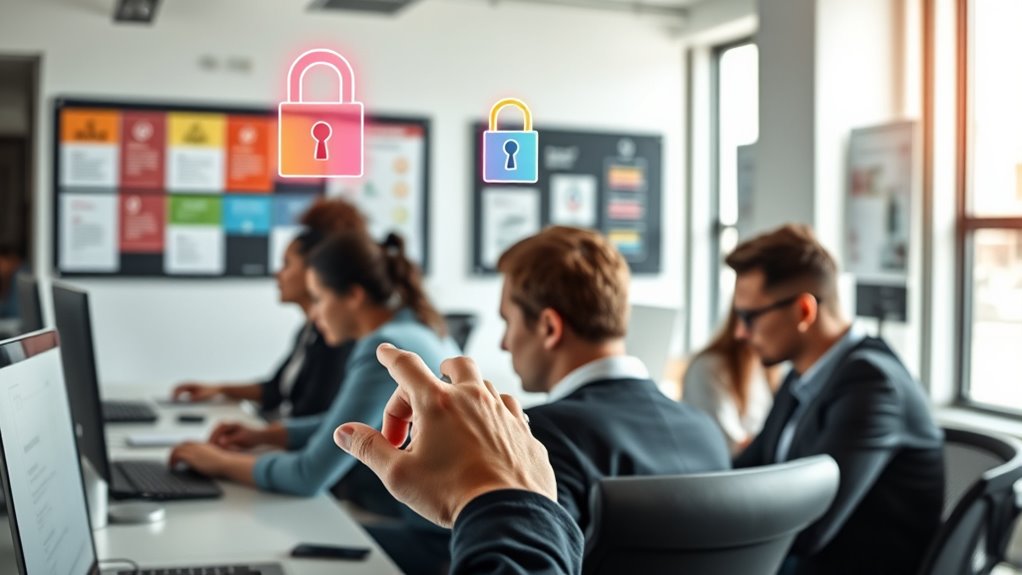
One of the most effective ways to safeguard your business is through employee training. Your staff is your first line of defense against cyber threats. They need to understand the risks and recognize suspicious activities. Regular training sessions can empower your employees with the knowledge to identify phishing emails, avoid harmful links, and manage sensitive information safely. Make sure they know how to create strong passwords and change them regularly. When your team is well-informed, they become a formidable barrier against potential attacks, reducing the likelihood of human error leading to breaches.
Empower your employees with regular training to strengthen your first line of defense against cyber threats.
In addition to training, data encryption is vital in protecting your business data. Encrypting sensitive information ensures that even if cybercriminals manage to access your data, it remains unreadable without the appropriate decryption key. This is particularly important for any customer data, financial records, or proprietary information you might handle. By implementing robust encryption methods, you’re not just complying with regulations but also gaining your clients’ trust. They expect you to protect their information, and showing that you take this seriously can set you apart from competitors. Consider using self-watering features in your data management solutions to enhance efficiency and security.
Furthermore, consider adopting a multi-layered security approach. Use firewalls, anti-virus software, and intrusion detection systems to add additional layers of protection. Regularly update your software to patch vulnerabilities, as outdated systems can serve as gateways for hackers. Maintenance isn’t a one-time task; it requires constant vigilance.
Lastly, don’t overlook the importance of backing up your data. Regular backups can save you from a significant loss in case of a cyber attack. Whether you choose to back up data on-site or through cloud services, ensure that these backups are also encrypted for added security. It’s not just about preventing attacks but also preparing for recovery if they occur.
Frequently Asked Questions
What Is the Average Cost of a Cybersecurity Breach for Small Businesses?
The average cost of a cybersecurity breach for small businesses can reach around $200,000. If you don’t have cyber insurance, those costs can escalate quickly, covering things like breach response and legal fees. You might face disruptions that impact your revenue and customer trust too. Investing in both preventive measures and cyber insurance can help mitigate these risks, ensuring you’re better prepared if a breach occurs. Don’t underestimate the potential financial impact!
How Often Should Small Businesses Update Their Cybersecurity Policies?
You should update your cybersecurity policies at least annually, but more often if there’s a significant change in your business or new threats emerge. It might feel overwhelming, but regular policy reviews and employee training are essential. By keeping your team informed about the latest risks and protocols, you foster a culture of security. Don’t wait for a breach to happen; proactive measures can save you time and money in the long run.
Are There Specific Cybersecurity Certifications for Small Business Owners?
Yes, there are specific cybersecurity certifications for small business owners. You can pursue small business certifications like CompTIA Security+ or Certified Information Systems Security Professional (CISSP) to enhance your cybersecurity credentials. These programs help you understand best practices and strengthen your business’s defenses. Additionally, consider certifications tailored for your industry, as they can provide specialized knowledge to protect your assets effectively. Investing in these certifications boosts your skills and safeguards your business.
Can Small Businesses Afford Professional Cybersecurity Services?
Sure, you can afford professional cybersecurity services! Think of it like hiring a personal trainer for your business’s digital health. While some might assume it’s too pricey, there are affordable solutions tailored for small businesses. You can also combine these with DIY strategies to maximize your security without breaking the bank. Investing in cybersecurity now can save you from costly breaches down the line, making it a smart financial decision.
What Are the Signs of a Cybersecurity Breach?
You’ll notice several signs of a cybersecurity breach, like unexpected system slowdowns or crashes. If you spot unusual login attempts or unauthorized access to your accounts, that’s a red flag. Phishing scams often lead to compromised data, so be wary of suspicious emails or messages asking for sensitive information. Regularly monitor your systems and user activities to catch these issues early, helping you maintain your business’s security and integrity.
Conclusion
Don’t let the fear of costs hold you back from securing your small business. Investing in cybersecurity isn’t just an expense; it’s a crucial step to protect your dreams and hard work. Remember, a single breach can lead to devastating losses—both financially and emotionally. By taking proactive measures today, you’re not just safeguarding your data; you’re ensuring a brighter, more secure future for your business and everyone who depends on it. You’ve got this!
Fall Picks
fall essentials
As an affiliate, we earn on qualifying purchases.