

Hospitals targeted by ransomware face extreme disruptions that can put patient lives at risk. Attackers often breach systems through phishing or supply chain vulnerabilities, then encrypt critical data and systems. This forces healthcare providers to revert to manual workflows, delaying surgeries and emergency care. These attacks can also expose sensitive records and lead to costly recovery efforts. If you want to uncover how these breaches happen and what’s being done to protect hospitals, there’s more to contemplate.
Key Takeaways
- Ransomware attacks on hospitals cause operational chaos, delaying critical care and risking patient safety.
- Attackers use phishing, lateral movement, and third-party breaches to infiltrate hospital networks.
- Breaches can expose millions of records, trigger costly ransom demands, and disrupt vital medical services.
- Manual workflows and system outages increase medical errors, elevate mortality risks, and hinder emergency response.
- Effective mitigation requires layered security, robust backups, incident planning, and threat intelligence sharing.
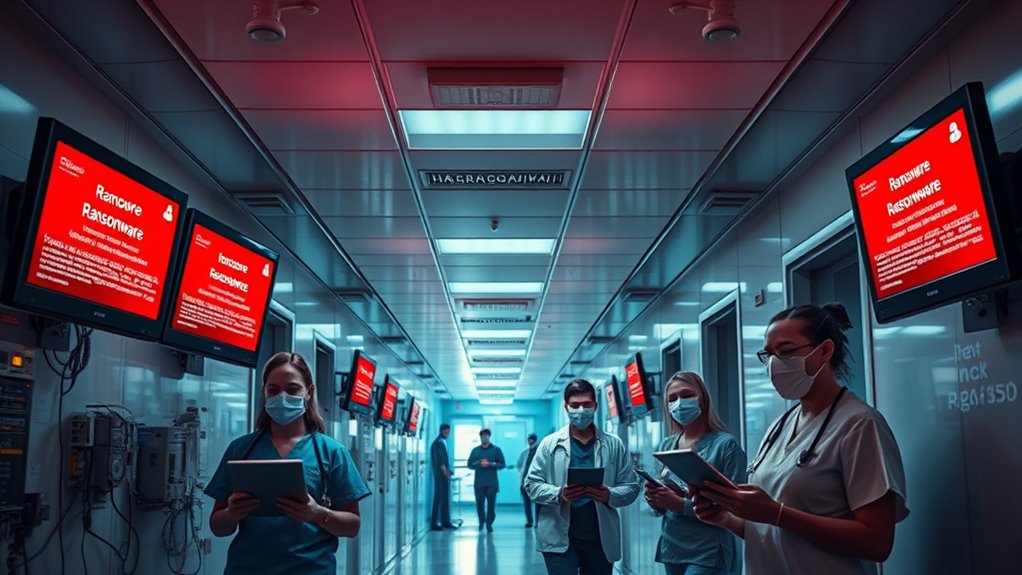
Hospitals are increasingly targeted by ransomware attacks, disrupting critical healthcare operations and putting patient safety at risk. In 2025 alone, there have been 293 recorded attacks against hospitals, clinics, and direct-care providers in just the first nine months—a 30% rise compared to previous periods. These breaches have exposed over 6 million healthcare records, with the average ransom demand around $532,000 per incident. Strains like INC, Qilin, SafePay, RansomHub, and Medusa have been particularly active, often used in high-impact campaigns. Major breaches have affected hundreds of thousands of patients at once, with some campaigns exposing more than 320,000 records. Attackers increasingly employ double-extortion tactics—stealing sensitive data before encrypting systems and threatening public disclosure to pressure hospitals into paying.
Hospitals face rising ransomware threats, exposing millions of records and using double-extortion tactics to pressure payments.
When a ransomware attack hits, your hospital faces immediate operational chaos. Appointments, surgeries, and emergency services get canceled or diverted, jeopardizing time-sensitive care. Evidence shows that neighboring hospitals also suffer, with an 81% increase in cardiac arrest cases and reduced survival rates following regional disruptions. Diagnostic labs, blood banks, and pathology services become inaccessible, delaying cancer treatments and elective procedures. During recovery, hospitals often declare “mini disaster” statuses, reverting to manual workflows that increase clinical workload and error risk. These outages don’t just inconvenience; they cause real harm, sometimes leading to lawsuits and investigations that link operational failures to severe patient outcomes, including deaths. Additionally, the complexity of hospital IT environments, including legacy systems and interconnected devices, further complicates detection and response efforts.
The attack vectors are sophisticated. Phishing and credential theft remain the primary entry points, often followed by lateral movement within networks to critical systems and data exfiltration before encryption. Supply chain compromises and third-party vendor breaches are increasingly common, providing attackers with easier access to hospital networks. Medical devices and IoMT components are targeted, aiming to disrupt diagnostic and treatment equipment. Many attackers now use double-extortion tactics, exfiltrating data first and then encrypting systems while threatening public leaks. Hospitals often face higher ransom demands and pressure to pay quickly, exploiting the life-and-death stakes involved.
Financially, these attacks cost hospitals millions. The average breach in 2024 was estimated at $7.42 million, with recovery costs sometimes exceeding $20 million. Ransom demands for critical access hospitals average around $840,000, with recovery taking weeks. Some incidents have caused over $50 million in lost revenue without paying ransom. The long-term costs include regulatory fines, legal actions, and damage to reputation. Publicized breaches erode patient trust, reduce referrals, and can lead to class-actions or wrongful-death lawsuits, especially when clinical harm is linked to system outages. Implementing security best practices such as layered defenses, routine backup testing, and incident response planning is crucial to mitigate these risks effectively.
Detection and response are complicated by hospitals’ complex IT environments, including legacy systems, IoMT devices, and shared vendor networks. Many hospitals lack robust backups, making downtime longer and recovery more costly. Manual workarounds increase clinician errors and slow throughput. To combat these threats, security experts recommend layered defenses—multi-factor authentication, network segmentation, and routine backup testing. Developing a thorough incident response plan, maintaining vendor security controls, and sharing threat intelligence with agencies like CISA and HHS are essential steps to safeguard patient safety and maintain operational resilience.
Top picks for "hospital held hostage"
Open Amazon search results for this keyword.
As an affiliate, we earn on qualifying purchases.
Frequently Asked Questions
How Do Hospitals Typically Detect Ransomware Infections Early?
You detect ransomware infections early by monitoring your network for unusual activity, like unexpected file changes or large data transfers. You should use advanced endpoint detection tools that flag suspicious behaviors, such as unauthorized access attempts or malware signatures. Regularly scanning systems, maintaining real-time alerts, and analyzing logs help catch threats before they spread. Employee training on phishing recognition also plays a critical role in preventing initial infection and enabling quicker detection.
What Are the Most Effective Ways to Prevent Ransomware Attacks in Healthcare?
To prevent ransomware attacks in healthcare, you should implement multi-layer defenses like strong phishing-resistant MFA, endpoint detection, and network segmentation. Regularly patch systems and maintain immutable, air-gapped backups. Enforce strict vendor risk management, requiring security controls and continuous monitoring. Develop extensive incident playbooks for clinical continuity, and strengthen reporting and collaboration with authorities like CISA and HHS. These steps create a robust defense, reducing your risk of devastating cyber incidents.
How Long Does It Usually Take to Fully Recover From a Hospital Ransomware Incident?
Recovery from a hospital ransomware attack can feel like rebuilding a shattered mirror, taking weeks or even months to piece everything back together. You might spend anywhere from two to six weeks restoring systems, testing backups, and ensuring patient safety. During this time, manual workflows become your lifeline, and every delay can ripple into patient care. Swift, well-planned responses shorten this process, but full recovery often remains a marathon, not a sprint.
Are There Legal Penalties for Hospitals Failing to Prevent Ransomware Breaches?
Yes, hospitals can face legal penalties if they fail to prevent ransomware breaches. You might be subject to fines, lawsuits, or regulatory actions under laws like HIPAA, which mandate protecting patient data. Authorities can impose penalties for non-compliance, data breaches, or failure to implement adequate security measures. These legal consequences aim to hold you accountable, encourage better cybersecurity practices, and ensure patient safety and privacy are prioritized.
What Support Resources Are Available for Hospitals Facing Ransomware Extortion Demands?
You have access to several support resources if facing ransomware extortion demands. Government agencies like CISA and HHS offer threat intelligence, incident response guidance, and coordination assistance, helping you manage the crisis. Industry groups and healthcare coalitions provide peer support and best practices. Cyber insurance providers can also assist with recovery costs and negotiations. Remember, approximately 30% of hospitals are targeted this year, so leveraging these resources is essential to protect your facility and patients.
Conclusion
This attack shows how ransomware can turn hospitals into battlegrounds, where lives hang in the balance. Just as a thief steals your peace of mind, hackers threaten patient safety and trust. Remember, behind every click and firewall is a silent guardian—your vigilance. If we don’t act now, the next victim could be someone you love. The question isn’t if, but when, we’ll face another attack—are you prepared to stand guard?