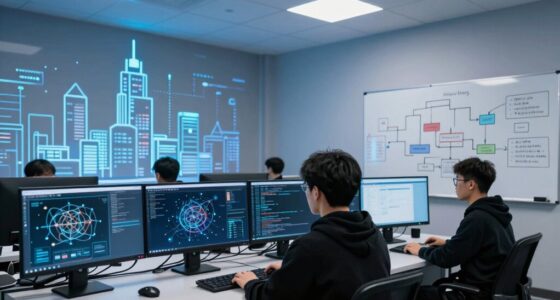

Cybersecurity AI is advancing rapidly with data-driven improvements, enhancing threat classification and incident response. Machine learning models revolutionize threat detection accuracy, proactively mitigating diverse attacks. Adaptive learning refines strategies for emerging threats, bolstering real-time threat mitigation. Human-AI collaboration optimizes defense mechanisms, streamlining operations and fortifying against evolving threats. These innovations, along with continuous enhancements in threat detection capabilities, provide efficient tools for cybersecurity experts to combat sophisticated cyber threats. Explore further to uncover the latest advancements shaping the future of cybersecurity AI.
Key Takeaways
- Enhanced data-driven AI refines security protocols efficiently.
- Advanced machine learning models revolutionize threat detection accuracy.
- Adaptive learning algorithms adjust strategies for emerging threats.
- Human-AI collaboration optimizes incident response and defense mechanisms.
- AI continuously advances threat detection through data analysis and automation.
Data-Driven Improvements
Data-driven enhancements in AI for cybersecurity play a pivotal role in detecting malicious activity patterns and refining security protocols. By leveraging vast amounts of data, cybersecurity AI systems can analyze and identify potential threats more efficiently and accurately. These improvements enable AI to continuously learn from past data, enhancing its threat classification capabilities and overall adaptability in combating cyber threats.
Through the integration of advanced machine learning tools, AI algorithms can now adjust strategies based on evolving cyber threats and changing conditions. This adaptability is essential in staying ahead of malicious actors and maintaining robust cybersecurity defenses.
Additionally, the collaboration between human experts and AI technologies is vital for refining incident response capabilities and ensuring a proactive approach to cybersecurity.
Regular audits and assessments of AI security protocols are imperative to continually enhance and maintain the effectiveness of cybersecurity AI systems. By embracing data-driven improvements, organizations can better equip themselves to combat sophisticated cyber threats and safeguard their digital assets effectively.
Better Machine Learning Models

Enhancements in machine learning models within cybersecurity AI have revolutionized threat detection and response capabilities. By leveraging advanced machine learning algorithms, cyber systems can now learn from vast amounts of data to identify potential threats with higher accuracy and efficiency.
These Algorithms enable artificial intelligence (AI) in Cyber Security to proactively detect and mitigate various types of attacks.
The integration of better machine learning models allows AI to continuously adapt and improve its threat classification abilities. This means that cybersecurity AI systems are better equipped to analyze complex patterns of malicious behavior and optimize security measures accordingly.
Additionally, the use of adaptive learning further enhances these capabilities by enabling AI to adjust its responses based on evolving threat landscapes. This synergy between humans and AI in developing and utilizing cutting-edge machine learning models empowers organizations to strengthen their incident response strategies and safeguard their digital assets effectively.
Adaptive Learning
The implementation of adaptive learning in cybersecurity AI systems enables continuous adjustment of strategies to effectively combat emerging threats and evolving conditions. By integrating adaptive learning algorithms, these AI systems can enhance threat detection accuracy and response effectiveness.
Through behavior analysis and pattern recognition, cybersecurity AI with adaptive learning capabilities strengthens real-time threat mitigation, allowing for proactive security measures against dynamic threats. These systems learn from previous incidents to develop new defense mechanisms that can counter sophisticated attacks effectively.
The incorporation of adaptive learning not only enhances the overall cybersecurity posture but also guarantees that AI can adapt to changing landscapes swiftly. This dynamic security approach provides a robust line of defense against ever-evolving cyber threats, offering a proactive stance in safeguarding critical assets and data from malicious actors.
Human & AI Collaboration
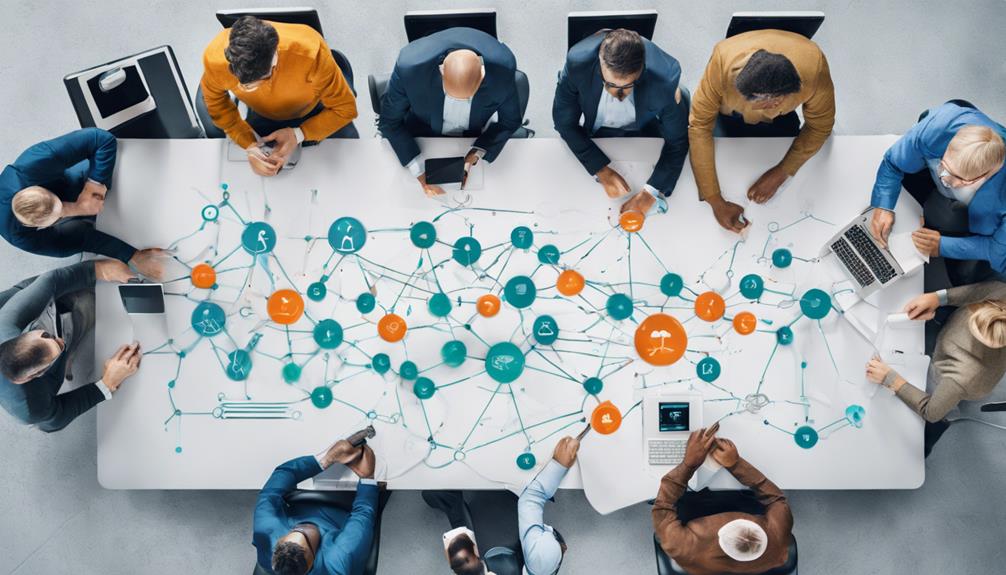
Effective cybersecurity defense mechanisms are achieved through the collaborative efforts of human expertise and AI analytical capabilities. In the domain of cybersecurity, the fusion of human intuition with AI's data processing prowess is revolutionizing incident response and threat detection.
By working together, humans and AI systems can rapidly identify and address security incidents, bolstering overall defense strategies. Security professionals leverage AI to automate mundane tasks, freeing up valuable time to tackle complex security challenges that require human ingenuity.
This collaboration not only streamlines operations but also enhances the accuracy and efficiency of threat detection processes. The harmonious partnership between humans and AI in cybersecurity signifies a new era where the strengths of each are harnessed to fortify defenses against evolving threats.
Threat Detection Enhancements
AI's role in cybersecurity has greatly enhanced threat detection capabilities through its ability to analyze vast amounts of data for identifying patterns of anomalous behavior. By leveraging AI algorithms and models, security systems can now proactively identify threats, including those stemming from AI-driven cyber attacks. This innovation not only streamlines the workload of cybersecurity teams but also enables quicker response times.
With the integration of threat intelligence, endpoint security measures have become more robust, reducing false positives and allowing for the prioritization of alerts for more effective incident management. Additionally, the continuous advancement and updating of AI models make sure that cybersecurity experts are equipped with the most efficient tools to combat evolving threats.
Automation in threat response processes further enhances cybersecurity measures, facilitating rapid isolation and escalation procedures. By embracing these enhancements in threat detection, organizations can fortify their defenses against sophisticated cyber threats.
Frequently Asked Questions
How Is Cybersecurity AI Being Improved?
Cybersecurity AI is continuously enhanced through data-driven improvements, better machine learning models, and adaptive learning integration. These advancements enable AI to combat AI-enhanced cyber threats effectively, optimize security policies, and collaborate with humans for a holistic cybersecurity approach.
How Can AI Be Used to Improve Security?
AI can bolster security by automating threat detection, streamlining incident response, and fortifying defenses against evolving cyber threats. Leveraging AI's predictive capabilities enhances proactive identification and mitigation of risks, diminishing potential vulnerabilities and safeguarding critical assets.
What Does AI Do in Cyber Security?
In cybersecurity, AI plays a vital role in automating threat detection, response, and management processes. By analyzing data for patterns and anomalies, AI enhances endpoint security, improves threat intelligence, and continuously evolves to optimize security strategies.
What Is the Main Challenge of Using AI in Cybersecurity?
The main challenge of using AI in cybersecurity lies in bridging the profound knowledge gap between cybersecurity experts and AI developers, fostering misunderstandings that hinder effective implementation and compromise the security landscape.
Conclusion
In the ever-evolving landscape of cybersecurity, AI continues to be improved through data-driven enhancements, better machine learning models, adaptive learning techniques, human & AI collaboration, and threat detection advancements.
As technology advances, so must our security measures. As the saying goes, 'A chain is only as strong as its weakest link.'
Let us continue to strengthen our cybersecurity defenses by embracing these latest innovations in AI.
Fall Picks
fall essentials
As an affiliate, we earn on qualifying purchases.