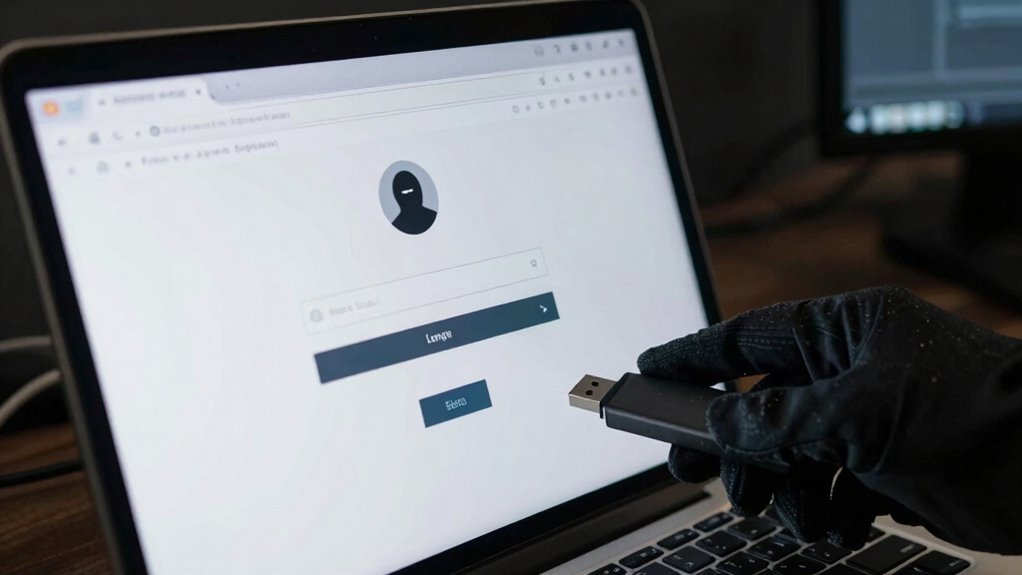

You can still fall victim to session hijacking today because attackers exploit vulnerabilities like cross-site scripting (XSS) and session fixation. They may steal cookies or set fixed session IDs before you log in, gaining access to your account. Weak session management, such as predictable IDs or poor input validation, makes it easier for hackers. Staying protected involves understanding these methods—stay tuned to uncover more about how they still work and how to defend yourself.

Get privacy and security gear delivered free with Prime
- Fast, free delivery on millions of items
- Prime Video, Amazon Music and more included
- Member-only deals all year
Key Takeaways
- Attackers exploit vulnerabilities like XSS to steal session cookies stored in browsers.
- Session fixation allows pre-setting session IDs before user login, enabling unauthorized access.
- Weak session management, such as predictable or non-rotating session IDs, facilitates hijacking.
- Insufficient input validation enables malicious scripts to execute and compromise sessions.
- Lack of proper security protocols and outdated software increase susceptibility to hijacking attacks.

In today’s interconnected web environment, session hijacking remains a significant security threat that can compromise your personal and organizational data. Attackers exploit vulnerabilities in web applications to steal or hijack active sessions, gaining unauthorized access to sensitive information or services. Despite advances in security, techniques like cross site scripting (XSS) and session fixation continue to be effective tools for cybercriminals. Understanding how these methods work helps you recognize the risks and take steps to protect yourself.
Session hijacking threats persist, exploiting vulnerabilities like XSS and session fixation to access sensitive data and compromise security.
Cross site scripting is a common attack vector that allows an attacker to inject malicious scripts into trusted websites. When you visit a compromised page, the malicious script executes in your browser, often without your knowledge. This script can then steal your session cookies or tokens, which hold the key to your authenticated session. Once an attacker has your session cookie, they can impersonate you, access your account, and perform actions as if they were you. The danger lies in how easily these scripts can be hidden within seemingly legitimate content and how they bypass traditional security measures if the website isn’t properly sanitized.
Session fixation is another sneaky attack that enables an attacker to hijack your session. In this scenario, the attacker sets a specific session ID for you before you even log in. When you authenticate, the session ID remains unchanged, allowing the attacker to use that same ID to access your account afterward. It’s like the attacker plants the key to your door before you even show up, so once you log in, they can walk right in. This attack is particularly dangerous because it often relies on weak session management practices, such as allowing session IDs to be fixed or reused across sessions. Moreover, many web applications still fail to implement effective session management techniques, making them vulnerable to such exploits. Additionally, poorly implemented session expiration policies can prolong the window of opportunity for attackers to hijack sessions.
Even with modern security measures, attackers continue to find ways to manipulate these vulnerabilities. For example, poorly implemented session management or insufficient input validation make it easier for attackers to exploit cross site scripting or session fixation. Many web applications still fail to properly sanitize user input, making it possible for malicious scripts to run. Similarly, session IDs that don’t rotate upon login or are predictable can be exploited through session fixation attacks. Additionally, the lack of proper security protocols can leave these vulnerabilities exposed to exploitation. It is also important to recognize that security awareness among users and developers plays a vital role in defending against these threats. Recognizing the importance of ongoing security training can significantly reduce the likelihood of successful attacks exploiting these vulnerabilities.
In this landscape, you need to be vigilant. Use strong, unique passwords, enable multi-factor authentication, and keep your software updated. For developers, implementing secure coding practices, such as input validation, proper session handling, and defense against XSS, is crucial. By understanding how these attack methods work and maintaining good security hygiene, you can reduce your risk of falling victim to session hijacking in today’s web environment.
web security session management tools
As an affiliate, we earn on qualifying purchases.
As an affiliate, we earn on qualifying purchases.
Frequently Asked Questions
Can Session Hijacking Be Completely Prevented?
No, session hijacking can’t be completely prevented, but you can greatly reduce the risk. You should use strong encryption protocols like HTTPS to secure data in transit and ensure user authentication is robust to verify identities. Regularly updating security measures, employing session timeouts, and monitoring for suspicious activity also help. While no method is foolproof, these practices make it much harder for attackers to hijack sessions effectively.
What Are the Signs of a Session Hijacking Attack?
You might notice signs of session hijacking if your session suddenly becomes unresponsive or if you see unfamiliar activity. Be alert for session fixation issues, where attackers manipulate session IDs, or cross-site scripting (XSS) attacks that steal your session tokens. Unexpected logouts, strange account behavior, or unfamiliar IP addresses accessing your account are clear indicators. Always monitor your sessions and use security measures to prevent these attacks.
How Do Attackers Steal Session Tokens?
Attackers steal session tokens through methods like session fixation, where they trick you into using a pre-set session ID, or by intercepting tokens via man-in-the-middle attacks. They might also exploit vulnerabilities to access tokens before they’re regenerated, especially if token regeneration isn’t handled properly. To prevent this, make sure your web app uses secure, encrypted connections and regenerates session tokens after login, making it harder for attackers to hijack sessions.
Are Mobile Apps Vulnerable to Session Hijacking?
Yes, mobile apps can be vulnerable to session hijacking, especially if app vulnerabilities aren’t addressed. Attackers exploit weak mobile encryption or insecure data storage to intercept session tokens. If a mobile app doesn’t implement robust encryption and security measures, hackers can hijack sessions, gaining unauthorized access. You should guarantee your app uses strong mobile encryption and regularly patches vulnerabilities to protect against session hijacking risks.
What Legal Actions Exist Against Session Hijackers?
You can face serious legal consequences if caught hijacking sessions, including criminal charges like unauthorized access or computer crimes. Prosecutors use strategies such as digital forensics and evidence collection to build cases against hackers. Laws vary by jurisdiction, but penalties can include fines, probation, or imprisonment. Staying aware of these enforcement measures helps emphasize that session hijacking is a criminal activity with significant legal risks.
browser cookie security extension
As an affiliate, we earn on qualifying purchases.
As an affiliate, we earn on qualifying purchases.
Conclusion
While the landscape of web security continuously evolves, the subtle art of session hijacking remains an elusive challenge. By understanding its nuances, you can better navigate the digital sphere with caution and awareness. Embracing robust security measures acts as a gentle safeguard, ensuring your online experiences stay private and secure. Remember, vigilance and best practices are your trusted allies in maintaining the delicate balance between convenience and protection in today’s interconnected world.
As an affiliate, we earn on qualifying purchases.
session fixation prevention software
As an affiliate, we earn on qualifying purchases.
As an affiliate, we earn on qualifying purchases.
Halloween Picks
halloween
As an affiliate, we earn on qualifying purchases.