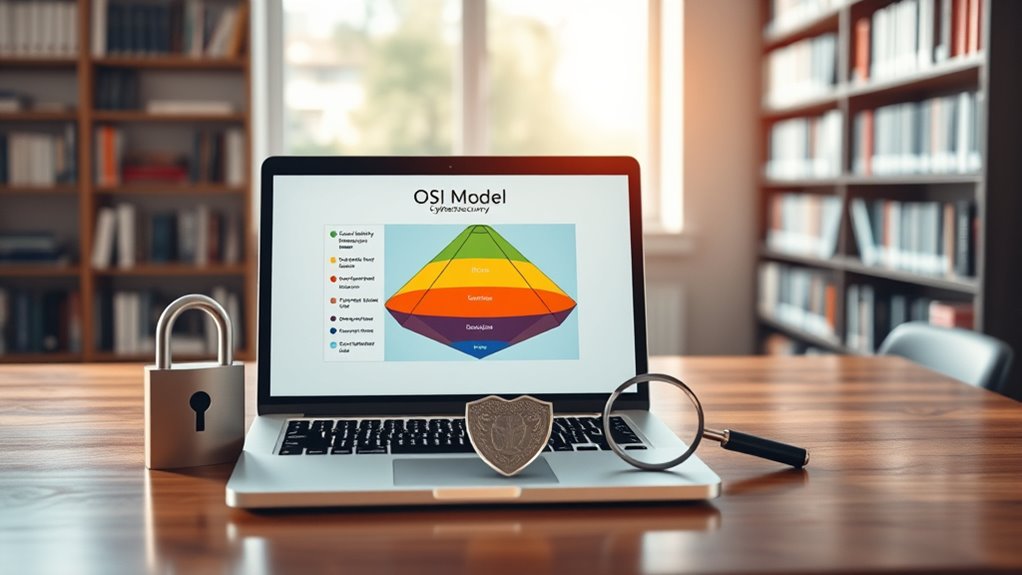

The OSI Model is a crucial seven-layer framework that helps you grasp how network communication works and its implications for cybersecurity. Each layer has specific functions, influencing data transmission and security. Understanding network protocols and encryption techniques can markedly enhance your ability to assess vulnerabilities and implement effective security measures. By familiarizing yourself with the OSI layers, you’ll be better equipped to identify risks and strengthen defenses in your network environment. You’ll discover more valuable insights ahead.
Key Takeaways
- The OSI Model provides a structured approach to understanding network communication and identifying potential vulnerabilities in cybersecurity.
- Each of the seven layers of the OSI Model has specific functions that impact data transmission and security.
- Network protocols, such as TCP/IP, play a crucial role in ensuring data integrity and establishing secure connections across the OSI layers.
- Data encryption primarily occurs at the presentation layer, safeguarding sensitive information from unauthorized access during transmission.
- Collaboration among users, network administrators, and developers is essential for implementing effective security measures across all OSI layers.
The OSI model is an essential framework for understanding how different networking layers interact, especially in the domain of cybersecurity. This seven-layer model helps you visualize the complexities of network communication and how data traverses through various stages, from physical transmission to application use. Each layer has its own responsibilities, and understanding this structure is vital for anyone looking to enhance their cybersecurity knowledge.
At the core of the OSI model are the network protocols that govern how data is transmitted. These protocols dictate the rules and conventions for communication between network devices. For instance, the Transmission Control Protocol (TCP) and Internet Protocol (IP) are fundamental for establishing connections and ensuring data integrity. When you send an email or access a website, these protocols are silently at work, coordinating the flow of information. Understanding these protocols is essential because they often serve as the first line of defense against potential threats. If you’re aware of how they function, you can better assess vulnerabilities and implement security measures.
The OSI model’s protocols are crucial for secure data transmission and form the first line of defense against threats.
Moving up the OSI layers, you’ll encounter the importance of data encryption. Encryption plays a crucial role in protecting sensitive information as it travels across networks. At the presentation layer, data is formatted and encrypted to guarantee its confidentiality. When you transmit passwords or sensitive data, encryption algorithms scramble the information, making it unreadable to unauthorized users. This practice is essential in cybersecurity, as it helps mitigate risks like data breaches and unauthorized access. Knowing how different encryption methods work, such as SSL/TLS for secure web traffic, can empower you to make better decisions about protecting your data. Additionally, understanding color accuracy can enhance the visual representation of data in various applications.
As you explore deeper into the OSI model, you’ll realize that cybersecurity isn’t just about technology; it also involves understanding the roles of various stakeholders. Users, network administrators, and software developers all play a part in maintaining a secure environment. Everyone must understand the implications of their actions within the OSI framework. For example, a misconfigured firewall at the network layer can expose your entire system to threats, while weak encryption can leave your data vulnerable.

Lenovo V-Series V15 Business Laptop, 15.6" FHD Display, AMD Ryzen 7 7730U, 40GB RAM, 1TB SSD, Numeric Keypad, HDMI, RJ45, Webcam, Wi-Fi, Windows 11 Pro, Black
[High Speed RAM And Enormous Space] 40GB high-bandwidth RAM to smoothly run multiple applications and browser tabs all...
As an affiliate, we earn on qualifying purchases.
Frequently Asked Questions
What Is the History Behind the OSI Model’s Development?
The OSI model’s origins trace back to the late 1970s when the International Organization for Standardization (ISO) aimed to create a framework for network communication. The development timeline saw several drafts and discussions before the model was officially published in 1984. It provided a structured approach to networking, promoting interoperability among different systems. By establishing clear layers, it helped streamline communication protocols and laid the groundwork for modern networking practices.
How Does the OSI Model Relate to the Tcp/Ip Model?
The OSI model and TCP/IP model both focus on network layering but differ in structure and purpose. You’ll notice that OSI has seven layers, while TCP/IP condenses it to four. When you compare protocols, TCP/IP integrates specific functions into its layers, making it more practical for real-world applications. Understanding these differences helps you appreciate how data flows through networks, enhancing your grasp of networking fundamentals and cybersecurity principles.
What Are the Real-World Applications of the OSI Model?
The OSI model has several real-world applications, especially in network troubleshooting and protocol design. When you diagnose connectivity issues, it helps you pinpoint which layer might be causing the problem. In protocol design, you can use the model to guarantee that new protocols fit seamlessly within existing frameworks. By understanding its layers, you’ll enhance your ability to create efficient, interoperable systems that communicate effectively across diverse networks.
How Can I Apply the OSI Model in My Cybersecurity Practices?
You can apply the OSI model in your cybersecurity practices by using it to enhance network segmentation and improve threat detection. Start by analyzing the different layers to identify vulnerabilities and implement security controls tailored to each layer. For instance, use firewalls at the network layer to segment traffic and employ intrusion detection systems at the application layer to monitor for suspicious activity. This structured approach helps you create a more secure environment.
What Tools Are Available to Visualize the OSI Model Layers?
You’ve got an arsenal of tool options at your fingertips for layer visualization! Imagine a world where every layer of the OSI Model bursts to life before your eyes. Tools like Wireshark and Lucidchart can transform complex data flows into stunning visuals. Network monitoring tools, like PRTG, offer real-time insights too. With these resources, you can easily dissect each layer, making your cybersecurity practices not just effective, but almost magical!

Lenovo ThinkBook 15 Business Laptop (15.6" FHD Anti-Glare, 16GB RAM, 512GB SSD, AMD Ryzen 7 5825U (> Intel i7-1255U)) Fingerprint, 1080p Webcam, Military Grade, Ethernet, Wi-Fi, Win 11 Pro w/Copilot
INTRODUCING THE THINKBOOK 15 GEN 4 - the perfect commercial laptop that is both budget-friendly and MIL-SPEC tested...
As an affiliate, we earn on qualifying purchases.
Conclusion
As you navigate the complex world of cybersecurity, remember the OSI model’s layered approach is like a sturdy fortress, protecting your valuable data. Each layer acts as a vigilant guard, ensuring that threats are kept at bay while your information flows smoothly. By understanding these layers, you empower yourself to build stronger defenses and outsmart potential attackers. So, embrace this knowledge, and let the OSI model be your guiding light in the ever-evolving landscape of cybersecurity.

Lenovo ThinkBook 16 G7 Business Laptop, 16” FHD+, AMD Ryzen 7 7735HS, 32GB DDR5, 1TB NVMe, WiFi 6E + BT, Backlit KB, Fingerprint Reader, HD Webcam, Win 11 Pro
Lenovo ThinkBook 16 Gen 7 laptop powered by AMD Ryzen 7 7735HS processor (3.20 GHz up to 4.75...
As an affiliate, we earn on qualifying purchases.

Lenovo 16" FHD+ Business Laptop: High-Performance for Programming, Data Analysis & Video Editing, Intel Core i7-13700H, 64GB RAM, 2TB PCIe SSD, Windows 11 Pro, Fingerprint & Backlit Keyboard (Gray)
【Powerful 13th Gen Intel Core i7 Performance】Equipped with the 13th Generation Intel Core i7-13700H processor, featuring a hybrid...
As an affiliate, we earn on qualifying purchases.