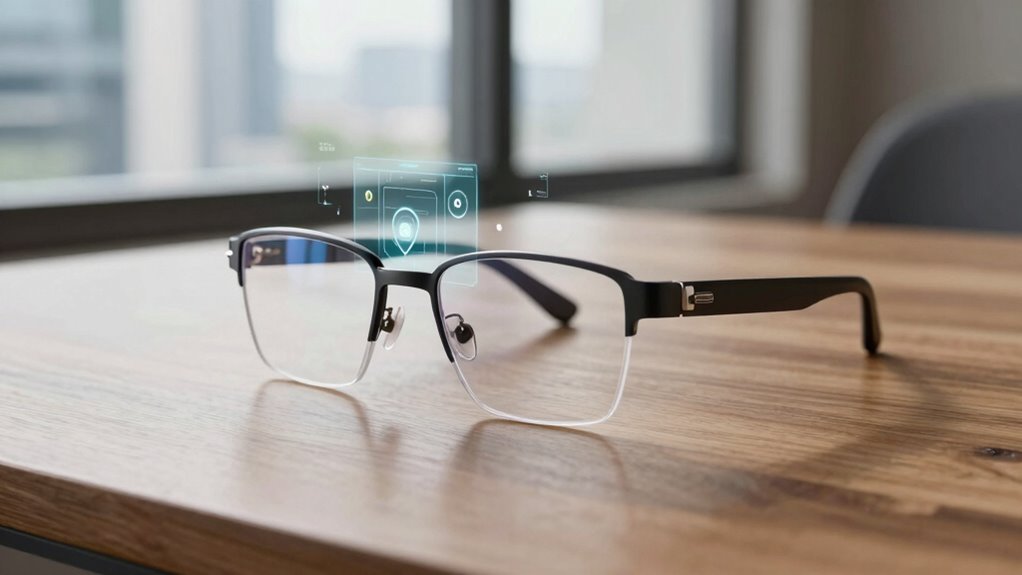

AR glasses are becoming more advanced and could change how you access information, but they’re unlikely to fully replace smartphones within the next decade. While features like heads-up displays, real-time translation, and hands-free tasks make AR glasses very useful, limitations such as limited battery life, content creation challenges, and bulky designs hold them back from taking over phones completely. If you keep exploring, you’ll discover how these devices might complement your digital life even more in the future.

Get privacy and security gear delivered free with Prime
- Fast, free delivery on millions of items
- Prime Video, Amazon Music and more included
- Member-only deals all year
Key Takeaways
- AR glasses are advancing rapidly, integrating features like mapping, translation, and streaming, but still face hardware and battery limitations.
- Industry experts predict convergence with smartphones by 2025, making AR glasses more of a complementary device than a full replacement.
- Current AR glasses excel in hands-free tasks and quick information access but struggle with complex content creation and detailed navigation.
- Fully standalone, all-day wearable AR devices are still under development, limiting their ability to replace smartphones entirely.
- Long-term trends suggest AR glasses will augment smartphones, eventually evolving into ambient computing hubs rather than outright replacements.
AR Glasses
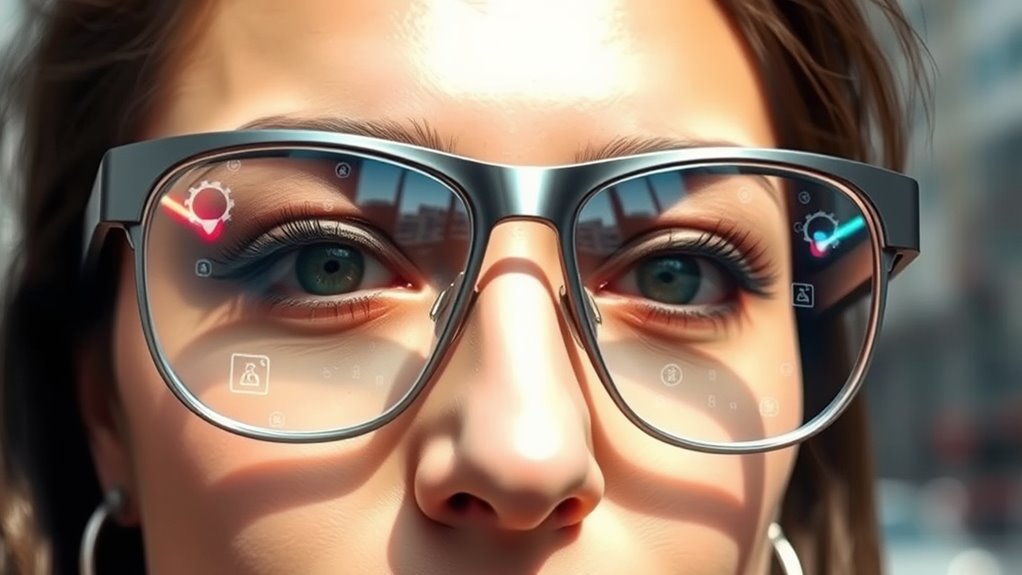
Have you noticed how AR glasses are quickly becoming the next big thing in wearable technology? Market forecasts show a surge, with IDC predicting a 39.2% increase in shipments in 2025 compared to 2024. This rapid growth reflects a shift in how tech giants and consumers view these devices. Media coverage, like Viture’s release on November 20, 2025, sparks a media and investor frenzy, signaling strong confidence in their potential. Companies like Meta are expanding their Ray-Ban and Hypernova lines to include everyday wearables with social features, emphasizing seamless integration into daily life. Meanwhile, Snap plans to launch consumer AR Spectacles in 2026, compressing timelines and intensifying competition. By the end of 2025, most industry leaders declare smart glasses as the next big thing, aiming to redefine personal computing.
AR glasses are set to redefine personal computing with rapid industry growth and innovative wearable designs.
In terms of hardware, the focus is on balancing sleek design with high performance. Major players like Samsung and Google are partnering on Android XR to support glasses and headsets, enabling smoother integration with smartphones. MicroLED waveguides and holographic projection technology are enabling sunlight-bright displays, making AR overlays more vivid and usable outdoors. Companion glasses that tether to smartphones via Wi-Fi 7 deliver low-latency processing, while hybrid models handle basic tasks onboard and offload complex rendering, offering a practical mix of portability and power. Standalone devices are improving too, with higher resolutions, wider fields of view, and prescription lens options, aiming for all-day comfort comparable to sunglasses. Innovations in optical technology, such as microLED waveguides, are making displays brighter and more vivid.
The capabilities of these glasses are expanding, with heads-up mapping, real-time translation, and AI-powered teleprompters reducing the need to glance at phones constantly. Field workers can access repair instructions hands-free, warehouse staff get picking directions without bulky devices, and healthcare professionals review patient info while maintaining eye contact. Content streaming, gaming, and mapping features make AR glasses more than just notification devices—they’re becoming versatile tools for various tasks. However, limitations still exist. Content creation and complex data entry are challenging on small displays, and standalone models tend to be bulkier with shorter battery life. Many rely on smartphones for intensive tasks, and gesture controls aren’t yet as efficient as touch for detailed navigation.
Looking ahead, the convergence of AR glasses and smartphones seems inevitable. Android XR will bridge these devices, enabling a complementary ecosystem by late 2025. Developer tools are easing app adaptation, and accessories like prescription inserts and neckband audio increase practicality. As content in streaming, gaming, and mapping improves, the long-term vision points toward ambient computing replacing smartphones. While AR glasses won’t fully replace phones in the next decade, they’re poised to become essential companions—delivering quick info, supporting hands-free tasks, and gradually taking over many functions we now rely on smartphones for.
Frequently Asked Questions
How Will AR Glasses Handle Privacy and Data Security Concerns?
You’ll see AR glasses address privacy and data security by implementing robust encryption, strict access controls, and user consent features. Manufacturers will give you transparent data policies and options to control what’s shared and stored. Biometric authentication and real-time alerts will keep your info safe. As the tech advances, you’ll have more control over your data, making privacy a core part of your AR experience and easing your concerns.
Will AR Glasses Be Affordable for Mainstream Consumers?
AR glasses are becoming more affordable for mainstream consumers, especially with a forecasted 39.2% growth in shipments by 2025. You’ll likely see prices drop as tech giants like Meta and Snap push mass-market models, such as Meta’s expanded Ray-Ban/Hypernova and Snap’s upcoming Specs. Advances in miniaturization, AI, and production efficiencies will make them accessible, blending into everyday life without breaking the bank.
How Durable and Weather-Resistant ARe Current AR Glasses?
You’ll find that current AR glasses are becoming more durable and weather-resistant, designed to handle everyday conditions like rain, sweat, and minor impacts. Many models feature rugged exteriors, reinforced frames, and water-resistant coatings to protect against the elements. However, they still aren’t as tough as traditional outdoor gear, so you should handle them with care. As technology advances, expect even more robust designs to keep up with your active lifestyle.
What ARe the Environmental Impacts of Widespread AR Glasses Adoption?
Widespread AR glasses adoption could reduce electronic waste by replacing multiple devices, but it might also increase resource extraction for manufacturing. For example, imagine a city where people use AR glasses for navigation, communication, and shopping, leading to higher demand for rare minerals. This boosts mining impacts and energy use. However, if recycling programs improve, the environmental footprint can be minimized, balancing benefits and drawbacks.
How Will AR Glasses Integrate With Existing Smart Home Technology?
You’ll see AR glasses seamlessly integrate with your smart home by acting as a central control hub. With voice commands and gesture recognition, you’ll manage lighting, climate, security, and appliances effortlessly. Real-time overlays will give you instant updates, while AI-driven automation anticipates your needs. Connectivity will be smooth via Wi-Fi 7, making interactions intuitive and immersive, transforming how you experience and control your home environment daily.
Conclusion
As AR glasses continue to evolve, they might soon rival smartphones in daily use. Did you know that by 2030, it’s estimated that over 1 billion AR devices could be in active use worldwide? If this trend holds, you could find yourself seamlessly blending reality with digital information right in your line of sight, making the future of communication more immersive and hands-free. Keep an eye on this tech—it’s poised to change how you interact with the world.
Fall Picks
fall essentials
As an affiliate, we earn on qualifying purchases.