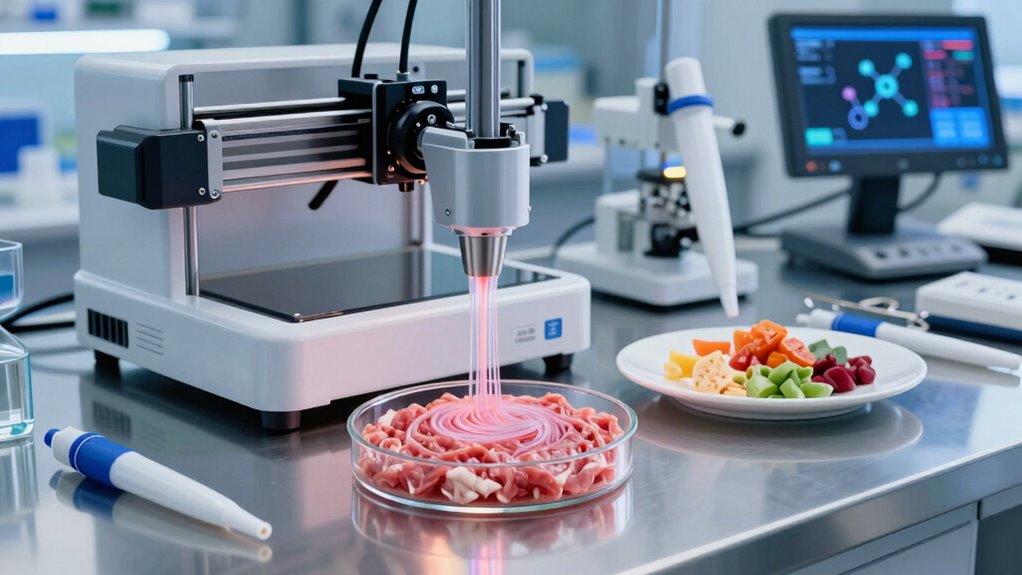

Lab-grown meat and 3D-printed food are shaping the future of dinner by providing sustainable, customizable, and safer options. As costs drop and technology advances, these innovations could replace traditional meat, reduce environmental impact, and cater to diverse diets. With growing consumer awareness and regulatory support, these foods are becoming more mainstream. If you want to discover how these breakthroughs could change what’s on your plate, keep exploring the possibilities.
Key Takeaways
- Advances in lab-grown meat and 3D bio-printing are making sustainable, customizable, and realistic meat alternatives increasingly feasible.
- Costs for cultivated meat have decreased significantly, nearing traditional meat prices with further reductions possible through automation.
- 3D bio-printing allows precise structuring of tissues, mimicking texture and flavor of conventional meat, enhancing consumer appeal.
- Environmental benefits include substantial reductions in greenhouse gases, land, and water use, addressing global food security challenges.
- Regulatory support and growing consumer awareness are accelerating adoption, positioning lab-grown and 3D-printed foods as future dinner options.
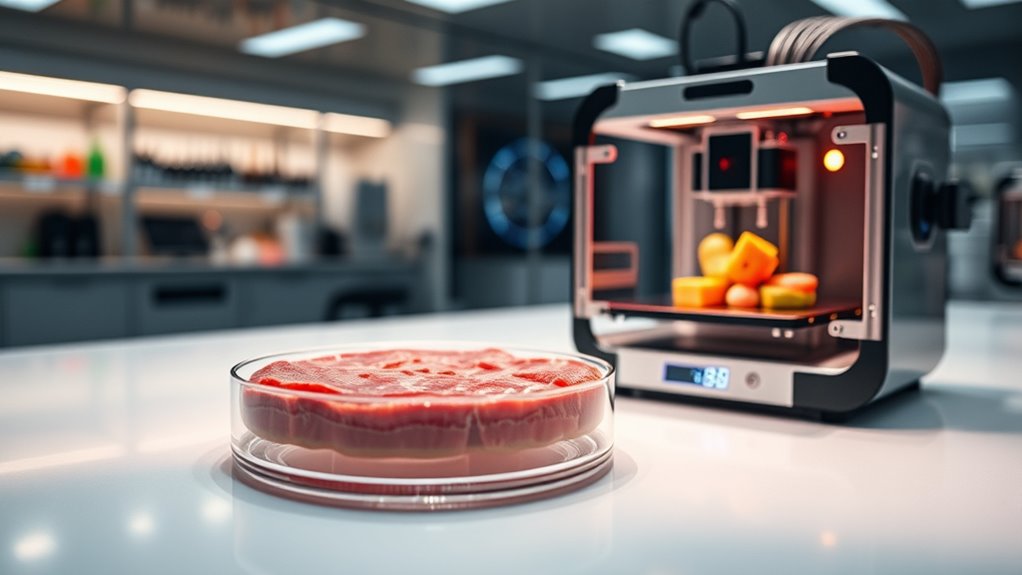
As concerns about environmental sustainability and food security grow, lab-grown meat and 3D-printed food are emerging as innovative solutions to transform how we produce and consume protein. The global lab-grown meat market is projected to reach around USD 20.6 billion by 2035, with a compound annual growth rate of approximately 44.5%. Long-term estimates suggest that cultivated meat could be worth up to USD 229 billion by 2050, driven by ongoing technological advancements and increasing adoption. Despite its early-stage status, the market shows rapid growth, with revenues rising from hundreds of millions in 2024 to billions in the coming decade. This growth reflects both rising consumer interest and substantial investment, although recent years have seen some slowdown due to regulatory hurdles, cost concerns, and skepticism.
Lab-grown meat market to reach USD 20.6 billion by 2035 amid rapid growth and technological advances.
You’ll notice that production costs have plummeted dramatically over the past decade. In 2013, a lab-grown burger cost around USD 330,000, but by 2025, costs have fallen below USD 10 per patty. This decline results from innovations like AI-driven cell cultivation, which can reduce costs by up to 40%, and the deployment of large-scale bioreactors that boost output by over 400%. These technological strides make commercial production more feasible, although some high costs—such as growth media and bioreactor expenses—still pose challenges. Scaling remains a key focus, with new vessel designs and process automation promising further reductions and bringing lab-grown meat closer to price parity with traditional products over the next decade.
3D bio-printing adds another layer of innovation, enabling the precise structuring of muscle, fat, and connective tissues to mimic the texture and flavor of conventional meat. This technology allows for customization, supporting a diverse range of meat types and products, which can cater to different tastes and dietary preferences. The ability to replicate original meat structures with tailored textures offers a promising avenue for industry growth. 3D bioprinting technology is also being explored for its potential to produce complex, layered food products that could revolutionize meal preparation and presentation. As urbanization accelerates—83% of Americans already live in cities, with projections reaching 89% by 2050—these technologies address supply chain gaps and reduce reliance on traditional farming, which demands extensive land and water resources. Moreover, advancements in regenerative agriculture could complement lab-grown food by restoring ecosystems and promoting sustainable land use.
From an environmental perspective, lab-grown meat produces up to 96% fewer greenhouse gases than traditional beef, according to Oxford University. It also lowers land and water use and reduces the risk of zoonotic contamination because it’s made in controlled environments. Health benefits include lower antibiotic use and the potential to eliminate foodborne illnesses and nutrition-related diseases. Regulatory agencies like the FDA and USDA are working to develop policies for cell-cultured meat, and consumer awareness is growing, with about 38% of Americans familiar with the concept. As these technologies advance and costs decrease, lab-grown and 3D-printed foods could soon become common staples, offering sustainable, safe, and customizable dinner options for the future.
Top picks for "grown meat print"
Open Amazon search results for this keyword.
As an affiliate, we earn on qualifying purchases.
Frequently Asked Questions
Are Lab-Grown Meats Safe for Long-Term Human Consumption?
Lab-grown meats are generally safe for long-term human consumption because they undergo rigorous testing and regulatory review, ensuring they meet safety standards. You can trust that manufacturers are developing these foods to minimize risks like contamination or harmful residues. As research progresses and regulations strengthen, you’ll likely see lab-grown meat becoming a safe, sustainable alternative, offering health benefits while reducing environmental impact.
How Does 3d-Printed Food Compare Nutritionally to Traditional Meat?
3D-printed food can match traditional meat nutritionally by customizing nutrient profiles and textures. You can enhance it with added vitamins, minerals, and proteins tailored to your health needs. Unlike conventional meat, it reduces contaminants and bacteria, making it safer. While it might lack some natural flavors initially, advancements allow it to replicate taste and nutrition closely, giving you a healthier, personalized alternative that can support your dietary goals.
What Are the Environmental Impacts of Large-Scale 3D Food Printing?
You’ll be surprised to learn that large-scale 3D food printing can substantially reduce environmental impacts. It uses up to 50% less energy than traditional manufacturing and minimizes food waste by precise portioning. Plus, it relies on fewer resources, like water and land, because it creates food efficiently. So, as you enjoy your future meals, know that 3D printing helps cut down greenhouse gases and conserves our planet’s resources.
Will Lab-Grown and 3d-Printed Meats Be Affordable for Consumers?
Yes, lab-grown and 3D-printed meats will become affordable for consumers over time. As production costs drop—thanks to AI, bioreactors, and bio-printing—prices will decrease markedly. Scaling up production and technological innovations will make these foods more accessible. Though initial costs are high, ongoing advancements and increased demand will drive prices down, making sustainable, healthy meat alternatives affordable for everyday consumers.
How Soon Will These Technologies Be Widely Available in Restaurants?
You can expect these technologies to become widely available in restaurants within the next 5 to 10 years. As production costs drop and regulatory frameworks develop, more eateries will start offering lab-grown and 3D-printed meats. Major companies are already scaling up, and consumer acceptance is increasing. Keep an eye on urban areas and innovative dining spots, as they’ll likely adopt these futuristic options first, making them more accessible over the coming decade.
Conclusion
As you explore the world of lab-grown meat and 3D-printed food, you might find yourself gently embracing a future where innovation and tradition blend seamlessly. These advancements whisper of a more sustainable, mindful way to nourish ourselves, subtly transforming your dinner table. While the journey has its twists, it’s clear that this new frontier could softly redefine what it means to enjoy a meal, inviting you to imagine a brighter, more thoughtful culinary tomorrow.