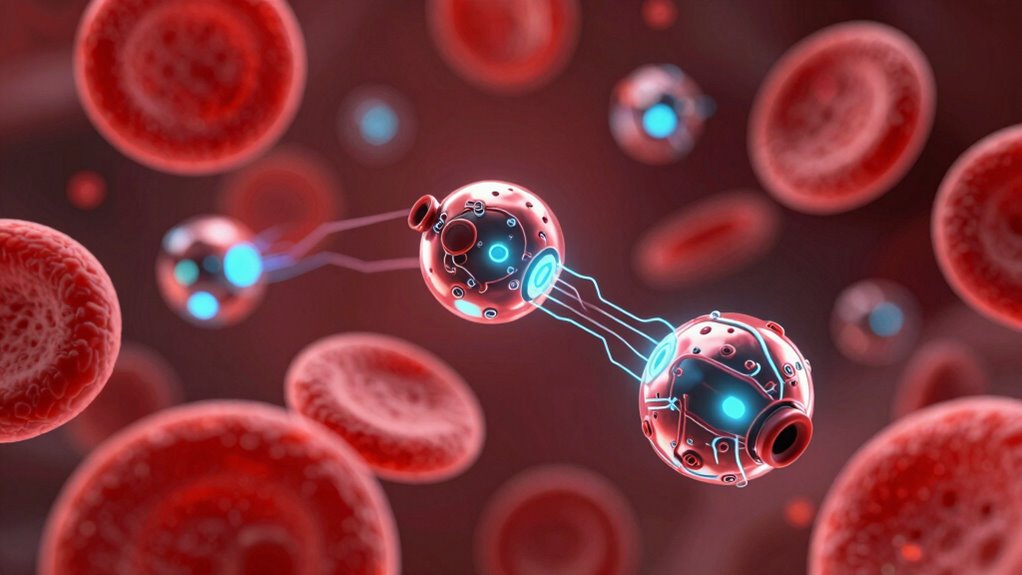

Nanobots in your bloodstream are reshaping medicine by offering precise, minimally invasive solutions for diagnosis and treatment. Designed to navigate blood flow, target tumors, cross the blood-brain barrier, and deliver drugs directly where needed, these tiny devices promise safer, more effective therapies. While still in experimental stages, breakthroughs suggest they could transform healthcare in the near future. To discover how these innovations might impact your health, keep exploring what’s on the horizon.

Get privacy and security gear delivered free with Prime
- Fast, free delivery on millions of items
- Prime Video, Amazon Music and more included
- Member-only deals all year
Key Takeaways
- Nanobots can target tumors and deliver drugs directly, reducing side effects and increasing treatment precision.
- Advances include magnetic-controlled, corkscrew-shaped nanorobots capable of navigating blood flow.
- DNA-based nanorobots can recognize specific proteins and cross biological barriers like the blood-brain barrier.
- Safety, toxicity, and biological barriers remain challenges before widespread clinical adoption.
- Future developments aim for minimally invasive, highly targeted treatments, with AI-powered nanobots expected within the next decade.

Have you ever wondered how tiny machines could revolutionize medicine? The idea of nanobots traveling through your bloodstream might sound like science fiction, but advances in nanotechnology are bringing this closer to reality. Researchers have developed highly accurate mathematical models to optimize the design of microscopic robots, or nanorobots, for steering the complex environment inside your blood vessels. These models consider blood’s unique properties and how vessels move, allowing nanorobots shaped like corkscrews to be controlled externally with magnetic fields. This precise control enables them to swim against blood flow, much like fish, giving access to small, hard-to-reach areas like tiny brain vessels and non-operable tumors.
Tiny nanorobots, guided by advanced models, can navigate blood vessels to target hard-to-reach areas for medical breakthroughs.
In cancer treatment, DNA-based nanorobots are engineered to target tumor blood vessels. They deliver clot-inducing drugs that coagulate the vessels feeding the tumor, effectively starving the cancer cells. These nanorobots can also carry chemotherapy or radioactive substances directly to cancer cells, increasing treatment efficiency while reducing side effects. They recognize specific proteins, such as nucleolins, on tumor cells using DNA origami, binding with high specificity. Once attached, they induce apoptosis, or programmed cell death, helping to eliminate the tumor from within.
The potential for targeted drug delivery is immense. These nanobots, smaller than blood cells, can carry medications straight to affected tissues. They are capable of crossing the blood-brain barrier, a major obstacle in treating neurological conditions, and release their payload in response to environmental signals like pH or enzymes. Polymers like PLGA, approved for clinical use, are often used to coat or modify nanobots, ensuring they reach the right place and release drugs at the right time, all while minimizing systemic exposure and side effects. Blood properties and vessel movement are critical factors that influence the efficiency and control of nanobots in the bloodstream.
Progress toward clinical use is steady. Researchers have achieved significant breakthroughs in lab and animal trials, especially in bloodstream guidance and targeted therapies. Although nanodrug treatments for cancer and autoimmune diseases are expected to reach clinical practice by 2025, the technology remains experimental. Challenges like ensuring safety, avoiding toxicity—especially for innovations like respirocytes, which act as artificial red blood cells—and overcoming biological barriers such as mucus and the blood-brain barrier still exist. AI-powered nanobots are unlikely to be in your doctor’s toolkit within the next decade, but the ongoing research promises a future where tiny machines could repair tissues, eliminate toxins, and perform surgeries with unprecedented precision.
Products Worth Considering

Samsung 27-Inch Odyssey QD-OLED G8 4K 240Hz Gaming Monitor

Samsung 32-Inch Odyssey OLED G8 (G80SH) 4K Gaming Monitor

Apple iPad Air (2025) 13‑inch Wi‑Fi 256 GB – Space Gray (M3 chip)
As an affiliate, we earn on qualifying purchases.
Frequently Asked Questions
How Long Can Nanobots Operate Inside the Human Body?
Nanobots can operate inside your body for varying durations, typically from hours to weeks, depending on their design and purpose. You might see some engineered for short-term tasks like drug delivery, which dissolve or deactivate afterward. Others, like biohybrid sperm nanobots or repair devices, could function longer, but safety concerns and bio-compatibility limit their lifespan. Advances are ongoing to extend operational times safely and effectively.
What Are the Potential Long-Term Health Risks of Nanobots?
You might worry about long-term health risks from nanobots, like toxicity or immune reactions. Although they’re designed to be biocompatible, prolonged presence could cause inflammation or damage healthy tissues. There’s also a chance of unintended interactions with your cells or genetic material. Researchers are still studying these risks, so it’s essential to stay informed and cautious as this technology advances, ensuring safety before widespread use.
How Are Nanobots Safely Eliminated From the Bloodstream After Use?
You can trust that nanobots are designed to be safely eliminated through natural processes. Once they’ve completed their task, they break down into harmless components via biodegradation or are cleared by your body’s immune system. Researchers guarantee these tiny devices don’t accumulate by engineering them to dissolve or be excreted efficiently. This way, you minimize risks of long-term buildup, keeping your bloodstream safe after their medical mission is done.
Can Nanobots Malfunction or Cause Unintended Damage?
Yes, nanobots can malfunction or cause unintended damage. You might worry about them losing control, damaging healthy cells, or triggering immune responses. Researchers design safety features like self-destruction protocols and precise targeting to minimize risks. Still, since they’re in experimental stages, there’s a chance of unforeseen issues. You should stay informed about ongoing trials and safety assessments to better understand the potential dangers and benefits.
What Regulations Govern the Clinical Use of Nanobots in Medicine?
You should know that regulations for nanobots in medicine are still evolving. Agencies like the FDA and EMA review safety, efficacy, and manufacturing standards before approving clinical trials. They require extensive testing, risk assessments, and ethical considerations to safeguard patients. As technology advances, expect tighter guidelines and international cooperation to ensure nanobots are safe, effective, and used responsibly in medical treatments.
Conclusion
Imagine a future where nanobots in your bloodstream fight off diseases faster than any doctor could blink. They’ll be like tiny superheroes, zipping through your veins, fixing problems before you even feel a thing. With this technology, you’ll be invincible—no illness can stand a chance. It’s almost like having a personal army of microscopic warriors constantly safeguarding your health. The future of medicine isn’t just bright; it’s about to become superpowered!