
Wearables are getting weird with innovations like high-tech tattoos that monitor your health directly on your skin and smart textiles embedded with sensors that track your biometrics, motion, and temperature. These devices can glow, change color, or even harvest energy from your body, making fashion and function overlap in exciting ways. If you want to see how these strange yet fascinating technologies are transforming daily life, there’s much more to explore.
Key Takeaways
- Electronic tattoos seamlessly integrate sensors and circuits onto skin for real-time health monitoring and biometric authentication.
- AI-powered design tools enable personalized, 3D virtual previews of tattoos before application.
- Smart inks that change color or glow under specific conditions expand tattoo functionalities and aesthetics.
- Wearable textiles embed sensors and energy-harvesting tech, transforming clothing into continuous health monitors.
- Advanced removal methods like picosecond lasers and biodegradable inks improve tattoo safety and versatility.
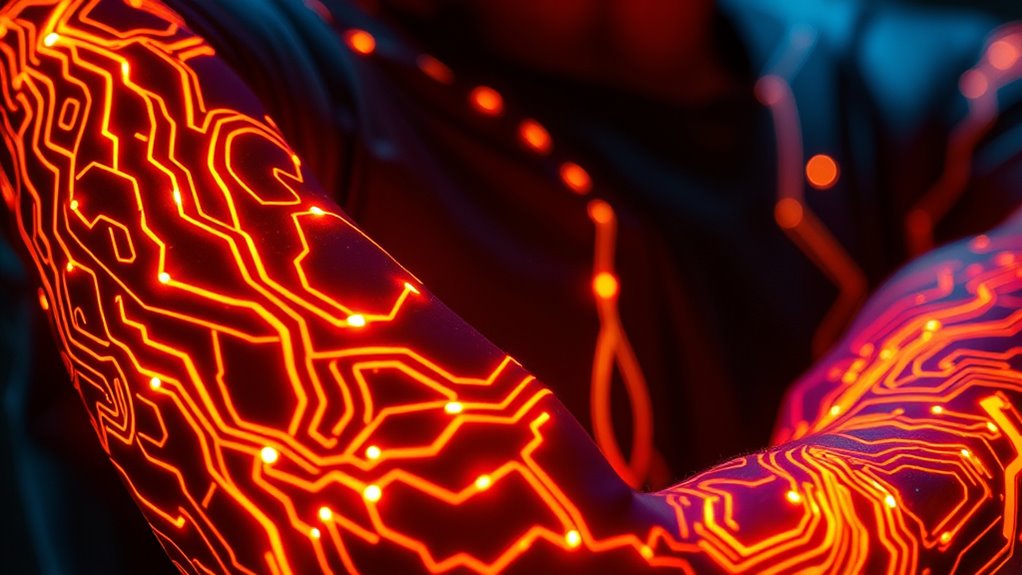
Wearables are pushing the boundaries of innovation, blending fashion with technology in ways that seem straight out of science fiction. Today, you can get smart tattoos—electronic ink that integrates sensors, LEDs, and thin-film circuits directly onto your skin. These tattoos aren’t just for looks; they can monitor your health by tracking ECG, temperature, hydration, and even physiological signals continuously. Conductive inks and ultrathin electrodes conform perfectly to your skin, making them feel like a second skin while providing real-time data. Some concepts even propose biometric tattoos that store or transmit personal data via near-field communication or electrical signatures, opening new avenues for authentication and contact exchange. The catch? Long-term skin irritation, powering active components, and data privacy still pose significant regulatory and biocompatibility challenges. To encourage experimentation, temporary electronic tattoos—transfer or printed—offer a lower-cost, lower-risk way to explore on-skin sensing before committing to permanent ink. Biometric data collection is increasingly integrated into these devices, enabling more personalized and accurate health monitoring. Moreover, advancements in biocompatible inks are essential to reduce adverse skin reactions and improve the longevity of these devices.
Smart tattoos blend fashion and tech, offering health monitoring and data sharing with regulatory and biocompatibility hurdles.
On the design side, AI-driven platforms now generate personalized tattoo drafts from text prompts, images, and styles within seconds, vastly speeding up the creative process. You can preview designs in 3D simulations or AR apps, seeing how a tattoo will look on your curved skin in real time before making a decision. AI also predicts pigment behaviors, recommends *ideal* ink formulations, and estimates healing outcomes based on your skin type and placement. These tools streamline workflows for artists, helping with stencil generation, bookings, and aftercare instructions. Still, some debate exists about the potential loss of traditional craftsmanship and the overreliance on automated aesthetics.
Advances in ink chemistry bring smart pigments that glow under UV light or change color with temperature, pH, or metabolites—passive signals that can indicate physiological changes. Researchers are refining formulations to improve color longevity, stability, and biocompatibility, with options for removable or erasable inks that can be laser-reactive or biodegradable. These innovations aim to make tattoos more versatile and easier to remove or modify, aligning with future safety standards.
In application technology, wireless rotary machines with digital voltage control now allow for precise shading and less tissue trauma. New delivery methods, such as microneedle arrays and ultrafast liquid jets, promise less pain and bleeding. Digital stencil printing and sensor-enabled wearables during sessions help monitor skin temperature, moisture, and inflammation, optimizing needle depth and pacing. Sterile workflows with RFID logs and smart autoclaves boost hygiene compliance, ensuring safer procedures.
When it comes to removal and revision, picosecond lasers with multiple wavelengths target stubborn colors, fragmenting ink into smaller particles for faster clearance. Advances in pigment chemistry and post-laser protocols improve removability, while biodegradable aftercare products support healing and pigment retention. Data-driven AI predictions help manage expectations about sessions and downtime, making removal or cover-up procedures more predictable.
Finally, smart textiles now embed sensors and conductive threads, transforming clothing into health monitors that track biometrics, motion, and temperature without separate devices. These fabrics can harvest energy from body heat and movement, powering integrated electronics for continuous monitoring or gesture control. But challenges around washability, comfort, EMI shielding, and data security remain as smart clothing moves closer to mainstream use.
Top picks for "wearabl weird high"
Open Amazon search results for this keyword.
As an affiliate, we earn on qualifying purchases.
Frequently Asked Questions
How Durable Are Electronic Tattoos Under Daily Wear and Exposure?
Electronic tattoos can be quite durable for daily wear, especially when made with advanced materials like biocompatible, flexible inks, and ultrathin circuits. They withstand regular movement, sweat, and minor exposure to water or sunlight. However, their longevity depends on factors like skin type, placement, and the specific ink chemistry. Temporary versions tend to last days to weeks, while permanent tattoos require laser removal for removal or revision.
Can Smart Tattoos Transmit Data Wirelessly Without Compromising Privacy?
Yes, smart tattoos can transmit data wirelessly, but you need to be cautious about privacy. They often use near-field communication or electrical signatures, which can be secure if encryption and authentication are properly implemented. However, vulnerabilities exist if data isn’t protected, so you should select devices with strong security measures. Regular updates, secure protocols, and controlled access help guarantee your personal information stays private while enjoying the benefits of wireless data transmission.
Are There Health Risks Associated With Long-Term Use of Biometric Inks?
Long-term use of biometric inks can pose health risks if not properly regulated or tested. You might experience skin irritation, allergic reactions, or toxicity from certain chemicals in the inks. Biocompatibility issues are still being researched, so it is crucial to choose inks approved by safety standards. Regular monitoring and professional removal when needed help minimize potential adverse effects, ensuring your health stays protected while using these innovative biometric tattoos.
How Easily Can Wearable Tattoos Be Removed or Revised?
You’ll find that wearable tattoos are designed for easier revisions and removals than traditional ones. Advanced laser systems target ink particles more precisely, breaking them down faster and with less discomfort. New formulations allow for smoother fading, and some inks even offer erasable options. While removal is becoming more straightforward, it still necessitates professional care, patience, and multiple sessions to ensure your skin heals beautifully without lingering traces.
What Are the Regulatory Hurdles for Commercializing High-Tech Tattoo Products?
You’ll face significant regulatory hurdles when commercializing high-tech tattoo products. You need to guarantee biocompatibility, long-term skin safety, and minimal irritation, which requires rigorous clinical testing. Data privacy and security are critical, especially for biometric tattoos transmitting personal info. Additionally, you must navigate complex approval processes for new inks and electronic components, address safety standards for active elements, and ensure compliance with health authorities to gain market approval.
Conclusion
As you dive deeper into this world of wild wearables, it’s like stepping into a sci-fi dream woven into your daily life. These high-tech tattoos and smart clothes are transforming your body into a futuristic canvas, blending innovation with imagination. Embrace the weirdness, because soon, your wardrobe might just be a living, breathing part of the tech revolution—turning you into a walking masterpiece where the line between human and machine blurs into beautiful art.