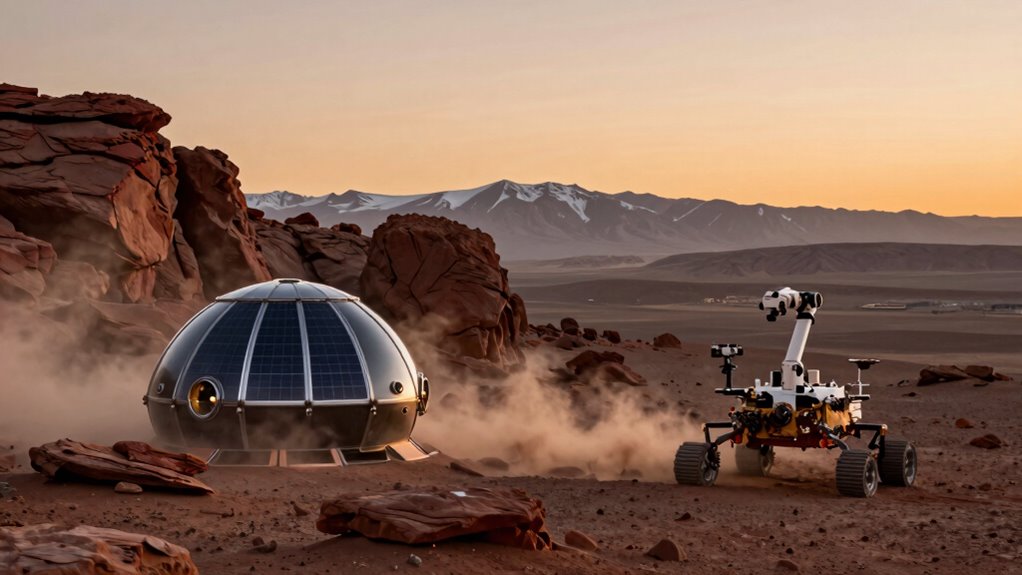

To colonize Mars, you need advanced propulsion systems like nuclear thermal and electric engines to cut travel time, along with reliable power sources such as nuclear reactors and large solar arrays. You’ll also rely on habitats shielded from radiation, underground or domed and equipped with life support to grow crops and recycle resources. Cutting-edge communication tech, like laser systems, will keep you connected. If you keep exploring, you’ll discover how these essential technologies turn dreams into reality.
Key Takeaways
- Advanced propulsion systems like nuclear thermal and electric engines are essential for quick, efficient travel to Mars.
- Reliable power sources, including nuclear reactors and large solar arrays with dust mitigation, support sustainability.
- Habitat designs featuring radiation shielding, underground modules, and greenhouse domes enable safe long-term living.
- High-speed communication technologies such as laser links ensure real-time contact and data transfer with Earth.
- In-situ resource utilization (ISRU) for water, oxygen, and fuel production reduces dependency on Earth supplies.
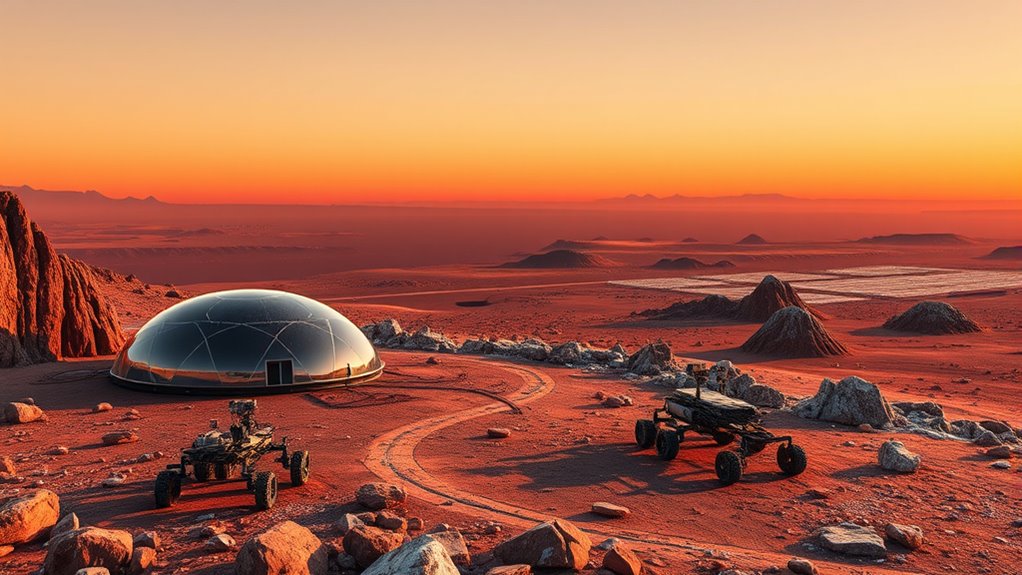
Have you ever wondered how humans might establish a sustainable colony on Mars? The journey begins with advanced propulsion systems that can efficiently and quickly transport crew and cargo across the 140 million miles between Earth and Mars. Nuclear electric propulsion offers high efficiency, reducing transit time, while nuclear thermal propulsion provides the thrust needed for faster travel. NASA is exploring multiple options, including robotic precursors that test critical technologies like in-space propellant production (ISPP), which produces oxygen from the Martian atmosphere. These systems are essential for minimizing supply needs and supporting a self-sufficient settlement.
Powering the colony requires robust systems capable of withstanding the planet’s harsh conditions. Nuclear fission reactors promise reliable energy during months-long dust storms, while solar panels, although necessary, demand large storage capacities and dust removal mechanisms to remain effective. These systems are being tested on Earth and planned for lunar demonstrations before Mars missions. Lightweight, space-rated power systems are crucial regardless of location or weather, fueling processes like electrolysis and Sabatier reactions that produce water, oxygen, and fuel. The ability to generate and store power locally will be the backbone of sustainability.
Robust nuclear and solar power systems are essential for sustainable Mars colonies.
Creating a livable environment on Mars involves innovative habitats and life support systems. Pressurized, environmentally controlled habitats shield against extreme cold, high radiation levels, and the planet’s thin CO2-rich atmosphere. Underground spaces offer additional protection from radiation, while transparent domes could support agriculture using in-situ construction materials. Systems managing CO2 levels, temperature, and oxygen are critical. Crops grown in greenhouses will provide food and breathable oxygen, with excess oxygen safely removed to prevent suffocation. Waste management, water recycling from underground sources, and production of essentials like fertilizer and oxygen via local resources are fundamental to reducing dependence on Earth supplies.
Communication across the vast distance relies on advanced laser systems that drastically reduce data transmission times—from nine years via radio signals to just nine weeks with lasers—enabling real-time contact with Earth. These systems also support astronaut communication and sharing of Mars explorations. Robotic precursors set up the initial communication infrastructure, ensuring reliable links for future crewed missions. Additionally, the development of high-quality home cinema projectors for entertainment will help maintain morale during long isolation periods on Mars.
The transportation and landing technologies are equally critical. Starship’s inflatable heat shields, parachutes, and retrorockets facilitate safe, rapid landings, while reusable engines and heat-resistant tiles ensure quick turnaround for multiple missions. Once on Mars, the focus shifts to resource utilization. Subsurface ice, atmospheric CO2, and other raw materials are harvested for water, oxygen, and fuel, enabling a self-sustaining colony. This combination of advanced propulsion, power, habitat, communication, and resource technologies paves the way for humans to thrive beyond Earth, turning the dream of a Martian settlement into reality.
Top picks for "beyond earth technology"
Open Amazon search results for this keyword.
As an affiliate, we earn on qualifying purchases.
Frequently Asked Questions
How Will Humans Survive Long-Term Radiation Exposure on Mars?
You’ll need to rely on advanced radiation shielding techniques, like thick habitats built with local materials or specialized suits that reduce exposure. Using underground shelters can provide natural protection. Additionally, incorporating water or polyethylene layers around living spaces helps absorb radiation. Regular monitoring and limiting time outside the habitats also safeguard you. Combining these strategies ensures your safety during long-term stays on Mars.
What Strategies Will Ensure Reliable Food Production on Mars?
Think of Mars as a barren garden awaiting your nurturing. To keep it thriving, you’ll rely on robotic systems and advanced agriculture techniques like LED lighting and controlled environments. You’ll utilize resource utilization methods such as ISPP to produce oxygen and grow food. By continuously adapting, innovating, and maintaining these systems, you’ll turn this desolate planet into a sustainable home, proving your resilience and forging a new chapter in human exploration.
How Will Mental Health Be Maintained During Prolonged Mars Missions?
You’ll need a strong mental health plan to stay resilient on Mars. Engage regularly with loved ones through laser communication, practice mindfulness, and set daily routines to create stability. Use virtual reality for familiar environments, stay connected with crew members, and pursue hobbies. Access mental health support remotely, and establish clear goals to maintain purpose. Prioritize self-care, communicate openly, and recognize signs of stress early to stay mentally strong.
What Are the Plans for Emergency Evacuation From Mars?
If you face an emergency on Mars, your plan involves a pre-deployed backup habitat and a return vehicle like SpaceX’s Starship. In a hypothetical scenario, you’d quickly don radiation shields, seal yourself inside the habitat, and activate emergency life support while awaiting rescue. Regular drills and advanced communication systems guarantee you stay connected, making sure help arrives swiftly and your safety remains a priority during unexpected events.
How Will Mars’ Gravity Affect Human Health Over Time?
You’ll experience significant health effects from Mars’ gravity, which is only about 38% of Earth’s. Over time, you might face muscle atrophy, bone density loss, and cardiovascular issues due to reduced gravity’s impact on your body. To counteract these, you’ll need regular exercise routines, advanced medical support, and possibly artificial gravity systems to help maintain your strength and overall health during long-term missions.
Conclusion
To make Mars our new home, you’ll need to stay ahead of the game and push boundaries. Every breakthrough brings us closer to turning science fiction into reality. Remember, Rome wasn’t built in a day, and neither will a Martian colony. With perseverance and innovation, you can be part of this historic leap. Keep your eyes on the prize, because the future of humanity depends on the steps you take today.