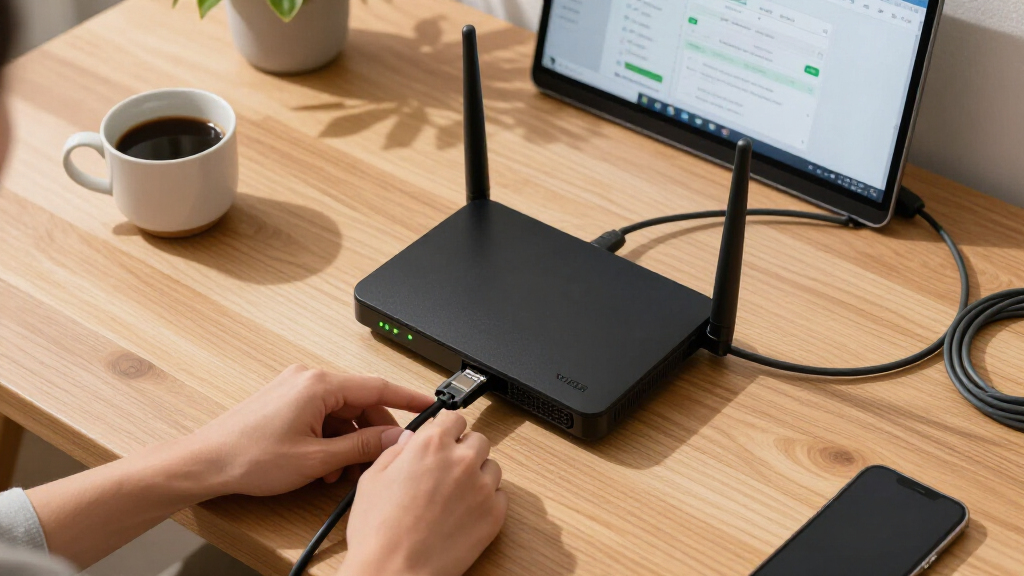

Hardware VPN routers take encrypted connections off your laptop and push them onto the network itself, so every device in your home or office routes through WireGuard or OpenVPN without extra software. My top overall pick is the GL.iNet GL-MT6000 Flint 2, because it pairs a fast processor with dual 2.5G ports and keeps VPN speeds high enough for real-world gigabit use. For travelers, the GL.iNet GL-MT3000 Beryl AX stands out as a pocket-sized option that still handles 2.5G WAN and full VPN loads, while the TP-Link ER605 makes the most sense for wired-only office setups on a tight budget. The main tradeoff in this category is VPN throughput versus price: routers that sustain fast encrypted speeds cost more, and Wi-Fi 7 models demand compatible devices to justify their speed. Read on for the full breakdown of all 12 models.

Get privacy and security gear delivered free with Prime
- Fast, free delivery on millions of items
- Prime Video, Amazon Music and more included
- Member-only deals all year
Key Takeaways
- GL.iNet dominates this lineup with 8 of 12 spots because its routers ship with native WireGuard and OpenVPN clients pre-installed, while most consumer routers require manual firmware work.
- The wired-versus-Wi-Fi split matters more than price: the GL-MT5000 Brume 3 and TP-Link ER605 outperform similarly priced Wi-Fi models on VPN throughput because they dedicate their processor to routing instead of wireless radios.
- Wi-Fi 7 options like the GL-BE9300 Flint 3 only pay off if your devices support the new standard and your internet plan exceeds gigabit speeds; otherwise Wi-Fi 6 models deliver nearly identical VPN performance for less.
- The SonicWall TZ280 occupies a different category entirely — next-gen firewall threat protection for businesses — and is overkill for home users who just want encrypted traffic.
- Travel routers (Beryl AX, Slate AX, Beryl 7) trade antenna range and port count for pocketability, making them supplements to a home router rather than replacements.
| TP-Link ER605 Wired Gigabit VPN Router |  | Best Wired VPN Router for Small Offices | Ports: 5 Gigabit Ethernet (1 WAN, 2 WAN/LAN, 2 LAN) | USB WAN: 1 port for 4G/3G modem backup | VPN Capacity: 20 IPsec, 16 OpenVPN, 16 L2TP, 16 PPTP | VIEW LATEST PRICE | See Our Full Breakdown |
| GL.iNet GL-AX1800 (Flint) WiFi 6 Router with OpenVPN & WireGuard |  | Best Home VPN Router | Wi-Fi Standard: Wi-Fi 6 (802.11ax), dual band | Max Speed: 1.8 Gbps (600 Mbps @ 2.4GHz, 1200 Mbps @ 5GHz) | Ethernet: 5 x 1G ports | VIEW LATEST PRICE | See Our Full Breakdown |
| SonicWall TZ280 Next-Gen Firewall Appliance, Hardware Only |  | Best Premium Business Security Gateway | Firewall Throughput: Up to 2.5 Gbps | Threat Prevention: 1 Gbps | IPSec VPN Throughput: 1.2 Gbps | VIEW LATEST PRICE | See Our Full Breakdown |
| GL.iNet GL-AXT1800 Slate AX Pocket-Sized Wi-Fi 6 Travel Router |  | Best Travel VPN Router | Wi-Fi Standard: Wi-Fi 6 (802.11ax), dual band | Wi-Fi Speed: 1800 Mbps (600 Mbps @ 2.4GHz, 1200 Mbps @ 5GHz) | Max Devices: 120 | VIEW LATEST PRICE | See Our Full Breakdown |
| GL.iNet GL-MT3000 Beryl AX Wi-Fi 6 Travel Router with 2.5G WAN |  | Best Compact Travel Router for Fast Connections | Wi-Fi Standard: Wi-Fi 6, dual band | Wireless Speed: 574 Mbps (2.4 GHz) + 2402 Mbps (5 GHz) | WAN Port: 2.5G multi-gigabit | VIEW LATEST PRICE | See Our Full Breakdown |
| GL.iNet GL-MT6000 Flint 2 Wi-Fi 6 Gaming Router, Dual 2.5G Ports |  | Best Value VPN Router | Wi-Fi Standard: Wi-Fi 6 (802.11ax), dual-band | Max Wireless Speed: 6 Gbps | Ports: 2 x 2.5G, 4 x 1G | VIEW LATEST PRICE | See Our Full Breakdown |
| GL.iNet GL-BE6500 Flint 3e Wi-Fi 7 Router with VPN for Home and Gaming |  | Best for Whole-Home Wi-Fi 7 Coverage | Wi-Fi Standard: Wi-Fi 7, dual-band | Max Wireless Speed: 6.5 Gbps | VPN Speed: Up to 1100 Mbps (OpenVPN and WireGuard) | VIEW LATEST PRICE | See Our Full Breakdown |
| GL.iNet GL-BE9300 Flint 3 Tri-Band Wi-Fi 7 VPN Router with 5x 2.5G Ports |  | Best Premium Pick for Wired-Centric Homes | Wi-Fi Standard: Wi-Fi 7 (802.11be), tri-band with 6 GHz | Max Wireless Speed: Up to 9 Gbps | LAN Ports: 5 x 2.5G | VIEW LATEST PRICE | See Our Full Breakdown |
| Omada ER707-M2 Multi-Gigabit VPN Router |  | Best for Small Business | Ports: 1 x 2.5G WAN, 1 x 2.5G WAN/LAN, 4 x Gigabit WAN/LAN, 1 x Gigabit SFP, 1 x USB 2.0 | Concurrent Sessions: Up to 500,000 | Max Clients: 1,000+ | VIEW LATEST PRICE | See Our Full Breakdown |
| GL.iNet GL-MT3600BE Beryl 7 Dual-Band Wi-Fi 7 Travel Router |  | Best Travel VPN Router | Wi-Fi Standard: Wi-Fi 7, dual-band | Wireless Speed: 688 Mbps (2.4 GHz) + 2882 Mbps (5 GHz) | Ethernet: 2 x 2.5G (1 WAN, 1 LAN) | VIEW LATEST PRICE | See Our Full Breakdown |
| ASUS RT-AX1800S Dual-Band WiFi 6 Router |  | Best Mainstream Home VPN Router | Model: RT-AX1800S | WiFi standard: WiFi 6 (802.11ax) | Band and configuration: Dual-band, 2×2 | VIEW LATEST PRICE | See Our Full Breakdown |
| GL.iNet GL-MT5000 Brume 3 Wired VPN Security Gateway, No Wi-Fi |  | Best Wired VPN Gateway | Model: GL-MT5000 Brume 3 | Product type: Wired VPN security gateway | VPN throughput: Up to 1100 Mbps | VIEW LATEST PRICE | See Our Full Breakdown |
| hardware VPN router | Security | Wi-Fi Standard | Ports |
|---|---|---|---|
| TP-Link ER605 Wired Gigabit VP | SPI firewall, DoS defense, IP/MAC/URL filtering | — | 5 Gigabit Ethernet (1 WAN, 2 WAN/LAN, 2 LAN) |
| GL.iNet GL-AX1800 | WPA3, WPA2, AdGuard Home | Wi-Fi 6 (802.11ax), dual band | — |
| SonicWall TZ280 Next-Gen Firew | — | — | 8x 1GbE + 2x 1G SFP |
| GL.iNet GL-AXT1800 Slate AX Po | — | Wi-Fi 6 (802.11ax), dual band | 3 ports, gigabit LAN |
| GL.iNet GL-MT3000 Beryl AX Wi- | WPA3, DNS over HTTPS, DNS over TLS, IPv6 | Wi-Fi 6, dual band | — |
| GL.iNet GL-MT6000 Flint 2 Wi-F | WPA3, AdGuard Home support | Wi-Fi 6 (802.11ax), dual-band | 2 x 2.5G, 4 x 1G |
| GL.iNet GL-BE6500 Flint 3e Wi- | — | Wi-Fi 7, dual-band | — |
| GL.iNet GL-BE9300 Flint 3 Tri- | WPA2, WPA3, WPS, WPA-Enterprise | Wi-Fi 7 (802.11be), tri-band with 6 GHz | — |
| Omada ER707-M2 Multi-Gigabit V | — | — | 1 x 2.5G WAN, 1 x 2.5G WAN/LAN, 4 x Gigabit WAN/LAN, 1 x Gigabit SFP, 1 x USB 2.0 |
| GL.iNet GL-MT3600BE Beryl 7 Du | WPA3, DNS over HTTPS, DNS over TLS, IPv6 | Wi-Fi 7, dual-band | — |
| ASUS RT-AX1800S Dual-Band WiFi | AiProtection Classic with parental controls | — | — |
| GL.iNet GL-MT5000 Brume 3 Wire | — | — | 3 x 2.5GbE |
More Details on Our Top Picks
TP-Link ER605 Wired Gigabit VPN Router
The ER605 stands out as the most straightforward choice for buyers who want a dedicated wired VPN router rather than a Wi-Fi box with VPN bolted on. Its multi-WAN support with 4G/3G USB backup gives small offices a failover path that none of the GL.iNet travel models in this roundup can match, and its tunnel capacity — 20 IPsec LAN-to-LAN plus 16 OpenVPN tunnels — is well beyond what a Flint or Slate AX is built to handle. Compared with the SonicWall TZ280, it lacks next-gen threat inspection, but it also skips the subscription treadmill entirely. The tradeoff is real, though: there’s no built-in Wi-Fi, so you’ll pair it with a separate access point, and the multi-WAN and VPN configuration menus assume some networking comfort.
Pros:- Multi-WAN load balancing and failover with USB 4G/3G modem backup
- High tunnel capacity: up to 20 IPsec and 16 OpenVPN connections
- Solid security stack with SPI firewall, DoS defense, and IP/MAC/URL filtering
- No recurring subscriptions needed for core VPN features
Cons:- No built-in Wi-Fi, so a separate access point is required
- Cellular backup depends on sourcing a compatible modem
- Multi-WAN and VPN configuration has a learning curve
Best for: Small offices and home labs that already have Wi-Fi access points and want wired multi-WAN failover with heavy VPN tunnel capacity
Not ideal for: Anyone wanting an all-in-one box — there’s no wireless, and the setup is too involved for casual home users
- Ports:5 Gigabit Ethernet (1 WAN, 2 WAN/LAN, 2 LAN)
- USB WAN:1 port for 4G/3G modem backup
- VPN Capacity:20 IPsec, 16 OpenVPN, 16 L2TP, 16 PPTP
- Security:SPI firewall, DoS defense, IP/MAC/URL filtering
- Standards:IEEE 802.3, 802.3u, 802.3ab, 802.3x, 802.1q
- Connectivity:Ethernet only (no Wi-Fi)
Our verdict“A wired-first pick that makes sense for small offices that need redundant internet and lots of VPN tunnels without subscription costs.”
GL.iNet GL-AX1800 (Flint) WiFi 6 Router with OpenVPN & WireGuard
The Flint GL-AX1800 is the pick for households that want whole-home VPN without sacrificing everyday Wi-Fi. Its 1.8 Gbps Wi-Fi 6 performance across up to 120 devices means streaming and gaming don’t suffer just because the router also encrypts traffic, and VPN throughput up to 500 Mbps over WireGuard is genuinely fast for a consumer box. Where the ER605 forces you to buy a separate access point, the Flint handles everything in one unit, and unlike the pocket-sized Slate AX it’s built to serve as a permanent home gateway rather than a travel companion. The built-in AdGuard Home adds network-wide ad blocking without extra hardware. Just keep expectations realistic: real-world VPN speeds depend heavily on your ISP and server location, and initial setup is easiest through the wired admin panel.
Pros:- Fast Wi-Fi 6 speeds up to 1.8 Gbps for 4K streaming and gaming
- OpenVPN and WireGuard with up to 500 Mbps VPN throughput
- Built-in AdGuard Home for network-wide ad and tracker blocking
- Handles up to 120 devices via OFDMA
Cons:- Real VPN speeds vary with ISP, network conditions, and server load
- Setup may require an Ethernet connection to the web admin panel
- Only gigabit Ethernet ports, no multi-gig WAN
Best for: Households that want one router covering streaming, gaming, and whole-network VPN with ad blocking
Not ideal for: Power users chasing multi-gigabit speeds — the Flint 2 or Flint 3 elsewhere in this lineup offer faster ports and newer Wi-Fi standards
- Wi-Fi Standard:Wi-Fi 6 (802.11ax), dual band
- Max Speed:1.8 Gbps (600 Mbps @ 2.4GHz, 1200 Mbps @ 5GHz)
- Ethernet:5 x 1G ports
- Max Devices:120
- VPN:OpenVPN & WireGuard, up to 500 Mbps
- Security:WPA3, WPA2, AdGuard Home
- RAM:512 MB
Our verdict“The most balanced one-box choice for a family home that wants everyday speed plus serious VPN capability.”
SonicWall TZ280 Next-Gen Firewall Appliance, Hardware Only
The TZ280 plays a different game from every other product here: it’s a true next-generation firewall with 2.5 Gbps inspection, 1 Gbps threat prevention, and 1.2 Gbps IPsec VPN throughput. Compared with the ER605, it adds intrusion prevention, gateway anti-malware, TLS/SSL decryption, and sandboxing — capabilities a consumer VPN router simply doesn’t have. Features like zero-touch deployment and secure SD-WAN make it better suited to multi-site businesses and remote-work infrastructures than any GL.iNet option. But the tradeoff is significant: this listing is hardware only. Without a service subscription, the advanced threat protection, firmware updates, and support are off the table, and that recurring cost adds up fast. The 1GbE ports also cap you in multi-gigabit LAN environments. This is a business tool with business costs, not a plug-and-play home upgrade.
Pros:- Up to 2.5 Gbps firewall inspection and 1 Gbps threat prevention throughput
- SonicOS 8 feature set: IPS, anti-malware, app control, TLS decryption, sandboxing
- Flexible connectivity with 8x 1GbE ports and 2x 1G SFP slots
- Secure SD-WAN, SSL VPN, and zero-trust access for distributed teams
Cons:- Hardware only — subscriptions, firmware updates, and support sold separately
- Advanced threat protection requires an active service plan
- 1GbE ports limit multi-gigabit LAN deployments
Best for: Small businesses and branch offices that plan to buy SonicWall security subscriptions and need real threat prevention, not just VPN tunnels
Not ideal for: Home users and anyone unwilling to pay ongoing subscriptions — the advanced security features stay locked without one
- Firewall Throughput:Up to 2.5 Gbps
- Threat Prevention:1 Gbps
- IPSec VPN Throughput:1.2 Gbps
- Ports:8x 1GbE + 2x 1G SFP
- Operating System:SonicOS 8
- Included Services:None — hardware only
- VPN & Access:IPSec, SSL VPN, Secure SD-WAN, Zero-Trust via Cloud Secure Edge
Our verdict“The right pick only for businesses committed to the subscription ecosystem; everyone else gets better value from consumer VPN routers.”
GL.iNet GL-AXT1800 Slate AX Pocket-Sized Wi-Fi 6 Travel Router
The Slate AX earns its spot by solving a problem the bigger routers here can’t: turning risky hotel or café Wi-Fi into an encrypted private network from something that fits in a jacket pocket. It runs OpenVPN and WireGuard with compatibility across 30+ VPN providers, and its OpenWrt firmware means tinkerers can customize far beyond stock settings. NAS file sharing via SAMBA/WebDAV is a thoughtful extra for travelers who want to stream from a USB drive. Compared with the Beryl AX in the same family, the Slate AX offers slightly faster OpenVPN throughput and more Ethernet ports, but a larger footprint. Its quirks matter, though — the physical toggle does nothing until you configure it manually, and captive-portal time limits on public hotspots can force tedious reconnections mid-trip.
Pros:- Genuinely pocket-sized design built for travel
- Pre-installed OpenVPN and WireGuard with 30+ provider compatibility
- Customizable OpenWrt 21.02 firmware
- NAS file sharing via SAMBA/WebDAV plus secure public Wi-Fi repeater mode
Cons:- Physical toggle switch is non-functional until manually configured
- Hotspot session time limits can drop connections and require manual reconnection
- Wi-Fi range is travel-scale, not whole-home
Best for: Frequent travelers and digital nomads who need to secure public Wi-Fi and occasionally share files from a USB drive
Not ideal for: Permanent home use — the Flint GL-AX1800 covers a whole house better, and the Slate’s range is travel-scale
- Wi-Fi Standard:Wi-Fi 6 (802.11ax), dual band
- Wi-Fi Speed:1800 Mbps (600 Mbps @ 2.4GHz, 1200 Mbps @ 5GHz)
- Max Devices:120
- VPN:OpenVPN up to 500 Mbps, WireGuard up to 550 Mbps, 30+ providers
- Operating System:OpenWrt 21.02
- Ports:3 ports, gigabit LAN
- Special Features:NAS (SAMBA/WebDAV), AdGuard Home, captive portal support
Our verdict“The traveler’s pick — compact, encrypted, and flexible enough to make any hotel network safe, as long as you accept occasional reconnects.”
GL.iNet GL-MT3000 Beryl AX Wi-Fi 6 Travel Router with 2.5G WAN
The Beryl AX is the travel router for people whose priority is raw connection speed at the WAN, not just portability. Its 2.5G multi-gigabit WAN port is something even the full-size Flint GL-AX1800 can’t match on the WAN side, making it a smart pick for travelers with fast hotel fiber or anyone using it as a compact VPN gateway at home. Security is well covered with WPA3, DNS over HTTPS, and DNS over TLS — nice extras the ER605 doesn’t natively emphasize. Compared with its sibling Slate AX, the Beryl AX is smaller and faster at the wired edge, but VPN client speeds top out lower (150 Mbps OpenVPN, 300 Mbps WireGuard), and the physical toggle again needs manual setup before it does anything. OpenWrt 21.02 with thousands of plug-ins keeps it deeply customizable.
Pros:- 2.5G multi-gigabit WAN port rare in this size class
- OpenVPN and WireGuard client/server support on OpenWrt 21.02
- Modern security with WPA3, DNS over HTTPS, and DNS over TLS
- Compact design with a configurable physical feature toggle
Cons:- VPN client speeds cap at 150 Mbps OpenVPN / 300 Mbps WireGuard
- Physical toggle must be configured in the admin panel before use
- VPN service requires an active subscription
Best for: Travelers and minimalists who want the smallest possible router that still handles a 2.5G uplink and modern DNS privacy features
Not ideal for: Users who need maximum VPN throughput — the Slate AX delivers faster encrypted speeds despite its larger size
- Wi-Fi Standard:Wi-Fi 6, dual band
- Wireless Speed:574 Mbps (2.4 GHz) + 2402 Mbps (5 GHz)
- WAN Port:2.5G multi-gigabit
- LAN / USB:1G LAN, USB 3.0
- Firmware:OpenWrt 21.02
- VPN Client Speed:Up to 150 Mbps OpenVPN, 300 Mbps WireGuard
- Security:WPA3, DNS over HTTPS, DNS over TLS, IPv6
Our verdict“A tiny router with a big WAN port — ideal for fast connections on the go, provided VPN speed isn’t your top priority.”
GL.iNet GL-MT6000 Flint 2 Wi-Fi 6 Gaming Router, Dual 2.5G Ports
Among the full-size VPN routers here, the Flint 2 hits a sweet spot between price and capability that the pricier Flint 3 can’t quite match. Its WireGuard throughput of roughly 900 Mbps means most households on gigabit internet won’t see VPN encryption become the bottleneck, and the pairing of two 2.5G ports with four 1G ports covers both a multi-gig WAN uplink and a small wired cluster for a PC, NAS, and console. Compared with the cheaper GL-AX1800 Flint, this model nearly doubles VPN headroom and adds multi-gig connectivity, which matters if you plan to keep the router for years. The 8GB of eMMC storage makes it a friendly base for AdGuard Home and OpenWrt plugins. The tradeoff is that it runs Wi-Fi 6 rather than Wi-Fi 7, so owners of the newest client devices leave some wireless speed on the table, and first-time setup involves a recommended firmware update before everything runs at its best.
Pros:- WireGuard speeds up to 900 Mbps keep pace with gigabit internet even when the VPN is active
- Dual 2.5G plus four 1G ports handle a multi-gig WAN and several wired devices at once
- 1GB RAM and 8GB eMMC storage support AdGuard Home and heavier OpenWrt plugins comfortably
- Handles 100+ concurrent devices, enough for a smart-home-heavy household
Cons:- Wi-Fi 6 only — newer Wi-Fi 7 clients can’t take advantage of their full capability
- Setup is more involved than a basic plug-and-play router, and an initial firmware update is recommended
- Real-world VPN throughput depends on your provider and server location
Best for: Gigabit-internet households that want VPN-grade encryption on every device without paying a Wi-Fi 7 premium
Not ideal for: Owners of multiple Wi-Fi 7 laptops and phones who want the newest wireless standard today — the Flint 3 or Flint 3e serves them better
- Wi-Fi Standard:Wi-Fi 6 (802.11ax), dual-band
- Max Wireless Speed:6 Gbps
- Ports:2 x 2.5G, 4 x 1G
- VPN Protocols:WireGuard (up to 900 Mbps), OpenVPN (up to 880 Mbps)
- Memory:1GB DDR4 RAM, 8GB eMMC storage
- Security:WPA3, AdGuard Home support
- Device Support:100+ devices
Our verdict“The Flint 2 is the pick for buyers who want near-gigabit VPN performance and multi-gig ports at a midrange price, accepting Wi-Fi 6 instead of the newest wireless standard.”
GL.iNet GL-BE6500 Flint 3e Wi-Fi 7 Router with VPN for Home and Gaming
The Flint 3e is the coverage champion of this lineup. At up to 2,500 sq ft, it out-reaches the larger Flint 3 by a claimed 500 sq ft, which makes it the stronger single-router choice for a two-story home where running Ethernet backhaul isn’t practical. It’s also the fastest VPN performer of the consumer GL.iNet models here, with OpenVPN and WireGuard up to 1100 Mbps — a step ahead of the Flint 2’s 900 Mbps and well beyond the Flint 3’s 680 Mbps. Wi-Fi 7 features like MLO and 4K-QAM translate into steadier latency for gaming, provided your client devices actually support the standard. The compromise is wired connectivity: unlike the Flint 3’s five 2.5G ports, the 3e is built around wireless reach rather than a multi-gig LAN. Buyers who mostly connect wirelessly get the better deal; those with a rack of wired machines should look at its bigger sibling. Parental controls via Bark integration add family-friendly filtering on top of AdGuard Home.
Pros:- Best-in-lineup VPN throughput at up to 1100 Mbps for both OpenVPN and WireGuard
- 2,500 sq ft coverage is the largest single-router footprint among the GL.iNet picks here
- Wi-Fi 7 with MLO and 4K-QAM reduces latency for gaming on modern clients
- Bark-based parental controls plus AdGuard Home cover family filtering and ad blocking
Cons:- Wired port selection lags the Flint 3, which offers five 2.5G jacks
- Wi-Fi 7 gains only materialize if your devices support the standard
- DIY plugin work assumes some technical comfort
Best for: Owners of Wi-Fi 7 laptops and phones in larger homes who want whole-house coverage with fast always-on VPN encryption
Not ideal for: Wired-heavy setups with multiple PCs, consoles, and a NAS — the Flint 3’s five 2.5G ports serve that use case far better
- Wi-Fi Standard:Wi-Fi 7, dual-band
- Max Wireless Speed:6.5 Gbps
- VPN Speed:Up to 1100 Mbps (OpenVPN and WireGuard)
- Coverage:Up to 2,500 sq ft
- Device Support:100+
- Key Features:MLO, 4K-QAM, OFDMA, AdGuard Home, parental controls (Bark)
Our verdict“The Flint 3e makes the most sense for wireless-first households in bigger homes that want the fastest VPN encryption and modern Wi-Fi 7 in one box.”
GL.iNet GL-BE9300 Flint 3 Tri-Band Wi-Fi 7 VPN Router with 5x 2.5G Ports
Sitting at the top of GL.iNet’s consumer stack, the Flint 3 justifies its premium role through raw connectivity rather than VPN speed. With five 2.5G Ethernet ports, it can wire an entire desk of gaming PCs, consoles, and a NAS at multi-gig speeds — something the Flint 3e and Flint 2 simply can’t match with their mixed 1G/2.5G layouts. Tri-band Wi-Fi 7 including a 6 GHz band and up to 9 Gbps of aggregate wireless throughput future-proofs the network, and 8GB of eMMC storage gives plugins plenty of room to grow. The curious tradeoff is that its rated VPN throughput of 680 Mbps trails both the Flint 3e (1100 Mbps) and the cheaper Flint 2 (900 Mbps), so buyers encrypting gigabit-plus connections may want to verify their expected speeds. Older client devices also gain nothing from Wi-Fi 7. For a wired-heavy household or small office that wants one router to handle everything for years, though, this is the most complete consumer option in the batch.
Pros:- Five 2.5G Ethernet ports provide multi-gig wired capacity no other pick here matches
- Tri-band Wi-Fi 7 with 6 GHz and up to 9 Gbps aggregate wireless speed
- 8GB eMMC storage gives ample room for OpenWrt plugins and AdGuard Home
- WPA3 and WPA-Enterprise security options suit semi-professional deployments
Cons:- Rated VPN speeds of 680 Mbps are lower than both cheaper Flint models
- Older Wi-Fi 5/6 clients see no benefit from the Wi-Fi 7 radio upgrades
- Requires a firmware update during initial setup for best performance
Best for: Enthusiasts and small offices with multiple wired devices that want multi-gig Ethernet everywhere plus tri-band Wi-Fi 7 headroom
Not ideal for: Buyers prioritizing maximum VPN throughput on a budget — the Flint 3e is both faster at encryption and simpler in design
- Wi-Fi Standard:Wi-Fi 7 (802.11be), tri-band with 6 GHz
- Max Wireless Speed:Up to 9 Gbps
- LAN Ports:5 x 2.5G
- VPN Performance:OpenVPN & WireGuard up to 680 Mbps
- Storage:8GB eMMC, 1GB DDR4 RAM
- Coverage:Up to 2,000 sq ft
- Security:WPA2, WPA3, WPS, WPA-Enterprise
Our verdict“The Flint 3 is the premium choice for wired-centric power users who value five multi-gig ports and tri-band Wi-Fi 7 more than peak VPN throughput.”
Omada ER707-M2 Multi-Gigabit VPN Router
The ER707-M2 plays a different game than every GL.iNet model in this roundup: it has no Wi-Fi at all, and that’s the point. As a business-grade wired router, it handles up to 500,000 concurrent sessions and 1,000+ clients, and supports serious site-to-site workloads — 100 IPsec LAN-to-LAN tunnels, 66 OpenVPN connections, and L2TP/PPTP for legacy peers. Where the Flint 3 is an enthusiast’s do-everything box, this is a purpose-built VPN gateway meant to sit behind a modem and in front of an access point or switch. Port flexibility is its quiet strength: a 2.5G dedicated WAN, another 2.5G WAN/LAN, four Gigabit LANs, and an SFP slot for fiber uplinks, plus USB LTE backup for WAN failover. The drawbacks follow from its business focus — there’s no wireless, the USB 2.0 port is slow for storage, LTE backup needs a separately purchased dongle, and the full cloud-management experience really shines only within a broader Omada ecosystem. A five-year warranty underlines its professional positioning.
Pros:- Handles 500,000 concurrent sessions and 1,000+ clients, far beyond consumer router capacity
- 100 IPsec LAN-to-LAN tunnels plus OpenVPN, L2TP, and PPTP cover site-to-site and remote access
- Mixed 2.5G, Gigabit, and SFP ports plus USB LTE backup provide serious WAN flexibility
- Cloud management via the Omada app enables centralized, remote administration
Cons:- No built-in Wi-Fi — requires separate access points
- USB 2.0 port limits storage and LTE backup performance, and the dongle is sold separately
- Best features depend on building out a wider Omada ecosystem
Best for: Small businesses and remote offices that need site-to-site VPN tunnels, fiber or multi-gig WAN, and LTE failover behind separate access points
Not ideal for: Home users who want one box doing Wi-Fi and VPN — this router has no wireless, so a consumer model like the Flint 2 fits far better
- Ports:1 x 2.5G WAN, 1 x 2.5G WAN/LAN, 4 x Gigabit WAN/LAN, 1 x Gigabit SFP, 1 x USB 2.0
- Concurrent Sessions:Up to 500,000
- Max Clients:1,000+
- IPsec LAN-to-LAN Tunnels:100
- OpenVPN / L2TP / PPTP Connections:66 / 60 / 60
- Management:Omada app with cloud remote access
- Warranty:5 years
Our verdict“The ER707-M2 is the pick for small offices that need business-grade VPN tunnel counts and WAN flexibility, provided they add their own Wi-Fi.”
GL.iNet GL-MT3600BE Beryl 7 Dual-Band Wi-Fi 7 Travel Router
The Beryl 7 is the pocket-sized answer to a problem the full-size routers here don’t address: staying encrypted on hotel, airport, and cruise-ship networks. Its VPN performance is remarkable for its size — up to 1100 Mbps over WireGuard and 1000 Mbps with OpenVPN-DCO, matching or beating the desktop Flint 3e while fitting in a palm. Compared with the earlier Beryl AX in this roundup, the jump to Wi-Fi 7 and dual 2.5G Ethernet ports makes it viable as a temporary primary router, not just a travel afterthought. OpenWrt firmware opens the door to custom plugins, and DNS-over-HTTPS/TLS plus WPA3 keep hostile public networks at arm’s length. The tradeoffs come from the format: total wireless throughput of about 3.5 Gbps is far below the Flint 3’s 9 Gbps, coverage is modest by design, and it needs a VPN subscription to do its main job. The physical toggle also needs configuring before it does anything useful.
Pros:- VPN throughput up to 1100 Mbps (WireGuard) rivals full-size desktop routers despite its size
- Dual 2.5G Ethernet ports and Wi-Fi 7 make it usable as a temporary primary router
- OpenWrt firmware supports custom plugins and deep configuration
- WPA3, DNS-over-HTTPS, and DNS-over-TLS harden connections on untrusted public networks
Cons:- Requires a separate VPN provider subscription to serve its core purpose
- Limited coverage and total throughput compared with desktop routers
- Physical toggle switch must be configured before it functions as intended
Best for: Frequent travelers and digital nomads who need to route hotel or café connections through their VPN securely
Not ideal for: Anyone shopping for a permanent home router — its range and total throughput fall well short of desktop models like the Flint 3
- Wi-Fi Standard:Wi-Fi 7, dual-band
- Wireless Speed:688 Mbps (2.4 GHz) + 2882 Mbps (5 GHz)
- Ethernet:2 x 2.5G (1 WAN, 1 LAN)
- USB:USB 3.0
- VPN Speed:1100 Mbps (WireGuard), 1000 Mbps (OpenVPN-DCO)
- Firmware:OpenWrt 21.02
- Device Support:Up to 120 devices
- Security:WPA3, DNS over HTTPS, DNS over TLS, IPv6
Our verdict“The Beryl 7 is the obvious pick for travelers who want near-desktop VPN speed in a pocketable, OpenWrt-friendly package.”
ASUS RT-AX1800S Dual-Band WiFi 6 Router
I place the ASUS RT-AX1800S in the mainstream-home slot because it makes a hardware VPN router feel like a normal router rather than a project box. Its built-in VPN access, AiProtection Classic, and parental controls suit buyers who want one dashboard for Wi-Fi, security, and remote access. Compared with the GL.iNet GL-AX1800 Flint, this model leans more toward simple home networking than OpenWrt-style tuning, so I would favor it for families who prefer fewer knobs. The tradeoff is flexibility: the dual-band, 2×2 design and Gigabit ports are sensible, but they do not match multi-gigabit or tri-band alternatives when the network gets crowded.
Pros:- WiFi 6 with MU-MIMO and OFDMA helps multiple devices share the network more efficiently
- Five Gigabit ports cover common wired needs for consoles, PCs, and switches
- Built-in VPN access, AiProtection Classic, and parental controls reduce the need for separate network tools
- AiMesh compatibility lets the router grow into a wider home network
Cons:- Dual-band design may feel limited in very busy households compared with tri-band routers
- Gigabit ports do not match the headroom of 2.5GbE hardware
- Real-world coverage can vary widely depending on layout and interference
Best for: Households that want a WiFi 6 router with simple VPN access, parental controls, and mesh expansion without moving to enthusiast firmware.
Not ideal for: Power users who want OpenWrt plugins, tri-band separation, or multi-gigabit wired ports.
- Model:RT-AX1800S
- WiFi standard:WiFi 6 (802.11ax)
- Band and configuration:Dual-band, 2×2
- Wired ports:1 Gigabit WAN, 4 Gigabit LAN
- Multi-device features:MU-MIMO and OFDMA
- Security:AiProtection Classic with parental controls
- VPN:ASUS Instant Guard
- Expansion:AiMesh compatible
Our verdict“I would choose this for homes that want easy Wi-Fi 6 networking with built-in VPN and parental controls, without needing an enthusiast setup.”
GL.iNet GL-MT5000 Brume 3 Wired VPN Security Gateway, No Wi-Fi
I reserve the Best Wired VPN Gateway role for the GL.iNet GL-MT5000 Brume 3 because it treats VPN speed as the whole point. Hardware-accelerated WireGuard and OpenVPN-DCO, three 2.5GbE ports, and Multi-WAN failover make it a strong match for SOHO users who already have separate access points. Compared with the TP-Link ER605, this gateway feels far more current, with faster wired interfaces and deeper OpenWrt expansion, though it also asks more from the person configuring it. The obvious compromise is the lack of Wi-Fi. I would not recommend this for buyers who want a single box for wireless clients; it is better framed as a compact security engine behind an existing network.
Pros:- Hardware-accelerated WireGuard and OpenVPN-DCO support VPN speeds up to 1100 Mbps
- Three 2.5GbE ports provide faster wired headroom than typical Gigabit routers
- VPN obfuscation and DPI protection add value for restrictive or privacy-sensitive networks
- OpenWrt and USB 3.0 Type-C support plugins, storage, or mobile dongles
Cons:- No built-in Wi-Fi means a separate access point is required for wireless devices
- Advanced features may be intimidating for buyers who want a basic setup
- Three Ethernet ports may be too few for larger wired networks without a switch
Best for: Wired-first home offices and small offices that need fast WireGuard or OpenVPN performance with Multi-WAN failover and OpenWrt flexibility.
Not ideal for: Buyers who need built-in Wi-Fi or want a simple all-in-one router for wireless devices.
- Model:GL-MT5000 Brume 3
- Product type:Wired VPN security gateway
- VPN throughput:Up to 1100 Mbps
- VPN protocols:WireGuard and OpenVPN
- Ports:3 x 2.5GbE
- WAN features:Dual-ISP Multi-WAN failover
- Operating system:OpenWrt
- Expansion:USB 3.0 Type-C
- Wi-Fi:No built-in Wi-Fi
Our verdict“I would place this in a wired-first network where fast WireGuard performance and OpenWrt flexibility matter more than built-in Wi-Fi.”
How We Picked
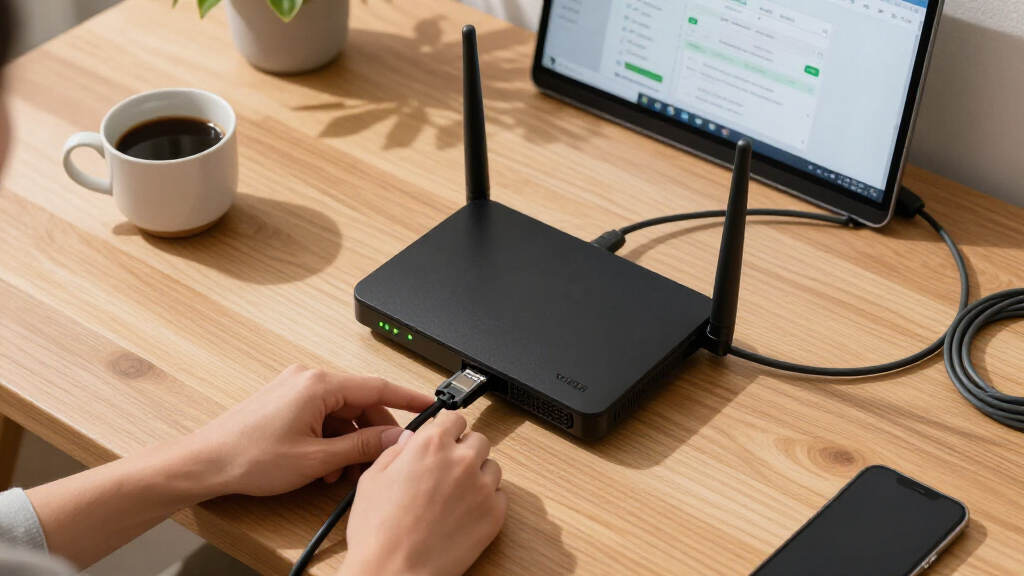
I ranked these hardware VPN routers around three buyer-relevant factors: sustained VPN throughput, setup difficulty, and hardware longevity. VPN throughput is the defining spec in this category — encryption is CPU-intensive, so a router with a weak processor can throttle a gigabit connection down to 100 Mbps once WireGuard or OpenVPN is active. I favored models with multi-gig ports and processors proven to handle encrypted traffic near line speed.
Setup experience separated the plug-and-play options from the enthusiast-grade ones. Routers with pre-installed VPN clients, web dashboards, and mobile apps ranked higher for most buyers, while devices requiring command-line configuration were judged only for technical users. I also weighed versatility — whether a model works as a travel companion, an office gateway, or a whole-home router — and penalized models whose strengths overlap heavily with cheaper picks in the lineup. Value was assessed on feature-per-dollar within each use case, not on sticker price alone.
| hardware VPN router | Security | Wi-Fi Standard |
|---|---|---|
| TP-Link ER605 Wired Gigabit VP | SPI firewall, DoS defense, IP/MAC/URL filtering | — |
| GL.iNet GL-AX1800 | WPA3, WPA2, AdGuard Home | Wi-Fi 6 (802.11ax), dual band |
| SonicWall TZ280 Next-Gen Firew | — | — |
| GL.iNet GL-AXT1800 Slate AX Po | — | Wi-Fi 6 (802.11ax), dual band |
| GL.iNet GL-MT3000 Beryl AX Wi- | WPA3, DNS over HTTPS, DNS over TLS, IPv6 | Wi-Fi 6, dual band |
| GL.iNet GL-MT6000 Flint 2 Wi-F | WPA3, AdGuard Home support | Wi-Fi 6 (802.11ax), dual-band |
| GL.iNet GL-BE6500 Flint 3e Wi- | — | Wi-Fi 7, dual-band |
| GL.iNet GL-BE9300 Flint 3 Tri- | WPA2, WPA3, WPS, WPA-Enterprise | Wi-Fi 7 (802.11be), tri-band with 6 GHz |
| Omada ER707-M2 Multi-Gigabit V | — | — |
| GL.iNet GL-MT3600BE Beryl 7 Du | WPA3, DNS over HTTPS, DNS over TLS, IPv6 | Wi-Fi 7, dual-band |
| ASUS RT-AX1800S Dual-Band WiFi | AiProtection Classic with parental controls | — |
| GL.iNet GL-MT5000 Brume 3 Wire | — | — |
Factors to Consider When Choosing Hardware VPN Routers
Choosing a hardware VPN router comes down to matching the device to your internet plan, your devices, and how much of your network actually needs encryption. These are the factors that most often trip buyers up.VPN Throughput Is the Spec That Actually Matters
The number printed on the box is almost never the speed you get with a VPN active. Encryption shifts the workload onto the router’s CPU, and many budget models lose 70–90% of their raw throughput the moment WireGuard or OpenVPN kicks in. WireGuard is dramatically lighter than OpenVPN, so a router that crawls on OpenVPN may run near full speed on WireGuard — check both figures when comparing. A common mistake is buying a router rated for gigabit when your processor budget only supports 200 Mbps encrypted; you then blame your VPN provider for a hardware bottleneck. Match encrypted throughput to your internet plan, not the router’s headline speed. If your plan is 500 Mbps, a router sustaining 400 Mbps encrypted is a better buy than a faster model that only encrypts at 150 Mbps.
Wired Gateway or Wi-Fi Router: Pick Your Architecture
Two designs dominate this category, and mixing them up wastes money. A wired VPN gateway like the GL-MT5000 Brume 3 or TP-Link ER605 has no wireless radios at all — it sits behind or in front of your existing Wi-Fi router and handles encryption for the whole network. This approach usually delivers better VPN performance per dollar because every hardware dollar goes to the processor and ports. A Wi-Fi VPN router combines both functions in one box, which is simpler but means replacing your current router entirely. Buyers with a mesh system or a router they already love should lean toward a gateway; buyers starting from scratch or wanting one box should choose the combined unit. The wrong choice here is the most expensive mistake in this category.
Wi-Fi 7 Is Only Worth It for Future-Proofers
Wi-Fi 7 routers like the Flint 3 and Flint 3e command a real premium, and most households cannot use that bandwidth yet. The standard only benefits devices with Wi-Fi 7 adapters — as of 2026, that’s recent flagship phones and laptops, not smart TVs, consoles, or older hardware. Where Wi-Fi 7 does pay off is multi-gig internet plans and dense households with many simultaneous streams, where the extra channel capacity reduces congestion. For everyone else, a Wi-Fi 6 model with a strong processor will feel identical in daily use, because your internet plan — not your wireless standard — is the bottleneck. A sensible middle path: buy Wi-Fi 7 only if you plan to keep the router five or more years and expect to upgrade your plan and devices along the way.
Setup Complexity Varies More Than Any Other Category
Some of these routers work out of the box with a few taps; others assume you know what an SSH session is. GL.iNet devices ship with VPN clients pre-installed and configured through a simple web panel, while business appliances like the SonicWall TZ280 expect IT-level knowledge and often require separate security subscriptions to unlock their full feature set. A frequent buyer error is purchasing enterprise hardware thinking it is ‘more powerful,’ then discovering it cannot even run a consumer VPN client without manual configuration. Match the setup burden to your actual skills, not your ambition. If terms like ‘certificate’ or ‘VLAN’ are unfamiliar, stay with consumer-oriented firmware. Enthusiasts, conversely, should confirm the device supports OpenWrt or custom firmware before buying.
Port Speed and PoE Future-Proof Your Purchase
Port configuration is where manufacturers quietly cut costs. A router with only gigabit ports caps your total throughput at 1 Gbps regardless of its internal speed — a real problem as 2 Gbps and faster home plans spread. Dual 2.5G ports (one for WAN, one for LAN) have become the sensible baseline for anyone buying in 2026, and models like the Flint 2 and Omada ER707-M2 handle this well. Also check whether your Ethernet ports support PoE if you plan to power access points or cameras through the router — mostly relevant on business models. Finally, count the ports: travel routers with a single LAN port will frustrate anyone with a desk setup, while a five-port switch built into the router eliminates an extra box and cable.
Travel Routers Are Additions, Not Replacements
Pocket-sized VPN routers solve a specific problem: protecting your traffic on hotel, airport, and café networks. Their internal antennas and small processors mean they cannot match a full-size router’s range or multi-device throughput at home. The mistake I see most often is buying a Beryl or Slate as a primary home router to save money, then discovering Wi-Fi dead zones and slowdowns with a busy household. The right mental model is a two-device setup: a capable home router or gateway, plus a travel router that carries the same VPN profiles on the road. If you can only buy one device and travel rarely, prioritize the home unit and tether securely through a phone VPN app when away.
Frequently Asked Questions
Do I need a hardware VPN router, or is VPN software on my devices enough?
Software VPN apps make sense if you only need encrypted traffic on one or two devices, like a work laptop. A hardware VPN router becomes worthwhile when you want to protect devices that can’t run VPN software — smart TVs, consoles, security cameras, IoT gadgets — or when you want every device covered automatically without managing individual apps. Hardware also keeps performance consistent, since the router’s processor handles encryption rather than competing with your laptop’s other work. The downside is that all traffic routes through one tunnel unless you configure split tunneling, which cheaper models handle poorly. If you already pay for a VPN subscription that allows router installation, adding a hardware router extends that subscription to your entire network at no extra cost.
Why is my VPN so much slower through a router than the VPN app on my computer?
Your computer’s processor is almost certainly far more powerful than the CPU inside a router, and encryption is processor-intensive. When your laptop runs the VPN app, it encrypts traffic with desktop-class hardware; when the router does it, a small embedded chip handles the same workload. That’s why VPN throughput is the single most important spec in this category — a router with a weak CPU can throttle a 1 Gbps connection to under 100 Mbps with OpenVPN active. WireGuard reduces this gap considerably because its protocol is far lighter than OpenVPN, so switching protocols on the same hardware often doubles or triples your speed. If speed keeps disappointing you, check whether your router supports hardware encryption acceleration or WireGuard before assuming the router is defective.
Should I buy a Wi-Fi 7 VPN router now or stick with Wi-Fi 6?
Wi-Fi 7 only pays off if three things align: you have a multi-gig internet plan, you own (or will soon own) Wi-Fi 7 client devices, and you plan to keep the router for five-plus years. Without compatible devices, a Wi-Fi 7 router runs your existing hardware at Wi-Fi 6 speeds anyway, so the premium buys headroom you can’t use. Where Wi-Fi 7 genuinely helps even with older devices is in crowded environments — apartment buildings, busy offices — because the extra spectrum reduces interference. For VPN use specifically, note that your encrypted throughput is usually lower than your internet plan anyway, which further hides the wireless standard’s advantage. A Wi-Fi 6 router with a strong processor remains the smarter buy for most budgets in 2026.
Can I use one of these travel routers as my main home router?
You can, but most buyers regret it. Travel routers like the Beryl AX and Slate AX use small internal antennas and compact processors to stay pocket-sized, which means noticeably shorter range and slower multi-device throughput than a full-size router. In a studio apartment or dorm room with a handful of devices, they perform adequately and save space. In a typical family home with streaming, gaming, and a dozen smart devices, expect dead zones and congestion that a proper router wouldn’t have. The better approach is a two-device strategy: a full-size VPN router at home and a travel router carrying the same VPN profiles for the road. If budget only allows one, prioritize the home unit — you can always secure travel traffic with a phone-based VPN app temporarily.
Is a business firewall like the SonicWall TZ280 better than a consumer VPN router?
Better for the right buyer, overkill for everyone else. The TZ280 is a next-gen firewall that does deep packet inspection, threat detection, and enterprise policy management — capabilities a consumer VPN router simply doesn’t have. But its VPN functionality is built around site-to-site business tunnels, not consumer VPN providers, so plugging in your usual VPN subscription is often awkward or impossible without workarounds. Business appliances also frequently require separate subscription licenses to unlock security features, which adds recurring cost the sticker price hides. If you run a small business with compliance needs or multiple office locations, this class of hardware earns its cost. For home users who just want encrypted traffic, a consumer VPN router delivers 95% of the practical benefit at a fraction of the complexity.
Conclusion
After comparing all 12 models, the right choice depends almost entirely on where you’ll use the router and how fast your connection is. For best overall, the GL.iNet GL-MT6000 Flint 2 balances VPN throughput, dual 2.5G ports, and accessible setup better than anything else here — it handles a busy gigabit household without asking you to learn networking. For best value, the TP-Link ER605 covers wired whole-network encryption for less than most Wi-Fi alternatives, provided you already have a separate access point.
For best premium, the GL.iNet GL-BE9300 Flint 3 with its five 2.5G ports and tri-band Wi-Fi 7 is the most future-proofed option, while the SonicWall TZ280 is the premium pick specifically for small businesses needing real threat management, not just encryption. For beginners, the GL.iNet GL-AX1800 Flint offers the gentlest on-ramp to router-level VPNs with pre-installed clients and a simple dashboard. For specific needs: the GL-MT3000 Beryl AX for travelers who want 2.5G WAN in a pocket, the GL-MT5000 Brume 3 for anyone who wants maximum VPN performance added to an existing Wi-Fi setup, and the ASUS RT-AX1800S for buyers who want a familiar mainstream brand with basic VPN support rather than a specialist device. Whatever you pick, match encrypted throughput to your internet plan — that single decision separates a satisfying purchase from a frustrating one.
Halloween Picks
halloween
As an affiliate, we earn on qualifying purchases.