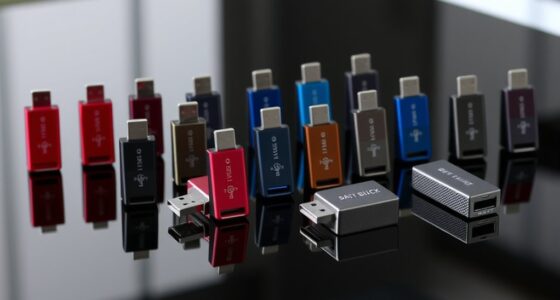
Choosing a Zigbee packet analyzer is less about the USB form factor than about the chipset, firmware path, and hardware included. I rank the AITIAO CC2531 two-pack first for buyers who want two antenna-equipped units, while the HiLetgo CC2531 is the compact single-board pick. The Dioche CC2540 stands out for 802.15.4 learning and programming experiments, and JUZITAO’s two-pack offers a similar dual-module setup with Linux listed as its operating system.

Get privacy and security gear delivered free with Prime
- Fast, free delivery on millions of items
- Prime Video, Amazon Music and more included
- Member-only deals all year
All four options need compatible firmware before they can capture and interpret packets, so none should be treated as a plug-and-play analyzer. I weigh how clearly each product fits a particular workflow, what arrives in the package, and how much setup or handling the buyer should expect. The main tradeoff is straightforward: one compact board versus two antenna-equipped modules, with the CC2540 adding a different development-oriented angle.
Key Takeaways
- AITIAO is my strongest general-purpose pick if a buyer wants two CC2531 units, external antennas, and support for compatible Sniffer and BTool firmware.
- HiLetgo suits a one-board setup where compact size and USB connectivity matter more than included accessories or a second unit.
- Dioche is the distinct CC2540 option for people exploring 802.15.4 analysis alongside firmware programming, provided they can manage the stated emulator and programming-line setup.
- JUZITAO offers two antenna-equipped CC2531 modules and lists Linux, but its bare-board construction and firmware dependence still require technical preparation.
- None of these products is a complete analysis workflow by itself: buyers need compatible firmware and suitable host-side software to capture and inspect packets.
| AITIAO Zigbee CC2531 USB Sniffer Dongles with External Antennas, 2-Pack |  | Best Overall — two antenna-equipped CC2531 units for flexible Zigbee capture setups | Quantity: 2 dongles | Chipset: CC2531 | Protocol: Zigbee | VIEW ON AMAZON | See Our Full Breakdown |
| HiLetgo CC2531 Zigbee USB Sniffer Module |  | Best Compact Single Board — straightforward choice when one small CC2531 is enough | Chipset: CC2531 | Wireless standard: Zigbee | Frequency: 2.405–2.485 GHz | VIEW ON AMAZON | See Our Full Breakdown |
| Dioche Zigbee USB Sniffer Dongle with Antenna (CC2540) |  | Best for 802.15.4 Development — a CC2540 option for analysis and programming experiments | Chipset: CC2540 | Protocol: 802.15.4 | Frequency: 2.405–2.485 GHz | VIEW ON AMAZON | See Our Full Breakdown |
| JUZITAO 2-Pack CC2531 Zigbee USB Sniffer Modules with External Antennas |  | Best Linux-Listed Two-Pack — dual CC2531 modules with antenna hardware and GPIO access | Quantity: 2 modules | Chipset: CC2531 | Connectivity: USB, Zigbee, Bluetooth, GPIO | VIEW ON AMAZON | See Our Full Breakdown |
| zigbee packet analyzer | Chipset | Frequency | Interface | Dimensions |
|---|---|---|---|---|
| AITIAO Zigbee CC2531 USB Sniff | CC2531 | 2.405–2.485 GHz | USB | 41 × 16 × 1.6 mm |
| HiLetgo CC2531 Zigbee USB Snif | CC2531 | 2.405–2.485 GHz | USB | 4.1 × 1.6 cm |
| Dioche Zigbee USB Sniffer Dong | CC2540 | 2.405–2.485 GHz | USB | — |
| JUZITAO 2-Pack CC2531 Zigbee U | CC2531 | 2.405–2.485 GHz | — | 41 × 16 × 1.6 mm |
More Details on Our Top Picks
AITIAO Zigbee CC2531 USB Sniffer Dongles with External Antennas, 2-Pack
I place the AITIAO two-pack first because it combines the familiar CC2531 chipset with two USB modules and external antennas. For a buyer building a capture station, a second unit can support a separate test arrangement or serve as a spare; it does not, by itself, guarantee better reception or simultaneous capture. The stated support for compatible Sniffer and BTool firmware also gives this package a more clearly described analyzer path than products whose details focus mainly on general development.
Compared with HiLetgo’s single bare board, AITIAO gives the buyer two antenna-equipped modules rather than one compact unit. That makes it a more adaptable package for someone already comfortable selecting and loading firmware. It shares the same basic 2.405–2.485 GHz band and 250 Kbaud transmission rate as the other listed options, so those specifications do not distinguish it as a faster analyzer.
The tradeoff is that the extra hardware does not remove the setup work. Compatible firmware remains necessary, and the package details do not say that cables, programming tools, or host software are included. Its small 41 × 16 × 1.6 mm dimensions also mean each device is a compact board rather than a protected desktop instrument. I would choose it for flexible DIY capture, not for a turnkey workflow or a buyer who wants detailed setup instructions included.
Pros:- Two CC2531 USB modules provide a spare or a second test unit.
- External antennas are included on both modules.
- Compatible Sniffer and BTool firmware are identified.
- Compact dimensions and eight IO ports suit small development setups.
Cons:- Compatible firmware is required before analyzer use.
- The supplied details do not list host software or programming accessories.
- Bare-board construction calls for careful handling.
Best for: DIY Zigbee developers who want two CC2531 modules with external antennas and are prepared to install compatible firmware.
Not ideal for: People expecting a ready-to-run analyzer, included programming accessories, or a rugged enclosed device.
- Quantity:2 dongles
- Chipset:CC2531
- Protocol:Zigbee
- Frequency:2.405–2.485 GHz
- Transmission rate:250 Kbaud
- Interface:USB
- Ports:8 IO ports per module
- Dimensions:41 × 16 × 1.6 mm
Our verdict“I rank AITIAO first for its two-unit, antenna-equipped CC2531 package, as long as the buyer accepts firmware setup and bare-board handling.”
HiLetgo CC2531 Zigbee USB Sniffer Module
HiLetgo is the leanest choice in this group: one CC2531 board with a USB interface, a small 4.1 × 1.6 cm footprint, and eight IO ports plus a debug pin. For someone adding one capture device to an existing development bench, that compact layout keeps the hardware simple. It covers the same stated 2.405–2.485 GHz band and 250 Kbaud rate as the CC2531 two-packs, so its appeal is its single-board format rather than a distinct radio specification.
Against AITIAO and JUZITAO, HiLetgo gives up the second module and included external antenna, but it can make more sense when the buyer needs only one board and already has the rest of the setup. The listing is explicit that matching firmware is required for analyzer functionality. That matters: USB connectivity alone does not make this a ready-to-use packet analyzer, and the package is described as a bare board without additional accessories.
I would put this behind the AITIAO kit for a buyer who values flexibility from multiple units, but ahead of it for someone who specifically wants a single compact board and can source any missing setup components. The main limitation is not a stated protocol shortfall; it is the sparse package. No antenna or programming accessories are listed, and the details do not identify an included analysis application or provide a step-by-step firmware path. Choose it when the low-complexity hardware footprint fits your bench, not when you need a guided start.
Pros:- Small 4.1 × 1.6 cm board fits a compact workbench setup.
- USB interface simplifies connection to a host.
- Eight IO ports and a debug pin offer development access.
- Specified to operate across 2.405–2.485 GHz.
Cons:- Matching firmware is required for analyzer functionality.
- Package contains one bare board with no additional accessories listed.
- An antenna is not listed among the package contents.
Best for: A technically comfortable buyer who wants one compact CC2531 USB board for a Zigbee capture setup already in progress.
Not ideal for: Beginners who need a complete kit, an antenna in the package, or a clearly supplied firmware and software workflow.
- Chipset:CC2531
- Wireless standard:Zigbee
- Frequency:2.405–2.485 GHz
- Data transfer rate:250 Kbaud
- Interface:USB
- Power consumption:<20 mA receiving; <25 mA transmitting
- Ports:8 IO ports and a debug pin
- Dimensions:4.1 × 1.6 cm
Our verdict“HiLetgo is my compact single-board pick for an existing DIY setup, but its bare package makes it a weaker first purchase than the AITIAO two-pack.”
Dioche Zigbee USB Sniffer Dongle with Antenna (CC2540)
Best for 802.15.4 Development — a CC2540 option for analysis and programming experiments
View on AmazonDioche is the lineup’s outlier: it uses a CC2540 rather than the CC2531 found in the other three picks. Its stated purpose spans developing, testing, and analyzing devices using 802.15.4, and it can also be used to burn programs. That makes it a more development-oriented choice for buyers who want to explore protocol analysis alongside firmware work, rather than simply add another CC2531 capture board to a Zigbee toolkit.
The included antenna gives Dioche an advantage over HiLetgo’s listed package contents, which contain only a bare board. It also has eight I/O ports and a debug pin, much like the other modules. Compared with AITIAO and JUZITAO, however, it is a single-unit package and uses a different chipset. Buyers should check that the firmware and tools they intend to use support this exact CC2540 device; broad 802.15.4 wording is not proof that every CC2531 tutorial or capture workflow will apply.
The stated setup is a real drawback: Dioche requires an emulator and programming line for the described configuration. That creates more hardware and compatibility questions than the product’s simple USB-dongle appearance might suggest. I would choose it for experimentation where programming functions are part of the goal, but skip it if the priority is the more familiar CC2531 route or a two-unit package. The available details do not identify included emulator hardware or analysis software.
Pros:- CC2540 platform adds a distinct option beside the CC2531 models.
- Supports 802.15.4 protocol-analysis use with suitable firmware.
- Antenna is included.
- Eight I/O ports and a debug pin support development work.
Cons:- The described setup requires an emulator and programming line.
- Compatibility with CC2531-focused instructions should not be assumed.
- Only one module is listed, and included analysis software is not specified.
Best for: Makers exploring 802.15.4 devices who want a CC2540 module for both protocol-analysis experiments and programming tasks.
Not ideal for: Buyers following a CC2531-specific setup guide or anyone seeking a complete, minimal-setup analyzer kit.
- Chipset:CC2540
- Protocol:802.15.4
- Frequency:2.405–2.485 GHz
- Data rate:250 Kbaud
- Interface:USB
- Working voltage:DC 5 V
- I/O ports:8
- Package contents:Sniffer bare board and antenna
Our verdict“Dioche is the most development-focused pick here, but its CC2540 platform and extra setup make it a more specialized choice than the CC2531 boards.”
JUZITAO 2-Pack CC2531 Zigbee USB Sniffer Modules with External Antennas
Best Linux-Listed Two-Pack — dual CC2531 modules with antenna hardware and GPIO access
View on AmazonJUZITAO is another two-module CC2531 package, with external antennas and eight GPIO ports on each small board. The listing names Linux as its operating system, which gives Linux-based buyers a useful point to verify against their intended drivers and software. That is not the same as proof of broad compatibility or a supplied application, but it makes the product’s intended host environment more explicit than the other listings here.
Compared with AITIAO, the hardware outline is very similar: two compact USB modules, the 2.405–2.485 GHz band, a 250 Kbaud rate, and support for compatible Sniffer or BTool firmware. AITIAO states that firmware support directly, while JUZITAO describes compatible firmware configurations and Linux. Neither package is described as ready to capture out of the box, so I would base a choice between them on confirmed firmware and host compatibility rather than assume a radio-performance difference from the supplied specs.
The main drawback is the bare-board format, which calls for careful handling, coupled with dependence on compatible firmware. The listed 41 × 16 × 1.6 mm dimensions reinforce that these are small modules, not enclosed field instruments. Compared with the single HiLetgo board, JUZITAO gives the buyer two modules and antennas; compared with Dioche, it sticks to the CC2531 path. It is a sensible alternative for Linux-oriented DIY users who verify support before purchase, though the available product details leave the exact setup process open.
Pros:- Two CC2531 USB modules are included.
- External antennas and eight GPIO ports support flexible setups.
- Linux is listed as the operating system.
- Compatible Sniffer or BTool firmware can support different functions.
Cons:- Compatible firmware is needed for analyzer use.
- Bare-board construction requires careful handling.
- The listing does not specify included host software or a complete setup kit.
Best for: Linux-oriented DIY users who want two CC2531 modules with external antennas and can confirm firmware and host compatibility.
Not ideal for: Buyers seeking an enclosed analyzer, detailed setup guidance, or a product with confirmed plug-and-play Linux software.
- Quantity:2 modules
- Chipset:CC2531
- Connectivity:USB, Zigbee, Bluetooth, GPIO
- Frequency:2.405–2.485 GHz
- Transmission rate:250 Kbaud
- GPIO ports:8 per module
- Operating system:Linux listed
- Dimensions:41 × 16 × 1.6 mm
Our verdict“JUZITAO is a credible Linux-listed alternative to AITIAO for a two-module CC2531 setup, but buyers should verify software support before choosing it.”

How We Picked
I ranked these products by their usefulness as Zigbee packet-capture hardware, not by generic USB convenience. A radio board only becomes an analyzer when its chipset, firmware, and host software work together. I therefore gave weight to the stated CC2531 or CC2540 platform, compatibility with analyzer firmware where specified, and clarity about the setup required.
I also compared what is included. The two antenna-equipped CC2531 packages offer more hardware flexibility than HiLetgo’s single bare board, while Dioche includes an antenna and frames its device around broader 802.15.4 development and testing. I treated those differences as workflow distinctions rather than assuming that more pieces automatically mean better captures.
Finally, I considered the friction a buyer may face: firmware installation, emulator or programming-line needs, bare-board handling, and operating-system information. The supplied details do not establish capture range, software ease, driver support, or current firmware compatibility, so I do not claim that one model performs better on those measures. The ranking favors the clearest fit for common packet-analysis setups while making the setup limits visible.
| zigbee packet analyzer | Chipset |
|---|---|
| AITIAO Zigbee CC2531 USB Sniff | CC2531 |
| HiLetgo CC2531 Zigbee USB Snif | CC2531 |
| Dioche Zigbee USB Sniffer Dong | CC2540 |
| JUZITAO 2-Pack CC2531 Zigbee U | CC2531 |
Factors to Consider When Choosing Zigbee Packet Analyzers
I would choose a Zigbee packet analyzer by matching its chipset and setup requirements to the capture workflow I already plan to use. These modules share similar radio-band and data-rate specifications, so package completeness, firmware support, and host compatibility matter more than the headline numbers.Start with the chipset and firmware path
CC2531 is the common ground for HiLetgo, AITIAO, and JUZITAO. That can make it easier to compare hardware around a known workflow, but it does not prove that a particular firmware image, driver, or host application will work with every board. Confirm the exact module and firmware combination before buying. Dioche’s CC2540 is a separate route; its 802.15.4 focus and programming use may suit broader development experiments, but CC2531 instructions should not be assumed to transfer.
Ask what the capture tool needs: analyzer firmware, a flashing method, host software, and any required programming adapter. The supplied product details do not establish that these accessories or applications come in the box. If a product page only names compatible firmware, treat that as a compatibility lead to verify, not a completed setup.
Choose one board or two based on the workflow
A single module can be enough for learning packet capture or monitoring one test setup. HiLetgo is the compact single-board option, while Dioche also supplies one module but adds a CC2540 development angle and antenna. A two-pack makes more sense when a spare, a second test device, or extra flexibility matters. AITIAO and JUZITAO both provide two CC2531 units, but two modules do not automatically mean higher capture quality or simultaneous analysis; that depends on the software and workflow.
For a basic bench, I would avoid paying attention to unit count alone. Consider whether the second module has a clear purpose, and whether you already have the host ports, firmware tools, and software to use it.
Check antenna and physical protection
AITIAO, Dioche, and JUZITAO list an external antenna; HiLetgo’s listed package is a bare board without additional accessories. An included antenna can make the module easier to position as part of a test setup, but the specifications supplied here do not provide measured range or reception comparisons. I would not infer better packet capture from antenna inclusion alone.
These are small boards, not rugged enclosed instruments. The dimensions listed for AITIAO and JUZITAO are 41 × 16 × 1.6 mm, and HiLetgo is similarly compact. If the analyzer will move between sites or sit in a busy workspace, account for safe handling and any enclosure or protection you may need to add.
Match the host environment and analysis goal
JUZITAO lists Linux, but buyers should still verify driver and application compatibility for their own system. The other listings do not provide enough operating-system detail to settle that question. Before choosing, check whether your preferred packet-analysis software accepts the device and firmware combination, and whether it can present the packet fields you need.
Also separate packet capture from packet interpretation. A USB radio module may collect data, while host software is needed to display and inspect it. If you need guided troubleshooting, documented software support, or a ready-to-run appliance, these bare-board products may not meet that need without additional research and setup.
Treat matching radio specifications as a baseline, not a ranking
All four listings specify operation across 2.405–2.485 GHz and a rate of 250 Kbaud, with the CC2531 models focused on Zigbee and Dioche described for 802.15.4. These shared figures establish the intended radio band, but they do not prove capture sensitivity, packet-loss behavior, software reliability, or compatibility with every device on a network. I rank the products by package and setup fit instead of claiming performance differences that the listed specifications do not show.
For a purchase decision, prioritize a verified firmware path and a compatible host workflow. Then compare the number of modules, antenna inclusion, chipset, and development features against the job you actually need to do.
Frequently Asked Questions
Can these modules capture Zigbee packets as soon as I plug them in?
No product here is described as a complete plug-and-play analyzer. The listings require compatible firmware, and the analyzer function depends on the board, firmware, and host-side software working together. Before buying, confirm the correct firmware image and the method for loading it; Dioche also describes an emulator and programming line for its setup.
Which of these options is best for a first Zigbee capture project?
For a beginner who already has a compatible firmware guide, I would start with the AITIAO two-pack because it specifies CC2531 hardware, external antennas, and compatible Sniffer and BTool firmware. It still requires setup, so a beginner who needs step-by-step instructions or included software may find that none of these bare-board products is a complete starter kit. Verify the tutorial against the exact module before ordering.
Do the two-packs capture more packets than the single modules?
The supplied specifications do not show that a two-pack captures packets more effectively than a single module. A second unit can give a buyer a spare or another device for a test arrangement, depending on the software and workflow, but the number of modules alone does not establish range, sensitivity, or packet-loss performance. I would choose a two-pack for the extra hardware rather than an assumed capture-quality advantage.
Should I choose the CC2540 Dioche or a CC2531 model?
I would choose based on the firmware and development task. HiLetgo, AITIAO, and JUZITAO use CC2531, while Dioche uses CC2540 and is framed for 802.15.4 analysis as well as programming experiments. If your existing instructions or tools specify CC2531, the CC2540 should not be treated as an automatic substitute. Check that your intended software supports the exact chipset and board.
What should I check before buying a Zigbee packet analyzer board?
Confirm the chipset, supported firmware, flashing method, host operating system, and packet-analysis software before choosing a board. Then check whether an antenna and programming accessories are included, how many modules arrive, and whether the bare-board form suits your workspace. These listings share similar stated frequency and data-rate figures, so verified compatibility and setup requirements are more useful decision points than those shared numbers.
Conclusion
For most DIY buyers who want two antenna-equipped CC2531 modules, I would choose AITIAO, with the condition that compatible firmware and host software are arranged separately. Pick HiLetgo if one compact board is all your existing setup needs and you do not require an included antenna. Choose Dioche for CC2540 and 802.15.4 development experiments, especially when programming is part of the goal and you can provide the described emulator and programming line. JUZITAO is the alternative for Linux-oriented buyers seeking a two-module CC2531 package, but I would verify its exact software and firmware support first. Across all four, the best match is the module whose setup path you can confirm—not simply the one with the most hardware in the package.