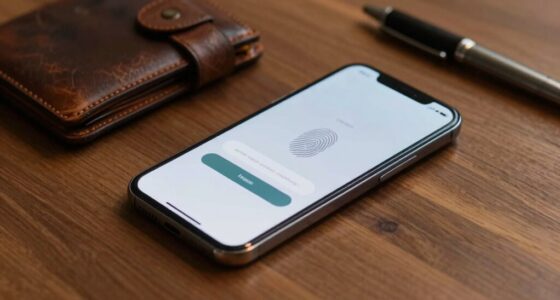
To create security awareness training that truly works, incorporate gamification tactics like interactive challenges, leaderboards, badges, and rewards. These elements boost engagement, improve knowledge retention by up to 40%, and foster a proactive security culture. Personalize content to your team’s roles and keep challenges fresh to sustain motivation. By embedding these strategies, you’ll see measurable improvements and long-term behavior changes. Keep exploring to discover how to implement these effective techniques in your organization.
Open a free Amazon Business account
Business pricing, bulk buying and tax-exempt orders.
As an affiliate, we earn on qualifying purchases.
Key Takeaways
- Gamification transforms security training into engaging, interactive experiences, boosting participation by up to 60% and improving retention by 30–40%.
- Incorporating elements like leaderboards, badges, and rewards fosters motivation, achievement, and ongoing engagement.
- Personalized, role-based content ensures relevance, addressing specific security challenges within different departments.
- Real-world simulations and adaptive scenarios keep training dynamic, reinforce correct behaviors, and reduce human error.
- Continuous, data-driven metrics track progress, reinforce behavioral change, and embed security habits into daily routines for long-term impact.
The Power of Gamified Learning in Security Training

Gamified learning transforms security training by making it more engaging and effective. It uses realistic simulations and scenarios that mirror actual cyber threats, like phishing and data breaches, giving you a safe space to practice without fear of consequences. Interactive challenges boost your confidence in recognizing and responding to risks under real conditions. Features like mystery-style games and immediate feedback help you absorb and remember key concepts better, with studies showing a 30–40% improvement in retention. Regular updates keep your skills sharp against evolving threats. This approach also increases participation, with gamified programs raising completion rates by up to 60%. Behavioral science principles support the effectiveness of this method, making it a proven way to improve security awareness. By making learning enjoyable, gamification helps you stay alert, motivated, and better prepared to defend your organization. Incorporating learning retention techniques further enhances long-term understanding and application of security best practices.

Laptop Privacy Screen 15.6 Inch 16:9 Aspect Privacy Screen Filter Removable
- Size Compatibility: Fits 15.6-inch screens with 16:9 aspect ratio
- Privacy Protection: Obscures screen from side views over 30°
- Clear Front Visibility: Maintains clear display from the front
As an affiliate, we earn on qualifying purchases.
Engaging Elements That Drive User Motivation
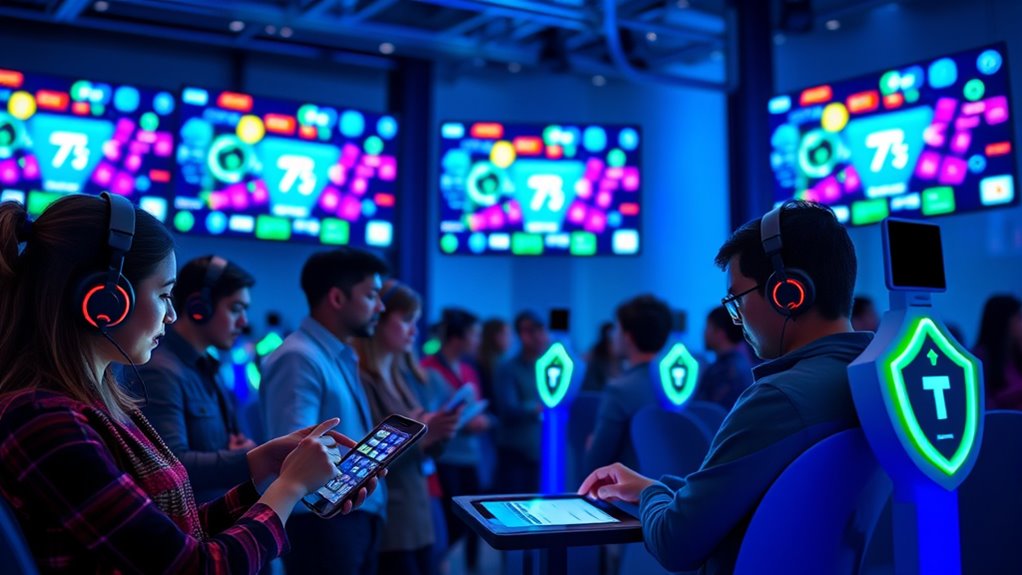
Using points, badges, and leaderboards can boost your motivation and keep users engaged. Interactive challenges and team competitions make security training more dynamic and fun. Incorporating these elements encourages consistent participation and a sense of achievement. Personalized, role-based content further enhances engagement by making the training more relevant to each employee’s daily tasks role-specific training and helps address unique security challenges faced by different departments.
Points, Badges, Leaderboards
Points, badges, and leaderboards are powerful tools that motivate employees to engage actively in security awareness training. They create a sense of achievement and foster healthy competition, keeping security topics fresh and interesting. Applying education principles, these elements make learning more memorable and attention-holding. A well-designed gamification strategy can significantly enhance retention and application of security practices. – Boost Engagement: Points reward participation in activities like quizzes and phishing simulations, encouraging ongoing involvement. – Visual Recognition: Badges symbolize milestones and skills, making progress easy to track and boosting morale. – Foster Competition and Collaboration: Leaderboards motivate employees to improve and promote team spirit by displaying collective performance. Together, these elements maintain interest, reinforce learning, and drive continuous improvement. They turn training into a dynamic experience, ensuring security awareness becomes an integral part of your organization’s culture.
Interactive Challenge Design
Engaging challenge design leverages multimedia and scenario-based learning to make security training more relevant and memorable. You’ll find that realistic scenarios and multimedia content like videos and animations help maintain focus and improve knowledge retention by up to 40%. Adaptive scenarios evolve based on your responses, keeping challenges engaging without causing boredom. Instant feedback during exercises reinforces correct actions and clarifies mistakes, making learning active and immediate. Personalization adjusts difficulty to match your skill level, fostering motivation and progress. Embedding challenges within compelling stories creates emotional connections, helping you grasp complex topics better. Here’s a quick overview of key elements: Emotional Support | Element | Benefit | Implementation Example | |——————————|——————————————-|————————————————| | Multimedia & Scenarios | Boost engagement & retention | Realistic cyber threat simulations | | Instant Feedback | Reinforce learning & correct errors | Immediate explanations for wrong choices | | Personalization & Adaptation | Maintain challenge & motivation | Custom difficulty based on your performance | | Storytelling & Narratives | Enhance understanding & engagement | Security stories with decision points
Team Competition Dynamics
Team competition taps into our natural desire to compare ourselves with others, making security awareness training more engaging and motivating. It boosts participation through leaderboards and rankings, encouraging teams to improve continuously. Friendly rivalry fosters active learning, while comparative feedback highlights strengths and weaknesses, guiding targeted efforts. Structured dynamics promote collaboration within teams and healthy competition between groups, increasing engagement. A significant gap exists in security training availability, especially among smaller firms, underscoring the importance of innovative engagement tactics like gamification. To maximize motivation, consider these elements: – Tangible rewards like badges, points, or prizes motivate ongoing effort. – Public recognition reinforces positive behaviors and sustains interest. – Milestone rewards support steady progress, encouraging consistent participation. Additionally, incorporating behavioral motivation strategies can further enhance user commitment and training effectiveness.

SightPro Magnetic Laptop Privacy Screen 14 Inch 16:9 - Patented Removable Laptop Privacy Filter Shield and Protector
- Magnetic Snap-on Attachment: Easy magnetic attachment and removal
- Compatible Dimensions: Fits 14-inch screens, verify measurements
- Enhanced Privacy: Blacks out side viewing, clear front view
As an affiliate, we earn on qualifying purchases.
Real-World Success Stories and Case Studies

Real-world success stories and case studies demonstrate how organizations have effectively implemented gamification strategies to boost security awareness. For example, Deloitte’s escape room challenges employees to solve security puzzles within a time limit, strengthening their security mindset. Inno-Versity’s “Face the Hacker” challenge raises awareness about human error, while CommLab India’s gamified eLearning improves threat response skills in retail staff. Gametize’s platform engages employees through rewards and interactive content, fostering ongoing learning. Brightside AI’s phishing simulations create realistic scenarios based on employees’ digital footprints, enhancing threat detection. These initiatives leverage leaderboards, competitions, and collaborative challenges to maintain engagement, build community, and reinforce best practices. Additionally, incorporating personalization into training modules increases relevance and motivation among employees. Ultimately, these case studies highlight how gamification creates a proactive security culture and reduces human error. Gamification in cybersecurity training is proven to significantly improve engagement, knowledge retention, and behavior change.

STARY 360° Laptop privacy screen protector 14 inch 16:10 Ratio (1920x1200)
- Dimensions and Compatibility: Fits 14-inch 16:10 laptops, check size
- 360° Privacy Protection: Blocks visibility from all directions
- Two Finish Options: Glossy for privacy, matte for glare reduction
As an affiliate, we earn on qualifying purchases.
Metrics and Data-Driven Improvements in Security Awareness

Implementing gamification strategies in security awareness programs has shown significant success through measurable outcomes. You can track participation rates to see how many employees start and complete training, revealing engagement levels. Monitoring quiz scores helps measure knowledge retention and identify weak areas needing reinforcement. Behavioral metrics, like phishing simulation click rates and reporting, directly link training to real-world actions, showing behavioral improvements. Additionally, gathering employee feedback provides insights into content relevance and engagement, guiding content updates. Tracking training effectiveness and analyzing these metrics consistently allows organizations to demonstrate the value of their training efforts and make data-driven improvements.
Cultivating a Security-First Culture Through Gamification
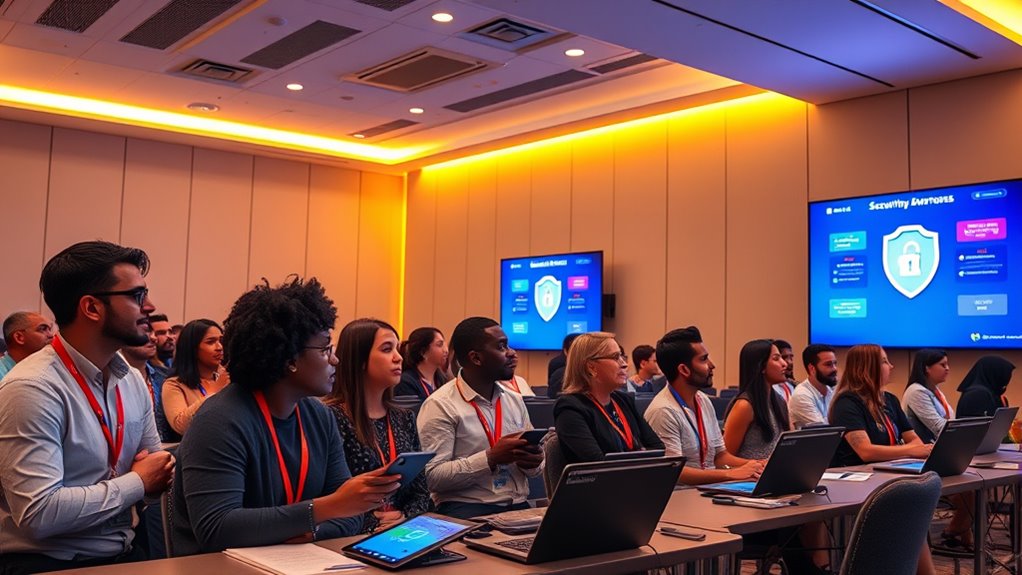
Gamification plays a pivotal role in cultivating a security-first culture by making cybersecurity training more engaging and motivating employees to adopt secure behaviors. You’ll see increased retention—up to 40%—by turning learning into enjoyable activities. Incorporating competition, rewards, and leaderboards taps into intrinsic motivators, encouraging proactive security actions. Shared experiences like quizzes foster camaraderie and trust, strengthening your organization’s culture. Immediate feedback builds confidence, reinforcing correct decisions in a risk-free environment. Repeated practice embeds security habits into daily routines, creating a sense of ownership. To visualize this, consider the following:
| Activity | Impact | Outcome |
|---|---|---|
| Leaderboards | Motivates ongoing participation | Continuous engagement |
| Badges | Reinforces positive identity | Culture of achievement |
| Quizzes | Encourages repetition | Skill retention |
| Rewards | Incentivizes secure behaviors | Behavior reinforcement |
| Team Challenges | Fosters collaboration | Unified security mindset |
Main Factual Point Games are most effective when part of a comprehensive security culture program, ensuring that behavioral changes are sustained over time and integrated into daily practices. Consistent engagement is key to embedding these behaviors as habits rather than temporary efforts.
Practical Steps to Implement Effective Gamified Security Programs

To create an effective gamified security program, you need to incorporate engaging techniques like interactive quizzes and role-playing scenarios that mimic real-world threats such as phishing and ransomware attacks. Tailor your training to specific departments to boost relevance and engagement. Use platforms that simulate threats based on employees’ digital footprints or common security challenges, and regularly update content to reflect emerging risks like social engineering and quishing. Measure success with engagement metrics such as completion rates and quiz scores. Incorporate Preppy Dog Names that appeal to diverse preferences within your organization to boost participation and morale.
Create engaging, tailored gamified security training with interactive scenarios, real-time leaderboards, and up-to-date threat simulations.
- Implement real-time leaderboards to foster friendly competition
- Offer badges or rewards for milestones achieved
- Use instant feedback to help employees learn from mistakes and improve security habits
Frequently Asked Questions
How Do Gamification Elements Adapt to Different Organizational Sizes?
You need to adapt gamification elements based on your organization’s size. Small organizations benefit from simple, quick challenges and friendly leaderboards, making engagement easy and cost-effective. Medium-sized teams thrive with tailored, collaborative features like badges and storytelling integrated into existing tools, promoting ongoing participation. Large enterprises require scalable platforms with advanced analytics and adaptive responses to manage thousands of users, ensuring sustained motivation and targeted security training across diverse groups.
What Are Common Challenges When Implementing Gamified Security Training?
Implementing gamified security training can feel like climbing Mount Everest, with challenges looming at every step. You might face employee resistance, viewing gamification as trivial or distracting from serious security issues. Keeping content relevant and updated is tough, and balancing competition with inclusivity requires finesse. Measuring real behavior change can seem like chasing a mirage. Yet, with clear communication, tailored scenarios, and data-driven insights, you can overcome these hurdles and boost your security culture.
How Does Gamification Impact Long-Term Security Behavior Change?
You might wonder how gamification influences long-term security habits. It boosts engagement and immediate behavior, but without ongoing reinforcement, these habits tend to fade back to baseline. To create lasting change, you should integrate continuous, evolving gamified activities that measure and adapt to employee behaviors over time. This ongoing approach helps embed security practices into your organization’s culture, making the desired behaviors more consistent and durable.
Can Gamified Training Replace Traditional Security Awareness Methods?
Can gamified training replace traditional security awareness methods? It’s unlikely you’ll see a full replacement, but gamification markedly enhances engagement and knowledge retention. You’ll notice better participation, faster learning, and measurable behavior changes like increased threat reporting. While traditional methods provide foundational knowledge, integrating gamification makes training more interactive and motivating. Combining both approaches offers the most effective strategy, ensuring employees stay informed and vigilant against security threats.
What Are the Costs Associated With Developing Gamified Security Programs?
You’re likely wondering about the costs of developing gamified security programs. The expenses include scaling for your user base, language localization, and the complexity of courses. You’ll also pay for game mechanics like badges and leaderboards, plus integration with your existing systems. Additional costs cover creating scenarios, ongoing updates, and support services. Overall, expect a range from moderate to high, depending on customization, features, and scope of your program.
Conclusion
By embracing gamification, you turn security training from a dull chore into an engaging adventure that sticks. Think of it as planting seeds of awareness that grow into a security-first mindset. With the right tactics, you’ll not only boost participation but also build a resilient culture that defends your organization like a fortress. So, take the leap—your team’s security awareness is about to level up in ways you never imagined.
Summer Picks
summer essentials
As an affiliate, we earn on qualifying purchases.