
TL;DR

Get privacy and security gear delivered free with Prime
- Fast, free delivery on millions of items
- Prime Video, Amazon Music and more included
- Member-only deals all year
NIST has released Small Business Cybersecurity: Non-Employer Firms, a guide for businesses whose sole paid employee is the owner. The publication adapts guidance from the NIST Cybersecurity Framework 2.0 into practical steps, examples and worksheets; NIST describes it as a starting point, not a complete solution for every business.
The National Institute of Standards and Technology (NIST) has released a cybersecurity guide for non-employer businesses — businesses whose owner is the only paid employee — offering practical steps to protect digital systems from malicious attacks. The publication adapts the NIST Cybersecurity Framework 2.0 for readers with little or no cybersecurity experience, a relevant resource for more than 28 million U.S. small businesses that fit that definition, according to NIST.
Titled Small Business Cybersecurity: Non-Employer Firms and published as NIST Cybersecurity White Paper 50, the guide explains cybersecurity fundamentals and lays out actions that a solo business owner can take. For each recommended action, it gives the reason for doing it, a way to get started and options to consider as the business grows. It also points readers to the corresponding parts of the NIST framework and, often, to further resources.
Among the starting steps highlighted by NIST are regular data backups and keeping software updated. The guide also advises owners to replace factory-set passwords on devices such as Wi-Fi routers with unique, strong passwords. It suggests beginning with a review of security settings across devices; businesses that expand can develop procedures for managing devices and passwords.
The document closes with implementation tools, including worksheets for listing assets at risk and tracking actions taken. It also presents three hypothetical business examples — a lawyer, an artisan and a business consultant — to help readers apply the guidance to different types of solo work. NIST says the recommendations are intended to be manageable without specialist knowledge or major spending, although the publication does not promise that following them will prevent an attack.
Practical Steps for One-Person Businesses
For a business with no dedicated IT staff, cybersecurity decisions can fall to the same person handling clients, finances and daily operations. A guide that explains tasks in plain language may help owners identify basic protections without first having to learn the terminology of a formal security framework. The practical format — what to do, why it matters and how to begin — is aimed at making the guidance usable in a small operation.
The scale cited by NIST helps explain the audience: more than 28 million U.S. businesses are classified as non-employer firms. These businesses operate across industries, so the risks and systems they need to protect can vary widely. Backups, software updates and unique device passwords are concrete starting points, but the value of the guide is also in giving owners a way to plan and track their own security work.
The publication is guidance, not a security service or a guarantee. Owners may still need paid tools or outside professional help depending on their systems, the information they handle and the consequences of a disruption. NIST’s framing gives readers a baseline for thinking about those needs rather than suggesting that one checklist fits every firm.
Products Worth Considering
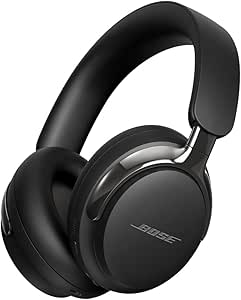
Bose QuietComfort Ultra Headphones (2nd Gen), Wireless Bluetooth Noise-Cancelling Over-Ear Headphones, Black

Bose QuietComfort Wireless Noise-Cancelling Over-Ear Headphones, Black

DJI Osmo Mobile 7P Phone Gimbal with Mic Mini Transmitter, Infinity Black
As an affiliate, we earn on qualifying purchases.
A Narrower Update to NIST Guidance
The new publication updates Small Business Information Security: The Fundamentals, formerly NIST Interagency Report 7621. NIST says the earlier work addressed information security for small businesses of varying sizes, while the updated guide focuses more narrowly on protecting digital systems from malicious attack and is written specifically for businesses with no employees besides the owner.
The guidance draws on the NIST Cybersecurity Framework 2.0, but NIST says readers do not need prior familiarity with the framework. The agency describes the document as an introduction to cybersecurity and its place in running a business, with definitions and context intended for non-specialists. The change is therefore not just a new title: it refocuses the material on a distinct business type and translates framework-based actions into steps a sole operator can plan.
“Because solopreneurs may not have cybersecurity expertise, we wanted to create a resource designed for them.”
— Daniel Eliot, NIST publication author
Limits and Business-Specific Risks
NIST does not claim that the guide covers every security need or that following its steps will eliminate cyber risk. Eliot said the publication is not comprehensive and that readers differ in their cybersecurity knowledge and sophistication. The agency’s announcement does not quantify how much risk the recommended actions reduce or report whether the guide has been tested for measurable outcomes.
The source material also does not detail a separate implementation service, ongoing support or a schedule for future revisions. Individual owners will need to decide whether the guide’s baseline steps are adequate for their own technology, data and obligations. The available announcement does not establish that every recommendation is suitable for every business.
Owners Can Work Through the Guide
The guide is available from NIST as Cybersecurity White Paper 50. Its worksheets and mapped recommendations are intended to help owners record their systems, choose initial actions and track progress. NIST’s announcement does not name a later release date, follow-up event or planned update schedule.
For readers putting the advice into practice, the next step is to review the publication against the devices and data their business relies on, beginning with measures such as backups, software updates and replacing default passwords. NIST presents the material as a foundation; owners with more complex systems or higher-risk data may need to seek additional guidance.
Key Questions
Who is the NIST guide for?
It is aimed at non-employer businesses, defined in the publication as businesses whose owner is the only paid employee. NIST says the guide is written for readers who may have little or no cybersecurity knowledge.
What does the guide recommend doing first?
NIST highlights regular data backups and keeping software updated as useful initial practices. It also recommends replacing default device passwords with unique, strong passwords.
Does a business need to know the NIST Cybersecurity Framework?
No prior familiarity is assumed. The guide draws on Cybersecurity Framework 2.0 but explains its recommendations in language intended for beginners and links actions to relevant framework sections.
Does following the guide guarantee protection from cyberattacks?
No. NIST presents the publication as a starting point and says it is not comprehensive or tailored to every reader’s needs. It does not claim that the listed steps eliminate cyber risk.
Source: nist.gov