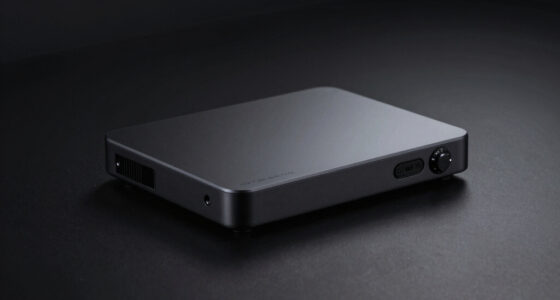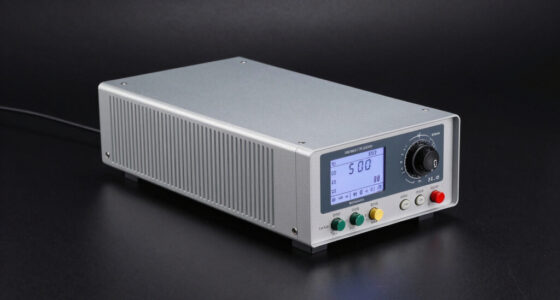

I chose these five penetration testing gadgets for different parts of an authorized security workflow: preparing a portable Linux environment, auditing Wi-Fi, and exploring nearby electronics. My best overall pick is the Kali Linux Bootable USB Drive for Ethical Hacking and Cybersecurity, since it offers both live and install options, dual connectors, and a broad toolset. For dedicated wireless assessments, the Hak5 WiFi Pineapple Mark VII is the more focused choice; for hands-on learning across radio, NFC, infrared, and GPIO, Flipper Zero covers more kinds of hardware.

Get privacy and security gear delivered free with Prime
- Fast, free delivery on millions of items
- Prime Video, Amazon Music and more included
- Member-only deals all year
The tradeoffs are practical, not just technical. The Pineapple is specialized and calls for a defined, authorized Wi-Fi test; the Flipper is versatile but rewards technical knowledge; and both Kali drives are constrained by 8 GB of storage. The newer-listed Kali 2026.2 drive is a straightforward live-boot option, while the other Kali USB adds USB-C and supported ARM compatibility. I rank each gadget by how clearly it serves its role, how much flexibility its supplied details suggest, and what a buyer should know before choosing it.
Key Takeaways
- Best all-around Kali starter: The B083D4PK4Z drive supports live use or installation, dual USB-A/USB-C connectors, and compatible amd64 plus supported arm64 systems.
- Best dedicated Wi-Fi option: Hak5 WiFi Pineapple Mark VII is purpose-built for wireless auditing workflows, with a recon dashboard and Cloud C2 remote access; it is not a general home-networking device.
- Best hardware-learning tool: Flipper Zero combines Sub-GHz, NFC, infrared, and GPIO functions, but practical results depend on compatible equipment, knowledge, and authorized use.
- Best simple live-boot alternative: The Kali Linux 2026.2 drive offers a stated live environment and software versions, but has USB-A only and a listed read speed of 12 MB/s.
- Check the limits before buying: Both Kali drives list 8 GB capacity, ARM support is limited to supported devices, and the second Flipper listing has specifications that may be inconsistent.
| Kali Linux Bootable USB Drive for Ethical Hacking and Cybersecurity |  | Best Overall | Storage: 8 GB | Connectors: USB-A and USB-C | Read speed: 450 megabytes per second | VIEW LATEST PRICE | See Our Full Breakdown |
| Hak5 WiFi Pineapple Mark VII |  | Best for Dedicated Wi-Fi Auditing | Operating system: Linux | Frequency bands: 2.4 GHz and 5 GHz | Wi-Fi standards: 802.11ac, 802.11b, 802.11g, 802.11n | VIEW LATEST PRICE | See Our Full Breakdown |
| Flipper Zero Portable Cybersecurity and Electronics Multitool |  | Best for Hands-On Hardware Learning | Power: Rechargeable battery | Features: Sub-GHz transceiver, NFC reader and writer, infrared transceiver, GPIO | Display and controls: Color display and backlit keyboard | VIEW LATEST PRICE | See Our Full Breakdown |
| Kali Linux 2026.2 Bootable USB Drive |  | Best Straightforward Live-Boot Option | Storage: 8 GB | Interface: USB 3.0 | Connector: USB Type-A | VIEW LATEST PRICE | See Our Full Breakdown |
| Flipper Zero Portable Cybersecurity and Electronics Multitool | | Best Alternative Flipper Listing | Power: Battery powered; rechargeable battery listed | Features: Sub-GHz transceiver, NFC reader and writer, infrared transceiver, GPIO | Display and controls: Color display and backlit keyboard | VIEW LATEST PRICE | See Our Full Breakdown |
More Details on Our Top Picks
Kali Linux Bootable USB Drive for Ethical Hacking and Cybersecurity
My best overall choice is the Kali Linux Bootable USB Drive because it combines the broadest general-purpose role in this lineup with useful connection flexibility. It can run Kali live or be used to install the system, so a buyer can start with a portable session and decide later whether a persistent installation suits the machine and workflow. The listed package includes more than 600 security tools, giving this drive a wider software scope than the Wi-Fi-specific Pineapple or the hardware-oriented Flipper Zero.
The USB-A and USB-C connectors are the clearest practical advantage over the Kali Linux 2026.2 drive, which lists USB-A only. This can make the B083D4PK4Z a better fit for a mixed set of newer and older computers, though it does not remove the need to confirm that a device can boot from USB. Supported amd64 and arm64 systems add range, but the ARM note is limited: compatibility applies only to supported devices, not every ARM computer or tablet.
The main compromise is the 8 GB capacity. That may constrain how much additional data or customization a buyer can keep alongside the supplied system, so I would not choose it as a roomy portable storage drive. The stated 450 MB/s read speed is notably higher than the 12 MB/s listed for the other Kali USB, but the supplied write speed is 25 MB/s; buyers should not assume equally fast writes. Compared with the Pineapple, this is a flexible Linux starting point rather than a dedicated wireless assessment appliance. It makes the most sense for people who want a portable Kali environment and can work within its storage limits.
Pros:- Supports Kali Linux live use or installation.
- Includes a stated collection of more than 600 security and penetration-testing tools.
- Dual USB-A and USB-C connectors broaden connection options.
- Lists support for amd64 and supported arm64 systems.
Cons:- The 8 GB capacity leaves limited room for extra files or customization.
- ARM compatibility is restricted to supported devices.
- Listed write speed is much lower than the stated read speed.
Best for: Buyers who want a portable Kali environment with live and install options, USB-A and USB-C connectors, and support for compatible amd64 or arm64 systems.
Not ideal for: Anyone needing substantial storage, guaranteed ARM compatibility across devices, or a dedicated Wi-Fi auditing appliance.
- Storage:8 GB
- Connectors:USB-A and USB-C
- Read speed:450 megabytes per second
- Write speed:25 megabytes per second
- Architectures:amd64 and supported arm64
- Compatible devices:Desktop, laptop, PC, tablet, and mini PC
- Dimensions and weight:2.5 x 0.5 x 0.5 inches; 1 ounce
- Warranty:1 year
Our verdict“I recommend this as the most flexible general-purpose Kali drive here, provided 8 GB is enough for the buyer’s workflow.”
Hak5 WiFi Pineapple Mark VII
The WiFi Pineapple Mark VII earns its place by being the most specialized device in this selection. Rather than supplying a broad desktop environment like the Kali USB, it is built around wireless security assessment, with a recon dashboard, automated campaigns, reporting, and remote access through Cloud C2. That concentrated workflow can be useful to a security practitioner who already knows what network is in scope and wants a dedicated device for authorized Wi-Fi work.
Its support for 2.4 GHz and 5 GHz networks, Linux-based operation, web interface, and app ecosystem make it more purpose-built for wireless auditing than either Flipper Zero listing. The listed standards include 802.11ac, b, g, and n; the security protocol list names WPA2-PSK, WPA-Enterprise, and WPA3. Those details help define its target environment, but the supplied information does not establish that every feature works identically across all network configurations. I would treat compatibility with a particular test setup as something to verify before purchase.
The tradeoff is focus. This is not a general-purpose home networking device, and it is less versatile for broad Linux work than the Kali USB or for physical electronics exploration than Flipper Zero. Its remote management and automated workflow are advantages for a planned assessment, but less valuable to someone just beginning to learn basic security concepts. The listing also identifies the brand as fonefunshop, so I would check seller, support, and product provenance carefully rather than assuming all listing details represent a direct manufacturer channel. I rank it second because its dedicated function is compelling, but applies to a narrower buyer group than the Kali drive.
Pros:- Designed for Wi-Fi security assessment rather than general computing.
- Supports listed 2.4 GHz and 5 GHz bands and several Wi-Fi standards.
- Includes a recon dashboard, automated campaign workflow, and reporting.
- Cloud C2 remote access and an app ecosystem support managed workflows.
Cons:- Its specialized purpose makes it less useful for everyday networking.
- Buyers should confirm compatibility with their specific test environment.
- The supplied listing identifies a third-party brand, so provenance and support merit checking.
Best for: Experienced security practitioners conducting authorized Wi-Fi assessments who want a dedicated wireless workflow, recon dashboard, and remote management.
Not ideal for: Beginners seeking a general learning computer, buyers wanting normal home-networking hardware, or anyone without a clearly authorized wireless test scope.
- Operating system:Linux
- Frequency bands:2.4 GHz and 5 GHz
- Wi-Fi standards:802.11ac, 802.11b, 802.11g, 802.11n
- Listed security protocols:WPA2-PSK, WPA-Enterprise, WPA3
- LAN port bandwidth:1000 Mbps
- Maximum upstream transfer rate:1300 megabits per second
- Included components:Main unit and 3 antennas
- Interface:Web interface, recon dashboard, and Cloud C2 remote access
Our verdict“I would choose the Pineapple over a Kali drive only when dedicated, authorized Wi-Fi assessment is the main job.”
Flipper Zero Portable Cybersecurity and Electronics Multitool
Flipper Zero has a distinct role: it is a portable interface for learning about and testing compatible electronics, not a substitute for a Kali workstation or a dedicated Wi-Fi auditing device. Its combination of Sub-GHz radio, NFC, infrared, and GPIO gives it more variety across short-range hardware experiments than any other product here. A color display and backlit keyboard add a self-contained way to interact with supported functions, while GPIO makes it possible to connect external electronics for prototyping.
Compared with the WiFi Pineapple, Flipper Zero covers more kinds of device interaction but has a much narrower focus on any one professional assessment workflow. Compared with the Kali drives, it is less about running a large software toolkit and more about examining compatible hardware through built-in interfaces or custom software. That makes it appealing to learners and electronics hobbyists who want a single pocketable device for exploring several technologies, subject to local rules and permission.
The limits are important. Technical knowledge matters, and the presence of several radios does not mean every device or protocol is supported. The listing’s “maximum range” of 1 km should not be read as a reliable working distance: real range can depend on the frequency, antenna, environment, compatible equipment, and applicable regulations. At 10.4 ounces and listed dimensions of 6 x 4 x 3 inches, it is portable but not as tiny as the word “multitool” might suggest. I rank this above the duplicate Flipper listing because its description clearly states learning and prototyping uses, while still placing it behind the broader Kali pick and the focused Wi-Fi appliance for those specific jobs.
Pros:- Combines Sub-GHz radio, NFC, infrared, and GPIO capabilities.
- Supports cybersecurity learning and electronics prototyping.
- Battery-powered and designed for portable use.
- Color display and backlit keyboard provide an onboard interface.
Cons:- Advanced uses require technical knowledge and compatible hardware.
- The listed 1 km range depends on conditions and equipment.
- It does not replace the broad software environment of Kali or the Wi-Fi focus of the Pineapple.
Best for: Curious learners and electronics hobbyists who want to explore compatible Sub-GHz, NFC, infrared, and GPIO projects in one battery-powered device.
Not ideal for: Buyers who need a full penetration-testing workstation, a dedicated Wi-Fi assessment tool, or a ready-made solution that requires little technical understanding.
- Power:Rechargeable battery
- Features:Sub-GHz transceiver, NFC reader and writer, infrared transceiver, GPIO
- Display and controls:Color display and backlit keyboard
- Connectivity:Wireless
- Listed maximum range:1 km; depends on conditions and compatible equipment
- Dimensions:6 x 4 x 3 inches
- Weight:10.4 ounces
- Compatible devices:Listed smartphones, computers, tablets, TVs, air conditioners, RFID cards, NFC devices, and GPIO-compatible electronics
Our verdict“I recommend this Flipper listing for authorized hardware learning, not as a replacement for a computer-based testing setup.”
Kali Linux 2026.2 Bootable USB Drive
This Kali Linux 2026.2 boot drive is the most straightforward choice for a buyer who wants a stated live environment without installing an operating system on the host computer. It lists Kali Linux 2026.2, kernel 6.19, and GNOME 50 or KDE Plasma 6.6, giving more specific software-version information than the B083D4PK4Z listing. The live-boot approach can suit a dedicated lab or a portable session, though a buyer should still check that the target computer permits USB booting.
Compared with the other Kali USB, this one is less flexible at the connector level: it lists USB Type-A only, while B083D4PK4Z includes USB-A and USB-C. The two drives both list 8 GB capacity, so neither offers much headroom for extra data. This model also reports a read speed of 12 MB/s, far below the 450 MB/s listed for the dual-connector drive. I would not assume the two supplied speed figures were measured under identical conditions, but the listed number still gives a buyer reason to favor the other drive when stated read performance matters.
Its strongest case is simplicity: a buyer can boot into the listed live system without committing to installation, and the broad compatibility claim covers most modern computers and laptops. The listing does not specify a write speed, and its 8 GB capacity limits how much additional material can travel with the system. Unlike the Pineapple, it is not a dedicated wireless appliance; unlike Flipper Zero, it is not a self-contained radio and electronics device. I place it fourth because it is a clear, useful option for live Kali access, but the other Kali drive lists more connectors and stronger stated read performance.
Pros:- Designed to boot into a Kali live environment without installation.
- Lists Kali Linux 2026.2, kernel 6.19, and two desktop environments.
- USB 3.0 interface and USB Type-A connector suit compatible computers.
- The listing describes compatibility with most modern computers and laptops.
Cons:- The listed 8 GB capacity limits room for added files.
- Read speed is listed as 12 MB/s, with no write speed provided.
- USB Type-A only, with no stated ARM compatibility.
Best for: Buyers who want a listed Kali Linux 2026.2 live environment on a USB-A drive and do not need USB-C or ARM details.
Not ideal for: Users who need USB-C, generous storage, a stated write speed, or the faster listed read speed of the other Kali USB.
- Storage:8 GB
- Interface:USB 3.0
- Connector:USB Type-A
- Read speed:12 MB/s
- Bootable:Yes; live environment
- Operating system:Kali Linux 2026.2
- Kernel:6.19
- Desktop environments:GNOME 50 and KDE Plasma 6.6
Our verdict“I would choose this drive for a version-specific live Kali setup, but the dual-connector drive is the more flexible pick.”
Flipper Zero Portable Cybersecurity and Electronics Multitool
This second Flipper Zero listing appears to describe the same general device as B0DH567GJX: a battery-powered unit with Sub-GHz, NFC, infrared, and GPIO features for learning, security testing, and electronics projects. Its role in this roundup is not a different kind of gadget; it is an alternative listing for the same broad hardware-learning use case. I rank it fifth because the supplied details warn that its specifications may be inconsistent, while the other Flipper listing gives a clearer description of the intended learning and prototyping uses.
On paper, it shares the useful breadth that separates Flipper from the Kali USB drives and the Wi-Fi-specific Pineapple. It can interact with compatible devices and external hardware rather than booting a full Linux environment or focusing on a wireless audit dashboard. The listed rechargeable battery, color display, and backlit keyboard make it sound self-contained, but none of those details change the key buying question: whether the buyer’s target devices and projects are compatible with its supported features.
The listed 1 km maximum range deserves particular caution, since the product description provides no conditions that would make this a dependable expectation. The listing also gives the color as “Blanco,” which does not align neatly with the other Flipper listing’s orange color, and its supplied specifications are flagged as potentially inconsistent. That is why I would compare the exact product and seller details carefully before choosing it over B0DH567GJX. If the listing is accurate and the device suits the project, it may serve a learner well; if certainty about the package matters, the clearer Flipper listing is the safer editorial choice in this comparison.
Pros:- Lists Sub-GHz, NFC, infrared, and GPIO features.
- Battery-powered design supports portable learning and prototyping.
- Color display and backlit keyboard are listed.
- The stated function spans compatible electronics rather than only computer software.
Cons:- The supplied specifications may be inconsistent.
- The listed 1 km maximum range is not a dependable real-world guarantee.
- Its capabilities still require technical knowledge and compatible devices.
Best for: Buyers who specifically want the listed Flipper Zero feature set and are prepared to verify the exact device, contents, and seller details.
Not ideal for: Anyone who needs unambiguous product specifications, a full Kali environment, or dedicated Wi-Fi assessment hardware.
- Power:Battery powered; rechargeable battery listed
- Features:Sub-GHz transceiver, NFC reader and writer, infrared transceiver, GPIO
- Display and controls:Color display and backlit keyboard
- Connectivity:Wireless
- Listed maximum range:1 km; actual results depend on conditions and equipment
- Dimensions:6 x 4 x 3 inches
- Weight:10.4 ounces
- Listed color:Blanco
Our verdict“I would choose this listing only after confirming the exact device details, since the other Flipper entry is more clearly described.”
How We Picked
I ranked these options by their usefulness as penetration testing gadgets, rather than by treating every device as an interchangeable security tool. A bootable Kali drive supports a broad software workflow; a Wi-Fi Pineapple focuses on wireless assessment; and Flipper Zero is a portable hardware interface for learning and testing compatible electronics. That difference in purpose drives the order and the role I assign to each product.
I also weighed practical compatibility, portability, and the detail available in the supplied specifications. Connector type matters when a buyer needs to boot a particular computer. Storage and stated transfer speeds matter when choosing a portable operating system. For dedicated radio devices, the listed bands, interface, and stated workflows help distinguish specialized equipment from a general-purpose computer accessory.
Where two listings describe the same product family, I do not treat them as separate capabilities. The Flipper listings have overlapping descriptions, so I rank one as the more complete-listed option and the other lower because its specifications may be inconsistent. Likewise, the Kali USB drives share an 8 GB capacity but differ in connector options, architecture notes, and stated software details. I do not infer unlisted performance or compatibility. These recommendations assume authorized testing of systems and devices the buyer owns or has explicit permission to assess.
Factors to Consider When Choosing Best Penetration Testing Gadgets
I would start by deciding what part of an authorized assessment you need to support. These products are not direct substitutes: Kali USB drives provide a portable operating system, the Pineapple focuses on Wi-Fi assessment, and Flipper Zero explores compatible electronics. The right choice depends on your target, your existing equipment, and how much setup or learning you are willing to take on.
Choose the job before the gadget
For a broad computer-based toolkit, start with one of the Kali Linux boot drives. They provide a portable route into a Linux environment and are the closest options here to a general-purpose penetration-testing starting point. The B083D4PK4Z drive is more flexible on connectors and lists live use or installation; the 2026.2 drive spells out a software version and live-boot setup. Neither is a complete assessment by itself: the right utilities, operating knowledge, and a defined scope still matter.
If your work centers on an authorized wireless network assessment, the WiFi Pineapple Mark VII is the specialized pick. Its dashboard and remote-management workflow make it different from a bootable USB, but that specialization is wasted if your goal is general Linux learning or electronics prototyping. For short-range hardware exploration, NFC-related learning, infrared, Sub-GHz, or GPIO projects, Flipper Zero has a broader mix of physical interfaces. I would not buy one expecting it to replace either the Kali environment or the Pineapple’s dedicated role.
Check computer compatibility and connectors
A bootable drive only helps if the host computer can boot from it. Check whether the machine supports USB boot, whether secure-boot settings or device policies may block the process, and which connector it has. The B083D4PK4Z drive lists both USB-A and USB-C, which gives it an advantage across newer and older hardware. The 2026.2 drive lists USB-A, so a computer with only USB-C may require an adapter, and adapter support should not be assumed without checking.
Architecture is another point to confirm. One Kali drive lists amd64 and supported arm64, but specifically limits ARM compatibility to supported devices. That is not a blanket promise that every ARM laptop, tablet, or mini PC will boot it. For the Pineapple and Flipper, check whether their stated radio, network, and peripheral features match your intended equipment. Compatibility is a model-specific question; broad descriptions do not guarantee every device or protocol will work.
Treat capacity and transfer figures as buying constraints
Both Kali drives list 8 GB of storage. That makes them compact entry points, but leaves less room for personal files, custom tools, or saved project material than a larger drive would. If you expect to keep substantial datasets or many custom changes on the boot media, compare the supplied capacity with your actual needs before ordering. Do not assume the nominal tool count means extra storage is available for your own files.
The B083D4PK4Z listing states 450 megabytes per second read and 25 megabytes per second write, while the 2026.2 listing states 12 MB/s read and provides no write figure. These numbers are not enough to predict every boot or task, and the listings do not describe a common testing method. Still, the contrast is useful when comparing the supplied claims: the dual-connector drive has the more compelling stated read figure, while the other drive offers more specific software-version details. I would weigh capacity and connector fit first, then use transfer specifications as a secondary differentiator.
Match specialization to your experience
The Pineapple’s automation, recon dashboard, and Cloud C2 access make it attractive to people who already understand the boundaries of a wireless assessment. Those features do not remove the need to define permission, network scope, and a safe testing plan. A new learner may get a gentler start by learning networking and Linux fundamentals with a Kali environment before adding specialized hardware. The device is not designed as ordinary home Wi-Fi gear, so its value depends on a clear assessment use.
Flipper Zero can make hardware concepts tangible, but its feature list is not a promise of universal access to nearby devices. A buyer needs to understand compatibility, protocol limits, and applicable rules. Its GPIO support is especially relevant to electronics learners, while a person seeking a large software repository may find a Kali USB more suitable. I would choose based on the kind of learning project planned, not the number of interfaces listed.
Compare duplicate and uncertain listings carefully
The two Flipper entries have substantially overlapping descriptions, so I do not count them as separate types of equipment. The B0DH567GJX listing more clearly frames the device as a cybersecurity-learning and electronics-prototyping tool. B0DRTZGQ12 has a potentially inconsistent specification set and a different listed color, so it sits lower in this ranking. Before selecting either, check that the exact listing, included device, and supplied details match what you expect.
The same care applies to the Pineapple listing, which names a third-party brand in the supplied product details. Confirm seller and support information, along with the exact hardware and included components. I prioritize clear fit and credible specifications over an impressive feature list. When a listing leaves a key point unclear, treat that uncertainty as a tradeoff rather than filling it in with assumptions.
Keep testing authorized and controlled
These tools can support legitimate security work, education, and prototyping, but their appropriate use depends on permission. Test only devices and networks you own or have explicit authorization to assess. For a workplace engagement, document the approved targets and boundaries before connecting specialized equipment. A portable tool can make testing easier to carry out, but it does not change the need for clear authorization and a controlled scope.
When a feature or range claim is uncertain, verify it through the product documentation and the exact hardware involved before relying on it. In particular, do not treat Flipper Zero’s stated 1 km maximum range as a guaranteed operating distance. Environment, antenna, compatible equipment, and regulations can all affect what is practical. A careful buyer chooses gear for a defined, permitted task and plans around its real limits.
Frequently Asked Questions
Which product is the best starting point for penetration testing?
I would start with the Kali Linux Bootable USB Drive B083D4PK4Z if the buyer wants a portable computer-based environment, since it lists live and install options, more than 600 tools, and USB-A plus USB-C. It is still a starting point rather than a complete testing solution: the host must be compatible, the buyer needs relevant skills, and all testing should stay within an authorized scope.
Should I choose a Kali USB drive or the WiFi Pineapple Mark VII?
Choose a Kali USB drive for a broader Linux-based workflow, and choose the Pineapple when authorized Wi-Fi auditing is the specific task. The Kali drives are more adaptable as portable operating-system media; the Pineapple is more focused on wireless assessment, with a recon dashboard and remote-management features. Neither is a substitute for the other, and a buyer should confirm compatibility with the intended equipment before choosing.
Which Kali bootable USB is more flexible?
The B083D4PK4Z drive is more flexible for connector choice because it lists both USB-A and USB-C, and it also names amd64 plus supported arm64 systems. The Kali Linux 2026.2 drive provides more specific software-version details and lists a live environment, but has USB-A only and a stated read speed of 12 MB/s. Both list 8 GB, so neither is a high-capacity option.
Is Flipper Zero a replacement for a computer-based penetration-testing setup?
No. Flipper Zero serves a different role, with Sub-GHz, NFC, infrared, and GPIO features for learning about compatible electronics and prototyping. It does not provide the broad desktop environment of Kali or the Wi-Fi-focused workflow of the Pineapple. It is most useful when the buyer has a hardware project in mind and is prepared to learn the relevant compatibility and technical details.
Can I use these gadgets on networks or devices I do not own?
I recommend using these devices only on systems, networks, and electronics that you own or have explicit permission to assess. A product’s features do not grant authorization, and wireless or radio testing can affect other people’s equipment. For a professional engagement, agree on the targets and boundaries before testing, and follow applicable laws and organizational policies.
Conclusion
My recommendation depends on the task. For the broadest portable computer-based setup, choose the Kali Linux Bootable USB Drive B083D4PK4Z, especially if USB-C or supported ARM compatibility matters. For a dedicated authorized wireless assessment, the WiFi Pineapple Mark VII is the more focused tool. For electronics learners who want Sub-GHz, NFC, infrared, and GPIO in one device, the clearer Flipper Zero listing B0DH567GJX is the better match; I would verify the B0DRTZGQ12 listing carefully before choosing it.
The Kali Linux 2026.2 drive fits buyers who prioritize a stated live environment and version details, while accepting USB-A-only connectivity and its listed transfer speed. Across all five, the deciding questions are what you need to assess, which equipment you already own, and whether the supplied limitations suit your workflow. I would buy for a specific authorized use rather than for the size of a feature list.