
During Cybersecurity Awareness Month, you should focus on these top five online safety tips: always recognize phishing scams by verifying sources, create unique passwords for each account, enable two-factor authentication on critical platforms, stay informed about evolving cybersecurity threats, and prioritize data privacy practices. By adopting these habits, you greatly enhance your online security. Curious about how to deepen these strategies and protect your personal information? Let’s explore more insights that can keep you safe online.

Get privacy and security gear delivered free with Prime
- Fast, free delivery on millions of items
- Prime Video, Amazon Music and more included
- Member-only deals all year
Key Takeaways
- Always verify the source of emails and messages to avoid falling for phishing scams.
- Use unique, strong passwords for each account and consider a password manager for security.
- Enable two-factor authentication on critical accounts to add an extra layer of protection.
- Stay informed about the latest cybersecurity threats and educate yourself continuously.
- Practice good data privacy habits to safeguard your personal information online.
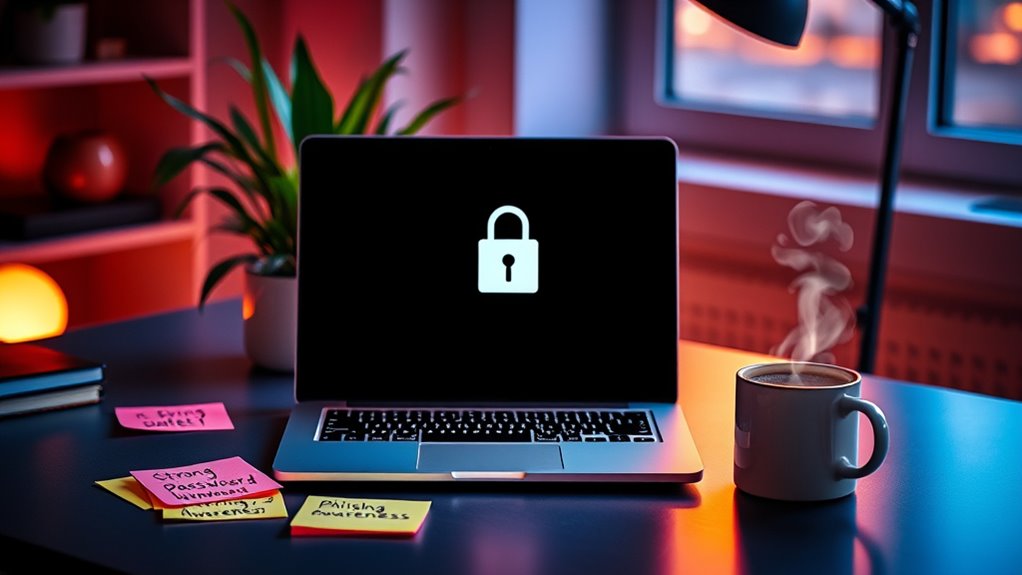
October marks Cybersecurity Awareness Month, a essential time for everyone to focus on online safety. As you navigate the digital world, it’s necessary to arm yourself with knowledge and tools to protect your personal information. One of the most prominent threats you’ll face is phishing scams. These deceptive tactics aim to trick you into providing sensitive information, like passwords and credit card numbers. Phishing scams can come in various forms, including emails, text messages, or even phone calls that appear legitimate. To stay safe, always verify the source before clicking on any link or providing your information. If something feels off, trust your instincts.
October is Cybersecurity Awareness Month—an essential time to focus on online safety and guard against phishing scams.
Another fundamental aspect of online safety is effective password management. You might think using the same password across multiple accounts is convenient, but it puts you at risk. If a hacker gains access to one of your accounts, they could easily infiltrate others. Instead, create unique passwords for each account. Aim for a combination of letters, numbers, and special characters to enhance security. It might seem overwhelming, but using a password manager can simplify this process. These tools store your passwords securely and can even generate strong ones for you. You’ll no longer have to remember every password, which alleviates the burden of trying to keep track of multiple logins.
Regularly updating your passwords is another best practice. Set a reminder to change them every few months, especially for sensitive accounts like banking or email. This practice helps minimize the risk of unauthorized access. Additionally, enable two-factor authentication wherever possible. This extra layer of security requires you to provide a second form of identification, such as a code sent to your phone. Even if a hacker gets hold of your password, they’ll struggle to access your account without that second piece of information.
Finally, stay informed about the latest cybersecurity threats and trends. The digital landscape is ever-evolving, and so are the strategies used by cybercriminals. By educating yourself on potential risks, you’ll be better equipped to recognize and avoid them. Remember, cybersecurity isn’t just a one-time effort; it requires ongoing vigilance. By being proactive, practicing good password management, and staying alert for phishing scams, you can greatly enhance your online safety. Embrace this Cybersecurity Awareness Month as an opportunity to strengthen your defenses and protect yourself in the digital world. Additionally, understanding the importance of data privacy regulations can help you navigate online threats more effectively.
Frequently Asked Questions
What Are the Signs of a Phishing Attempt?
You can spot a phishing attempt by looking for certain signs. If an email seems suspicious, it might be an email scam. Watch out for generic greetings, urgent language, and requests for personal information. Be cautious of fake links; they often lead to fraudulent sites. Check the sender’s email address closely—it’s usually slightly altered. If it feels off, don’t click on any links or download attachments, and report it immediately.
How Can I Create a Strong Password?
Creating a strong password is easy—if you enjoy juggling letters, numbers, and symbols! Start with at least 12 characters, mixing upper and lower case, numbers, and special symbols for maximum password complexity. Ironically, the simpler it sounds, the harder it is to remember. Consider using a password manager to securely store and generate complex passwords, so you don’t have to. It’s a clever way to stay safe while keeping your sanity intact!
Should I Use Public Wi-Fi for Banking?
You shouldn’t use public Wi-Fi for banking. The risks associated with public Wi-Fi, like hackers intercepting your data, make it unsafe. If you must access your bank on the go, use your mobile data instead. It’s more secure and reduces the chance of someone stealing your information. Always prioritize mobile banking safety by ensuring you’re connected to a private network when handling sensitive transactions. Your financial security depends on it!
What Is Two-Factor Authentication and Why Is It Important?
Two-factor authentication (2FA) is a security measure that requires two forms of verification before granting access, like your password and a text code. It’s essential because it adds an extra layer of defense against cyber threats. These days, hackers are as common as pigeons in the park! Using encryption techniques and biometric authentication, such as fingerprints or facial recognition, makes it much harder for unauthorized users to breach your accounts.
How Often Should I Update My Software?
You should update your software regularly, ideally every few weeks or as soon as a security patch is issued. Keeping an eye on the software update frequency helps protect your devices from vulnerabilities. Many companies follow a security patch schedule, so subscribe to notifications or check for updates frequently. Don’t wait until you notice a problem; proactive updates keep your data safe and ensure you’re using the latest features.
Conclusion
As Cybersecurity Awareness Month wraps up, remember, your online safety is more critical than ever—like guarding the crown jewels! By following these top tips, you’re not just protecting your personal information; you’re fortifying your digital fortress against cyber dragons ready to invade. Don’t underestimate the power of a strong password or the importance of updates—these small steps can mean the difference between a secure haven and a chaotic online nightmare. Stay vigilant and keep your digital life thriving!
Fall Picks
fall essentials
As an affiliate, we earn on qualifying purchases.